
The heavy-lift export business can be summarized in nine words: high cargo value, many touchpoints, zero room for error. A standard shipment gone wrong costs you thousands. A heavy-lift project gone wrong costs hundreds of thousands or more — and most of the traps aren't at sea. They lie before departure and after arrival. This article walks the risk points along the shipping timeline, and behind every one of them is a tuition fee somebody actually paid.
Moisture and rust protection: twenty to thirty days at sea across multiple climate zones means condensation inside the container is the norm. Precision equipment needs vacuum packing with desiccants; bare units need rust-preventive oil and wrap. Opening the container at destination to find the main control board moldy from moisture — that claim can drag on for a year, if it settles at all;
Wood packaging fumigation: crates and dunnage must be fumigated per the ISPM 15 international standard and stamped with the IPPC mark. Unmarked wood packaging gets rejected, returned, or even destroyed at many destination ports — at the shipper's cost;
Residuals handling: fuel tanks drained, batteries disconnected and secured. Diesel machinery with residual fuel, or equipment with lithium batteries, may be treated as dangerous goods under ocean shipping rules — undeclared, it's a serious violation; declared, it adds cost. Cleaning it out beforehand is the cheapest solution.
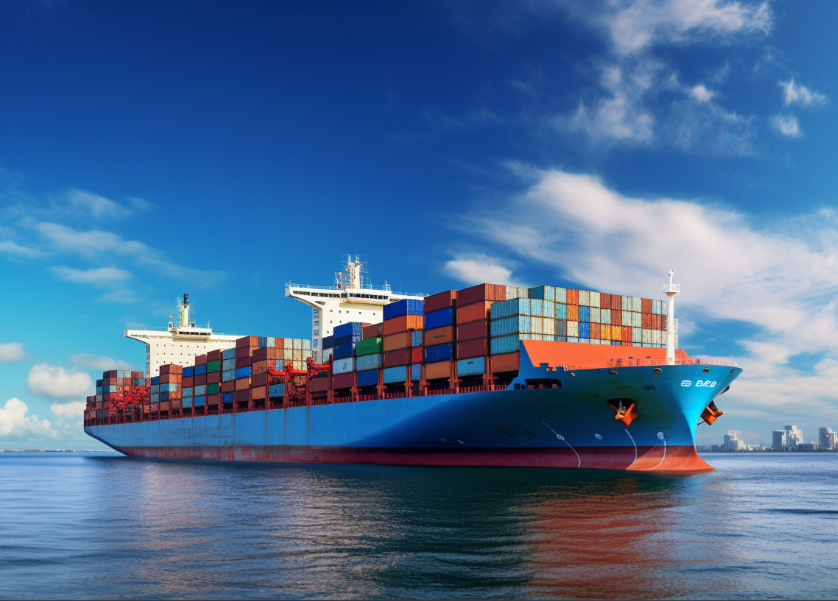
The factory-to-port inland haul is the highest-accident segment in heavy-lift transport. Over-wide, over-height cargo moves on specialized trailers requiring an oversize transport permit, with routes surveyed in advance: bridge clearances, weight limits, turning radii, overhead cables. Some loads clear the limit by just five centimeters and detour two hundred kilometers for it. And even with permits in hand, the last stretch of road outside the factory gate has to bear the axle load — plenty of projects finish their final few hundred meters by crane relay. All of this gets confirmed at the planning stage, not discovered on loading day.
Lifting plan: which crane, which spreader, how many lifts to load — all in a written plan confirmed with the terminal. Handling damage during lifting accounts for the largest share of heavy-lift cargo claims;
Lashing: designed per the IMO CSS Code, executed with wire rope, turnbuckles, and welded stoppers as specified. As covered in the earlier article on special-container declarations, in-house lashing with a closed responsibility chain is a hard standard when choosing a forwarder.
HS classification: misclassifying turnkey equipment can mean applying the wrong rebate rate and reconciling tax differences later, or worse, falling into a controlled category and stalling the shipment. Whether to classify a complete line "as a machine or as parts" should be settled with the customs broker in advance;
Three-way consistency: product name, piece count, weight, and dimensions on the invoice, packing list, and B/L must align perfectly. Any mismatch can hang the cargo up at destination customs for weeks;
Export controls: certain high-precision machine tools and special-material equipment fall under dual-use export control lists. Check the catalogue before shipping — don't discover at inspection that you needed a license.
Plenty of project cargo dies in the last mile. The equipment clears customs, and then reality bites: the local oversize transport permit takes two weeks, the destination has no crane of sufficient capacity, or the rainy season has turned the haul road impassable for heavy trucks. Have the destination agent confirm the inland delivery plan before loading — permit timelines, transport qualifications, lifting resources, seasonal factors. For projects shipping in batches, work backward from the site installation schedule: early arrivals occupy the laydown area; late arrivals breach the construction contract.
High-value heavy-lift cargo needs All Risks coverage spanning domestic trucking, ocean transit, transshipment handling, and inland delivery at destination, insured at contract value plus ten percent. And the evidence chain starts at the factory: pre-loading photos, handover sheets, lashing acceptance records, unboxing photos at every node. The first thing the insurer examines after an incident is evidence. Losses without photographic records, nine times out of ten, can't be substantiated.
Risk management in heavy-lift export is, at its core, turning "probably fine" into "confirmed in writing": fumigation marks on the packing, the inland route surveyed, the lifting plan documented, three-way document consistency, destination delivery pre-arranged, and photographic records throughout. Half a day extra per touchpoint buys you evidence when it matters. For multi-batch, multi-touchpoint projects, handing the coordination to a forwarder that follows the job from plan to delivery is far steadier — and far less exhausting — than chasing and verifying every link yourself.
联系人: Manager Li
电话: 021-31056166
邮件: sea-giant@sea-giant.com
地址: Room 1708, Pu Chuang Business Building, 1050 East Daming Road, Hongkou District, Shanghai, China