
With the continuous upgrading of China’s foreign trade export structure, the overseas shipping demand for over-dimensional cargo such as construction machinery, complete industrial equipment and large marine spare parts has grown steadily. Different from ordinary container cargo, OOG (Out-of-Gauge) cargo features non-standard dimensions, heavy tonnage, high value, difficult operation and long process chains, with a logistics operation logic completely different from standard dry containers. In actual export projects, most engineering enterprises still calculate costs only based on basic ocean freight, ignoring a variety of hidden expenses unique to over-dimensional transportation, and lack a professional full-process risk control system. As a result, many projects seem profitable in the early stage, but suffer shrinking profits or even losses due to hidden charges, operation rework, delivery delays and cargo damage compensation. This article comprehensively analyzes the easily overlooked hidden costs of over-dimensional cargo exports and sorts out corresponding risk control key points to help engineering foreign trade enterprises reduce costs and improve efficiency.
1. Special Container and Over-Load Premiums Trigger Hidden Basic Transportation Costs
The general container market has sufficient container volume, transparent freight rates and controllable cost fluctuations. In contrast, over-dimensional transportation relies heavily on scarce special transport resources such as flat racks, open-top containers and breakbulk vessels, which inevitably generate market premiums. Non-standard oversized and overweight equipment cannot be stacked normally and will occupy multiple standard deck spaces, resulting in vessel dead freight. Shipping lines will charge additional OOG surcharges and dead freight fees accordingly.
Many enterprises only compare basic ocean freight during budgeting and completely ignore special container repositioning fees, over-dimensional operation fees and heavy cargo surcharges. Meanwhile, special containers have long deployment cycles and tight schedules. Temporary booking often leads to premium price increases and space queuing, further raising transportation costs. Such premiums caused by special cargo attributes are the most fundamental and easily ignored hidden costs in over-dimensional exports.
2. Special Operation Costs at Both Ends Form Core Rigid Hidden Expenses
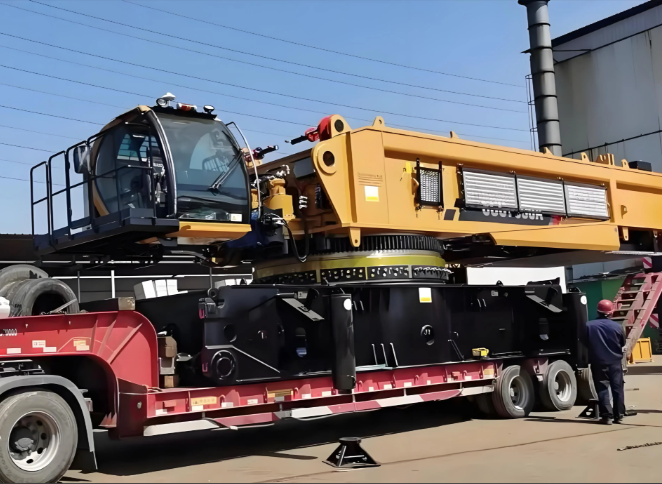
The real core cost of over-dimensional logistics does not lie in the sea freight, but in the special operations of domestic inland transportation, port operation and overseas terminal delivery, which are widely omitted in industry cost accounting. Domestically, heavy engineering equipment and large marine spare parts cannot be transported by ordinary trucks and must be carried by hydraulic modular trailers or low-bed special vehicles. For over-dimensional cargo, enterprises need to apply for road overlimit permits in advance, and professional escort fleets are required for remote sections and highway routes, generating rigid expenses including vehicle rental, approval and escort fees.
In port operations, over-dimensional cargo requires exclusive operation of large-tonnage quay cranes, with advance reservation of crane schedules and dedicated storage areas, resulting in independent charges for heavy lifting, special storage and overtime operation. In accordance with maritime regulations and carrier safety requirements, all OOG cargo on flat racks and open-top containers must undergo standardized professional lashing with chains, dunnage and stoppers, and third-party institutions must issue lashing inspection certificates. Simple self-reinforcement by enterprises often fails inspection, triggering rework and subsequent secondary costs such as material costs, labor costs, port detention and container demurrage, leading to continuous accumulation of hidden expenses.
3. Various Fragmented Surcharges and Opaque Quotations Cause Budget Losses
General container logistics charges are highly standardized and clearly listed, while over-dimensional project logistics belongs to customized services with numerous fragmented surcharges and huge regional differences, which is the main cause of project budget overruns. In addition to basic over-dimensional fees and heavy cargo operation fees, the whole process covers special port operation fees, professional inspection fees, bunker adjustment fees, destination heavy unloading fees, overseas inland overlimit permit fees, warehousing detention fees and high-value cargo insurance premiums.
Countries and ports have vastly different operation standards and road access rules for over-dimensional cargo. Many European and American countries restrict over-dimensional equipment to night travel only, requiring cross-regional permits and professional escort teams. Some overseas small and medium-sized ports lack large lifting equipment and need floating crane rental, greatly increasing terminal costs. Most logistics providers only display basic ocean freight in advance and settle numerous hidden surcharges after shipment, leading to serious budget distortion and continuous cost increases during project execution.
4. Uncertain Project Cycles Bring Hidden Time Costs and Default Risks
Over-dimensional export is typical project-based logistics with complex procedures, numerous nodes and long execution cycles. Every link including cargo parameter verification, logistics solution customization, space locking, inland transportation, sea shipment, customs clearance and terminal delivery requires accurate connection. Inaccurate measurement of cargo size and weight or insufficient pre-evaluation of port operation capacity will invalidate the original logistics plan and force temporary replacement of container or vessel types, directly increasing logistics costs and causing vessel schedule delays.
Most over-dimensional cargo supports key overseas projects such as infrastructure construction, ship maintenance and factory operation. Delivery efficiency is directly linked to project construction schedules. Delivery delays will lead to liquidated damages and project shutdown losses. Meanwhile, detention and storage fees accrue daily and occupy enterprise working capital for a long time, further squeezing overall project profits. Such hidden time costs are often more critical than direct logistics expenses.
5. High-Value Cargo Risks Lead to Huge Hidden Damage Disposal Costs
Construction machinery, complete production lines and core marine spare parts are ultra-high-value equipment, with single cargo value ranging from millions to tens of millions of RMB. Over-dimensional transportation involves multiple links and high operation difficulty. Road vibration, lifting stress, sea wind and waves and improper manual operation may cause cargo displacement, deformation, damage and moisture, resulting in huge direct economic losses once cargo damage occurs.
Ordinary cargo insurance cannot cover the special transportation risks of over-dimensional goods, and separate project-specific cargo insurance is required with much higher premiums. In addition to the loss of cargo value itself, cargo damage accidents will bring a series of indirect costs including on-site emergency disposal, rework and reshipment, and overseas project shutdown claims. Many enterprises ignore risk investment and lack risk control schemes in the early stage, resulting in accident losses far exceeding logistics freight.
6. Conclusion: Full-Professional Control Solves Hidden Cost Problems of Over-Dimensional Cargo
In general, the cost overruns of over-dimensional cargo exports are not simply caused by high freight rates, but by insufficient identification of hidden costs, unprofessional operation and imperfect risk control systems. To achieve accurate cost control and stable delivery, enterprises must abandon ordinary cargo logistics thinking and rely on professional project logistics providers for full-process overall planning.
JYC Supply Chain has been deeply engaged in the over-dimensional engineering logistics industry for many years, focusing on the export transportation of OOG over-dimensional cargo and project cargo such as construction machinery, complete industrial equipment and marine spare parts, with in-depth insight into industry operational pain points and cost blind spots. Relying on long-term stable cooperation with major shipping lines, JYC can preferentially lock exclusive space for flat racks, open-top containers and breakbulk vessels, avoiding the price premium caused by special capacity shortage and stabilizing basic logistics costs from the source.
In terms of cost control, JYC adheres to full transparent itemized quotations, completely eliminating ambiguous billing and post-hidden charges. All hidden expenses including special inland transportation approval, fleet escort, port heavy lifting, standardized lashing inspection, overseas overland permits and special cargo insurance are fully listed and included in the project budget at the quotation stage, realizing accurate and controllable cost accounting and completely solving budget overruns.
In terms of risk control, JYC is equipped with a professional technical and on-site operation team to verify cargo parameters in advance, evaluate domestic and foreign port operation conditions, and customize exclusive lifting, stowage, reinforcement and emergency solutions. The team tracks the whole process of cargo collection, shipment, sea transportation, customs clearance and terminal delivery, synchronizes logistics dynamics in real time, and strictly controls risks of cargo damage, demurrage and delivery default. With mature domestic and overseas special operation resources, JYC one-stop solves the problems of dual overland transportation, special operation and overseas terminal distribution, greatly reducing enterprise operation pressure.
For engineering foreign trade enterprises, cooperating with JYC Supply Chain can not only accurately avoid various hidden logistics costs and activate project profits, but also ensure stable delivery through a mature full-chain risk control system, escorting the efficient implementation of overseas projects.
联系人: Manager Li
电话: 021-31056166
邮件: sea-giant@sea-giant.com
地址: Room 1708, Pu Chuang Business Building, 1050 East Daming Road, Hongkou District, Shanghai, China