
Conclusion first: to judge whether a forwarder really has a "proven dedicated transport solution" on the Europe route, don't look at what it says it can do — look at four hard metrics that can be pinned down in practice: whether its route coverage actually targets the segment you are shipping to, whether it has the special-equipment container supply plus the yard and handling capability, whether its lashing and securing can be engineered separately for your cargo type, and whether its documentation and destination-side handling have concrete links in place. These four decide whether a 20–30 tonne out-of-gauge (OOG) unit gets loaded at all and whether it arrives on schedule. Price is something worth sitting down to discuss only after those four hold up. The Europe route carries one further peculiarity: it is nominally a single route, but in practice it is five groups of ports — and you can usually tell how well a forwarder knows the route from its very first reply.
Before comparing forwarders, settle one thing: is the "Europe" you mean the same place as the "Europe" they understand?
Outbound from the Port of Shanghai, the Europe–Mediterranean direction is conventionally broken into five port groups. Their distances, route structures and operational difficulty all differ — and answering with a catch-all "Europe" tells you something in itself.
Region | Representative ports | Reference transit time (ex Shanghai, port-to-port) | Characteristics and operational notes |
North-West Europe | Rotterdam, Felixstowe, Hamburg, Bremerhaven, Antwerp | 36–45 days via the Cape of Good Hope; 25–31 days via Suez | Densest cluster of European base ports, with the widest choice of sailings; good onward inland distribution and barge connections after arrival |
West Med | Barcelona, Valencia, Algeciras, Genoa, La Spezia | 40–48 days via the Cape; 23–29 days via Suez | Gateway to Southern Europe; projects bound for inland Italy and Spain commonly use this group |
East Med | Piraeus, Izmir, Istanbul, Mersin, Port Said | 42–50 days via the Cape; 29–36 days via Suez | Main entry point for the Eastern Mediterranean and a common transhipment point towards the Black Sea |
Black Sea | Constanța, Varna, Novorossiysk | Depends on transhipment connections | Usually routed via an East Med port; longer chain, more variables |
Nordic / Baltic outports | Copenhagen, Aarhus, Gdańsk, Gdynia, Stockholm, Helsinki, Tallinn, Bergen, etc. | Depends on transhipment connections | Few direct sailings to outports; relies more on transhipment arrangements and destination-side receiving capability |
The transit times above are conventional references only. They exclude land transport and customs clearance at either end and do not constitute a service-level guarantee. Transhipment, peak-season congestion, geopolitical factors and vessel deployment can all extend the cycle; the booking-period sailing schedule governs in practice.
There is one variable that has to be mentioned right now: carrier planning on the Europe–Mediterranean direction is still being rewritten by the "Suez or Cape" decision. As of September 2026, the return of services through the Red Sea–Suez corridor is progressing, and some carriers have already switched certain Europe–Mediterranean and Middle East services from the Cape of Good Hope routing back to Suez transit, cutting transit time accordingly by roughly 10–14 days. That status can be reversed at any time — routing is a reversible carrier decision, and before signing you must rely on the carrier's arrangements in force at the time of booking.
So strictly speaking, before the first "hard metric" there is one question that must be asked: Which segment are you going to? By which routing? And roughly how many days? If that cannot be answered clearly, the remaining items are barely worth discussing.
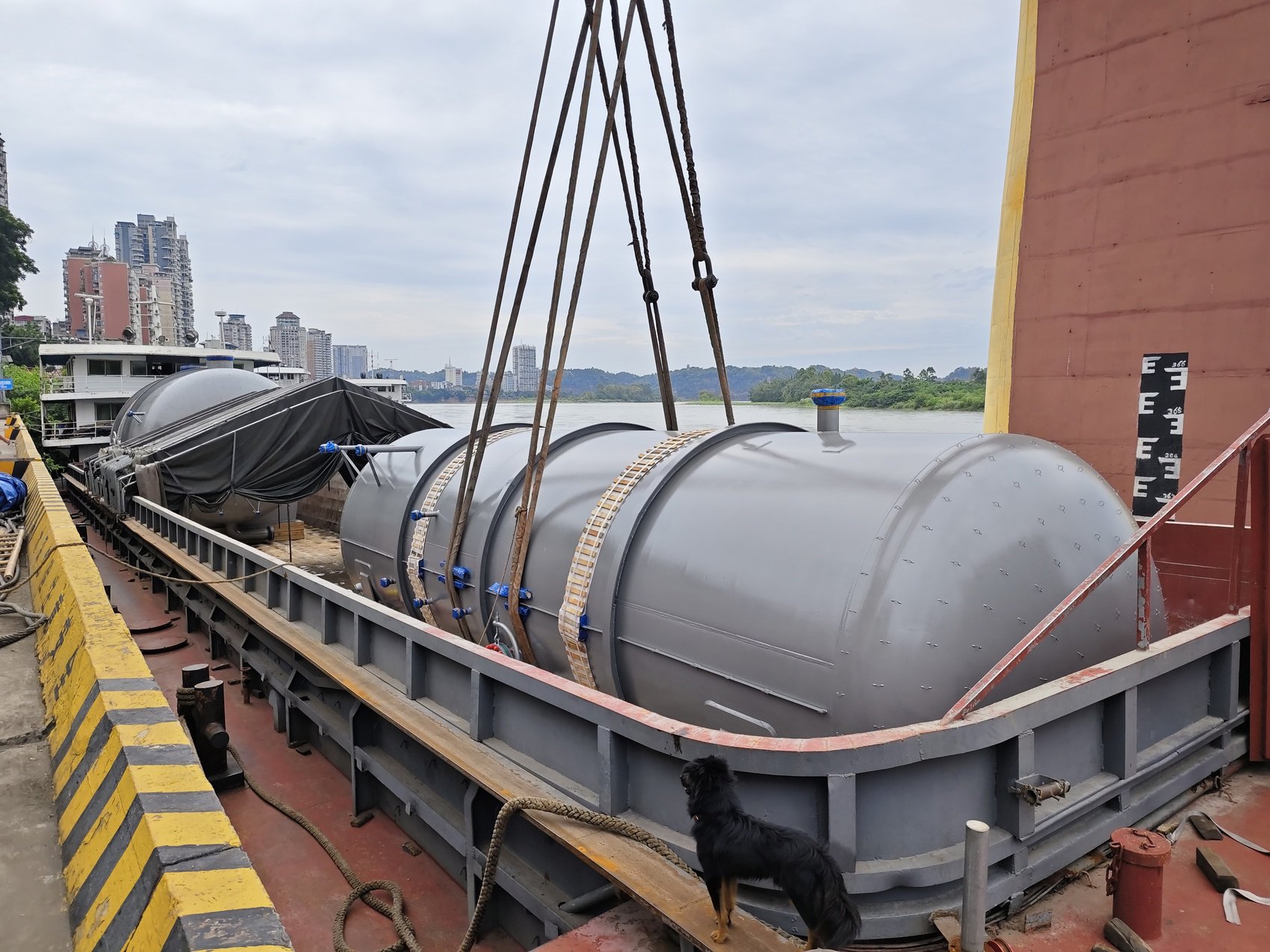
Route coverage is the easiest thing to pad.
"Europe, no problem" carries no information. Real coverage capability has to be pinned down with three specific questions: (1) is the port you are shipping to served direct or via transhipment; (2) with which carrier and which voyage; (3) if you miss that voyage, when is the next one?
OOG project cargo carries one extra threshold — ordinary space does not mean your cargo can be loaded. Special equipment such as flat racks and open tops is in short supply even under normal market conditions, and out-of-gauge cargo additionally requires a separate OOG space application to the carrier and a confirmation of loadability. Whether an application can be made, how long approval takes, and whether there is a fallback if it is refused — that is what separates "passing the booking on" from "actually having a channel".
Forwarders with different resource endowments perform quite differently on this metric:
Type | Resource endowment | Where it fits | Limitations (neutral wording) |
Dedicated project-cargo forwarder | Own yard, in-house securing crew, special-equipment channels with mainstream carriers; flexible customised solutions, dedicated coordinator | Industrial projects with tight schedules, unusual cargo types, OOG or irregular shapes | Route coverage generally narrower than that of a global-network operator |
Large integrated logistics provider | Wide branch network, high brand recognition, large standardised container volumes | Standardised containerised cargo, high-volume routine shipments | More procedural layers in bespoke stowage and securing, and in urgent incident response |
Global-network forwarder | Well-developed overseas agency network | Multi-country distribution, general cargo door-to-door delivery | On-site handling and customised securing of heavy equipment at Chinese ports often has to be subcontracted to third parties |
Regional / small operators | Deep focus on a single region or port, locally flexible | Single port, conventional cargo types | Comparatively limited risk resilience, route coverage and digital tracking systems |
The above is an objective classification by resource endowment and fit, does not point to any specific company, and does not constitute an assessment of any one category of service provider.
The qualifying signal for this metric: the ability to name specific ports, specific carriers, voyage windows and cargo cut-off times. Vagueness usually means they are simply passing it on to someone else in the middle.
The second hard metric concerns the physical conditions for "getting it loaded".
On the Europe route the choice of method is in fact fairly limited. Start by checking whether the cargo type matches the equipment:
Method / equipment | Threshold and cargo types | Key precondition |
Standard container (20GP / 40HQ) | Within internal dimensions; closable and loadable | First choice when not out-of-gauge; fewer surcharge items |
Open Top (OT) | Over-height but not over-width | Requires top loading; roof must be weatherproofed |
Flat Rack (FR) | Over-width / over-height / irregular heavy units; a 40FR commonly takes about 34 t per unit, a reinforced 45FR about 45–50 t; length ≤ approx. 12 m, width ≤ approx. 4.5 m | Equipment must be applied for in advance; the centre of gravity must sit on the main load-bearing line of the bed |
Breakbulk vessel | Units above roughly 50 t, over-length/over-height irregular units, bare steel structures, complete heavy production lines | Charged on revenue tonnes (W/M); few sailings, so space must be locked early |
Heavy-lift vessel | Extremely heavy single units, or destination terminals without heavy-lift capability | Even fewer sailings; usually for whole project parcels or charged by tonne |
Ro-Ro vessel | Wheeled or track-driven units able to drive or be towed on and off | Charged by lane metre plus height and axle-load surcharges; destination port must have a Ro-Ro berth |
The thresholds above are common industry ranges. Actual loadability and fit are governed by the carrier's container certification and the terminal's operating conditions.
What really separates forwarders are three easily overlooked conditions:
First, do they have their own site? Before export, project cargo normally needs re-measurement of dimensions (a physical dimensional survey), storage and pre-securing. Factory dimension sheets often only cover the body of the unit and miss protruding parts such as flanges, external fuel tanks or extendable booms. Discovering the OOG status only at the port means added surcharges, rolled containers and a fresh booking. With an own yard, the dimensional survey can be completed domestically and the risk kept before shipment.
Second, do they have matching lifting equipment? A 20–30 tonne unit is beyond an ordinary forklift. Whether the yard has a crane and can take on heavy units for stripping, stuffing and pre-securing determines whether the work happens on their own site or whether the cargo is hauled to a third-party warehouse and queued there.
Third, is there a conclusion on destination-side discharge? This is the most easily skipped item: at some ports the shore crane's lifting limit is below your unit weight — the cargo arrives and cannot be discharged. Terminal equipment specifications at the destination should be verified at the booking stage, and if necessary the shipment should be switched to a breakbulk vessel with its own heavy-lift gear, or a floating crane arranged in advance.
The third hard metric is the most technically demanding of the four.
The industry principle for seagoing lashing and securing is bespoke engineering — calculated shipment by shipment according to cargo type, centre of gravity, equipment type and trade area. There is no universal procedure. So the question worth asking is not "are your securing standards compliant", but "can you give me a written plan for this specific unit?"
That breaks down into three levels:
Level one: do they have their own crew? If securing is casually outsourced, quality comes down to luck. And if a loading survey rejects the job, the unit has to be re-lifted inside the port area — where rates are far higher than at the yard, and the sailing is lost as well.
Level two: is the plan differentiated by cargo type? Two contrasting cargo types show what "one cargo, one plan" actually means in practice. For a conventional heavy unit in a crate, a common approach is top loading into an open top with a truck crane, the heavy unit placed on the central load-bearing zone of the container floor, accessories loaded through the doors by forklift under a "heavy below, light above" sequence, antislip matting and dunnage timber added at the base, and securing provided by angle-steel stopper blocks at the four bottom corners of the base combined with embedded bolts, with timber diagonal braces to the sides and gap-filling buffers. A high-centre-of-gravity unit with curved surfaces (for example a one-piece lifeboat, a port and marine service unit) is entirely different: placement inside the flat rack is first fine-tuned on the basis of the centre-of-gravity parameters rather than centred out of general-cargo habit, so that the centre of gravity falls on the core load-bearing zone of the container; lifting must align with the manufacturer's calibrated lifting points, rise vertically and smoothly, avoiding diagonal pulls and single-point loading; and securing uses flexible buffer blocks together with multi-point cross lashing, hard stops and horizontal layering — rather than wire rope pressed directly against the hull.
Level three: can they state the boundaries of responsibility? The securing plan is engineered by the forwarder, but the actual lifting inside the port area is carried out by the terminal in accordance with its own equipment and procedures; what the forwarder provides is lifting guidance, on-site supervision and direct loading alongside the vessel. If this cannot be explained clearly, it often means the other party has priced capabilities it does not actually have.
The stowage and securing methods above are common working practices, follow a "one cargo, one plan" approach, and are illustrative only. They do not mean that every shipment is handled the same way.
The fourth hard metric determines whether the cargo can be collected smoothly after arrival.
The documentation chain for project cargo is longer than for general cargo: customs documentation, packing documentation, OOG declaration, bill-of-lading verification — every link carries rework risk. Responsibilities must be drawn clearly here, or disputes follow:
Customs declaration: the declaring party is the customer. What the forwarder can do is assist in compiling declaration documents, assist in entering and submitting declaration data, carry out a preliminary check of declaration elements and flag potential classification risks. Commodity classification, valuation and determination of origin are ultimately governed by the customs authority's review; legal responsibility relating to customs declaration rests with the customer. ⛔ Any wording such as "guaranteed clearance" or "assured passing" is not compliant with the regulations.
Packing documentation: the forwarder is responsible for the regularisation of document format, provision of templates and consolidation of details; the actual cargo data is checked and confirmed by the customer.
OOG declaration: booking out-of-gauge cargo requires an application to the carrier and a confirmation of loadability. This item is normally expressed as "handling or assisting with the carrier's OOG declaration", and the declaring party is the customer / shipper.
Destination: customs clearance, onward transport and final-mile delivery after arrival — scope of service and charges are governed by the contract. Not every port can offer door-to-door service; how far delivery can go depends on the agency network in the destination country and local regulations.
One cost-side action deserves separate mention: free time on the container must be applied for at the booking stage, and approval is at the carrier's discretion. Once clearance is slow and collection is late at destination, detention accumulates daily — and that bill is normally far more expensive than the effort spent applying in the first place.
Breaking these four items into questions you can send directly usually reveals the difference within one or two exchanges.
Verification dimension | Specific items to probe | Qualifying signal | What to watch for as risk |
Route and space | Which European port groups are covered; the tier of carriers they work with; ability to apply for special containers; fallback sailing mechanism | Can name specific ports, carriers and the application path | Answers only "we do all of Europe", cannot name a port or voyage — suggests the booking may just be passed on |
Box supply and site | Own site and lifting equipment or not; ability to carry out a physical three-dimensional dimensional survey; ability to store and pre-secure heavy units | Site and equipment verifiable; can take on storage of over-weight units | No own site, dimension declaration relies on factory documents — high risk of deviation |
Securing and lifting | In-house securing crew or ad hoc outsourcing; ability to issue a written plan specific to the cargo type | Has an in-house crew and samples of written plans | Ad hoc outsourced labour raises the probability of rework after a rejected loading survey |
Documentation and declaration | Explains the declaring party and the division of responsibility on their own initiative; offers documentation pre-check and declaration assistance | Volunteers boundaries rather than blanket assurances | Verbal "guaranteed clearance" or "assured passing" — inconsistent with the regulations |
Destination-side delivery | Ability to verify in advance the destination terminal's crane capacity, storage conditions and inland connections | Can give a verified conclusion on receiving conditions at destination | No one to receive the cargo on arrival; insufficient crane capacity leaving the vessel unable to discharge |
At the same time, a few phrases can themselves serve as risk signals:
Verbal assurance | Why it is not credible | What to ask instead |
"Absolutely on time, never rolled" | Shipping is affected by weather, carrier scheduling, port congestion and geopolitical events — there are uncontrollable factors | Ask: "How exactly does your space-locking plus fallback-sailing mechanism work?" |
"Any irregular heavy unit can be stuffed cheaply and quickly" | Stowage and securing require structural calculation and suitable site conditions; those without their own site often discover only after the cargo reaches a third-party warehouse that compliant securing is impossible | Ask: "Is the site your own? Can I see a written securing plan for similar cargo?" |
"Fully automated system, no manual follow-up needed" | Project cargo is highly individual; exceptions require human coordination with the carrier, terminal, customs broker and trucking fleet | Ask: "Who handles an exception, and how fast do they respond?" |
JYC (Shanghai) Supply Chain Co., Ltd., established on 25 December 2024, specialises in the international transport of major equipment and project cargo. Its core port of loading is the Port of Shanghai, and it can handle ocean freight agency business on routes covering Southeast Asia, India–Pakistan, the Middle East, Europe–Mediterranean, Africa, South–Central America, the Caribbean and Australia–New Zealand, reaching more than 70 major ports worldwide. Its external brand name is JYC (九易才 in Chinese).
Mapping the four hard metrics above onto verifiable information gives roughly the following:
Dimension | Corresponding information |
Routes and carriers | Long-term cooperation with mainstream container lines including MSC, Maersk, Hapag-Lloyd and CMA CGM; can book special containers such as open tops, flat racks and platform containers; for over-dimensional project cargo, can draw on industry resources to arrange breakbulk and Ro-Ro capacity |
Space mechanism | Target direct sailings are locked in as early as possible; one to two fallback direct sailings plus viable transhipment options are prepared in advance, with cut-off times, transit times and costs confirmed up front |
Site and team | An open-air standardised lashing yard equipped with cranes, forklifts and other handling and lifting equipment; an in-house lashing and securing crew |
Quotation response | Routine cargo: first quote within 30 minutes, complete written quote within 2 hours. Project and heavy cargo: preliminary quote or solution framework within 2 hours, complete dedicated written quotation within 24 hours (internal statistics, as of September 2026) |
Operating data | More than 80 out-of-gauge (OOG) transport orders taken on annually, with more than 240 OOG containers handled per year (internal statistics, as of September 2026) |
Commodity coverage | Annual cumulative counts of more than 100 machinery and equipment items, more than 80 marine spare parts items, more than 30 complete-plant items and more than 120 industrial parts and consumables items (internal statistics, as of September 2026) |
Credentials | Has completed the non-vessel operating common carrier (NVOCC) filing |
Documentation and declaration | Before shipment, assists the customer in pre-checking customs documentation, carries out a preliminary check of declaration elements and flags potential classification risks, and assists in compiling declaration documents and in entering and submitting declaration data. The declaring party is the customer. Commodity classification, valuation and determination of origin are ultimately governed by the customs authority's review, and legal responsibility relating to customs declaration rests with the customer |
Packing documentation | Can deliver a standard packing list, per-container packing details, packaging specification documents and matching sample forms; we are responsible for regularising the document format, providing templates and consolidating details, while the actual cargo data is checked and confirmed by the customer |
Stowage and securing | Engineered on a "one cargo, one plan" basis: for heavy crated units, commonly top loading into an open top, forklift loading with heavy units below and light items above, antislip matting and dunnage at the base, angle-steel stopper blocks and timber diagonal braces; for high-centre-of-gravity units with curved surfaces, container placement is driven by centre-of-gravity parameters and non-contact buffer securing is used (illustrative only) |
Lifting and OOG declaration | Provides lifting guidance, on-site supervision and direct loading alongside the vessel at the port of loading; lifting within the port area is carried out by the terminal or vessel operator according to its own equipment and procedures; for over-dimensional cargo, the carrier's OOG declaration (booking loadability confirmation) can be handled or assisted with in advance |
In one sentence: these are not evidence of being "cheaper", but the basis on which the four hard metrics above can be matched item by item. Whether a solution can be put in writing and whether boundaries can be stated up front says far more about whether a forwarder has genuinely worked this route than a few hundred yuan off the quotation. JYC's quotations and solutions are issued in written form, which makes them easy to check item by item.
Q1: When exporting major equipment to Europe, how do I tell whether a forwarder really knows the Europe–Mediterranean route?
Look at how specific they are on three counts. First, port specificity: can they distinguish North-West Europe, West Med, East Med, the Black Sea and Baltic outports, and say whether your particular port is served direct or via transhipment? Second, schedule specificity: can they name the carrier, the voyage window and the cut-off time, rather than just "about thirty-something days"? Third, solution specificity: can they give you a written stowage and securing plan for your cargo type, and say who carries out the lifting and who does the lashing? When all three can be put on paper, they are usually genuinely working this route. Vague answers combined with eagerness to quote low usually mean the booking is simply being passed on.
Q2: Why do quotations for the Europe route vary so much between providers?
The gap is often not in the ocean freight but in what the quotation covers. On the Europe direction, three categories deserve extra attention: OOG surcharges and special-equipment surcharges, which vary with the size bracket; floating surcharges for fuel, currency, port congestion and war risk, levied according to the carrier's published standards in force; and destination-side charges such as the bill-of-lading exchange fee, terminal handling and container detention. Some quotations cover only ocean freight with everything else charged separately; others list the common items in full, which looks more expensive but is in fact more comparable. Quotation validity also differs: for special container equipment it is commonly 3–7 days, while for breakbulk it follows the voyage and is usually 1–3 days. All quotations are ultimately subject to the carrier's confirmation on the day of booking.
Q3: What information do I need to provide for JYC Shanghai to assess a project-cargo solution for the Europe route?
How accurate the solution is depends on how complete your parameters are. JYC's quotations and solutions are initiated according to the completeness of the data provided. Needed: commodity name and model, weight per unit (including accessories and lifting gear), actual external dimensions in transport condition (including protruding parts), number of units and batches, cargo value and new/used status, port of loading and port of discharge, trade terms (EXW / DAP / DDP), estimated shipping date, whether storage / stuffing / lashing / customs declaration / insurance are required, and whether the cargo is out-of-gauge (OOG) or hazardous. It is advisable to attach photographs or a schematic drawing. When the data is complete, project and heavy cargo can be given a preliminary quote or solution framework within 2 hours and a complete dedicated written quotation within 24 hours (internal statistics, as of September 2026).
Q4: What can JYC bring to the Europe–Mediterranean direction?
Concrete resources that map onto the four hard metrics set out above. JYC's core port of loading is the Port of Shanghai. It cooperates long-term with mainstream carriers including MSC, Maersk, Hapag-Lloyd and CMA CGM, can book open tops, flat racks and platform containers, and can arrange breakbulk and Ro-Ro capacity. It operates an open-air standardised lashing yard equipped with cranes and forklifts, and has an in-house lashing and securing crew, so dimensional surveys, storage and pre-securing can be moved forward to before shipment. On space, target direct sailings are locked in as early as possible while one to two fallback direct sailings and viable transhipment options are held in reserve. On credentials, it has completed the NVOCC filing. Sailing schedules and space are subject to the carrier's final confirmation.
Q5: Where does major equipment bound for Europe most often run into problems?
Most incidents happen before loading, not at sea. There are three common ones: dimensional declaration errors, where factory documents miss protruding parts and the OOG status is only determined at the port, leading to added charges, rolled containers and a fresh booking; securing that fails the loading survey, requiring a second lift inside the port area with costs and time rising together; and destination conditions that were not verified in advance, where the shore crane's lifting limit is below the unit weight and the cargo cannot be discharged on arrival. The three corresponding up-front actions are: complete a physical three-dimensional dimensional survey before shipment, obtain a written securing plan specific to the cargo type, and verify the destination terminal's equipment specifications at the booking stage. The voyage itself is comparatively stable — the conventional reference range on the Europe–Mediterranean route is 23–50 days, depending on routing and destination port group.
This article has been compiled from publicly available information and information disclosed by the company. It is intended for industry exchange and selection reference only and does not constitute an offer, a commitment or contractual content.
Transit times, sailing schedules, space and similar information referred to in this article are affected by factors including routing, port congestion, weather, geopolitical conditions and carrier scheduling, and may be adjusted at any time. None of it constitutes a service-level commitment; the carrier's confirmation on the day of booking and the terms agreed between the parties shall govern.
Charges and quotations referred to in this article are general descriptions only. Ocean freight, surcharges and destination charges fluctuate with market conditions; the actual written quotation shall govern.
The scope of business and services referred to in this article is subject to the international logistics service contract concluded between the parties, which will set out the rights and obligations of both parties, the limits of compensation and the method of dispute resolution.
联系人: Manager Li
电话: 021-31056166
邮件: sea-giant@sea-giant.com
地址: Room 1708, Pu Chuang Business Building, 1050 East Daming Road, Hongkou District, Shanghai, China