
July marks a watershed moment for the shipping industry. Peak season cargo volumes begin to climb, and carriers make intensive rate adjustments. But this year, several things in the market are not unfolding the way most people expected.
1. Freight rates are not collapsing—they are holding firm at high levels
Many shippers assumed that once the Houthi attacks subsided, freight rates would fall. The reality is: from April to June this year, spot rates on major trade lanes did drop by 30%–40% from the January peak. However, starting in July, rates on the Asia–Europe and Asia–U.S. West Coast lanes have stabilized and even rebounded.
The core reason is not the war—it is capacity.
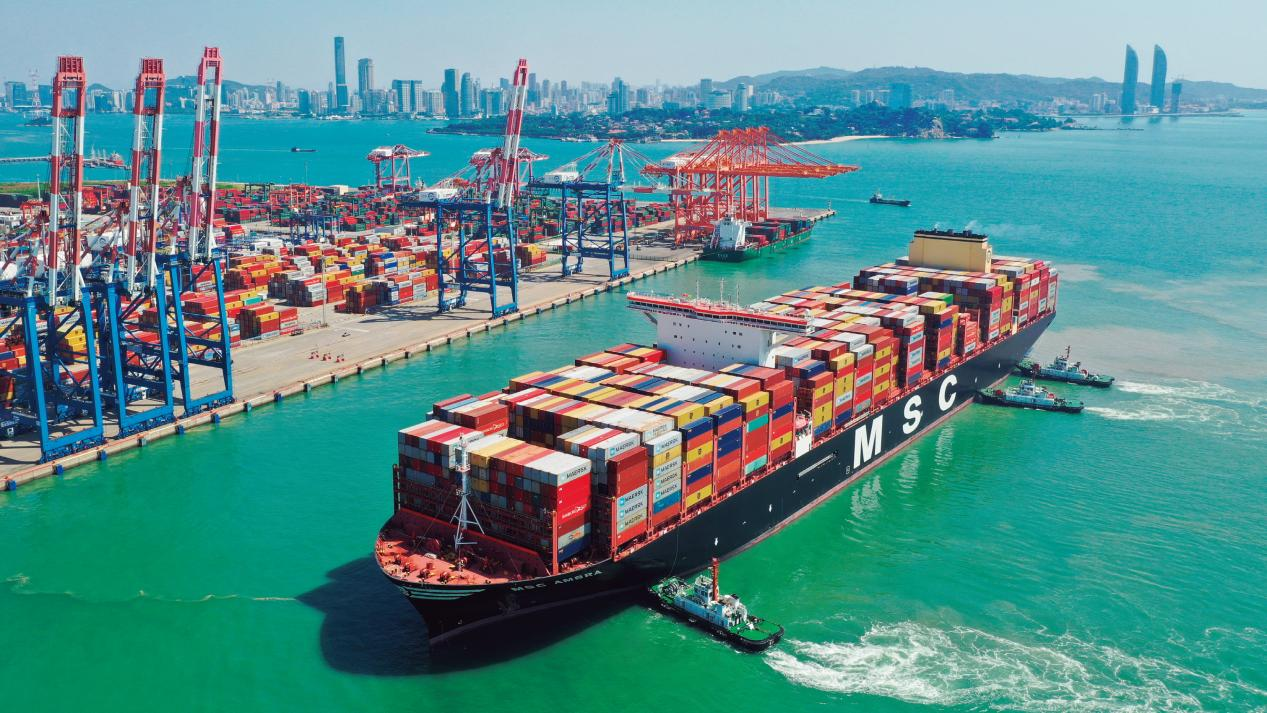
According to Alphaliner data, as of July 2026, global container shipping capacity stands at 34.428 million TEU, a year-on-year increase of approximately 10%. That sounds like a lot, but nearly 2 million TEU of that capacity is being absorbed by the detour around the Cape of Good Hope. Combined with port congestion eroding turnaround efficiency, the actual growth in effective available capacity is far smaller than the headline number suggests.
What this means for shippers: Do not expect freight rates to return to pre-2023 levels. A reasonable expectation is that the Shanghai Containerized Freight Index (SCFI) composite index will fluctuate between 2,500 and 3,500 points. The per-box ocean freight cost will be lower than in 2024 but will not collapse. When preparing your annual budget, allow for headroom within this range—do not use 2023's low rates as your baseline.
2. Carriers are actively managing down capacity supply
Since June, the actual capacity deployed on several major trade lanes has shown a pattern of "more planned, less executed." It is not that carriers lack ships—they are deliberately controlling capacity to support rates.
What you saw: Maersk announced the suspension of some Middle East/Red Sea services, CMA CGM adjusted Black Sea services, and MSC cancelled select sailings—all of which likely flooded your social media feeds.
What you did not see: Behind these "service suspensions," carriers are proactively creating an expectation of "capacity tightness" ahead of the peak season, setting the stage to smoothly push through General Rate Increases (GRIs).
What this means for shippers: In the coming six months, you need to book space earlier than before. Where you used to book one week in advance, it is now advisable to book 10–14 days ahead. If a carrier notifies you that a certain sailing is cancelled, do not wait—switch to an alternative routing immediately. The cost of having cargo stranded on the dock waiting for the next sailing far outweighs any price difference from changing ships.
3. The Red Sea situation is not the endgame—geopolitical risk is shifting
In the first half of the year, everyone's attention was fixed on the Houthis and the Red Sea. But for the second half, there are several severely underestimated risk hotspots:
The Turkish Straits (Bosphorus/Dardanelles) — the export channel for Black Sea grain. Any escalation in the Russia-Ukraine situation will push up Black Sea–Mediterranean freight costs through higher insurance premiums and detour expenses.
The Strait of Malacca — there has been an increase in reported attacks on vessels in Southeast Asian waters recently. While not yet severe enough to halt traffic, insurance rates are already rising.
The Panama Canal — although water level conditions have improved compared to last year, no one can be certain about the extent of the transit capacity recovery or whether it will affect the passage of ultra-large vessels until the Q3 data is released.
What this means for shippers: The risk of a strategy that relies on a single route or a single transshipment hub is growing. This is especially true for project and breakbulk cargo (your line of business), where shipping windows are narrow and alternative options are limited. It is even more critical to have two to three backup routing plans prepared at the booking stage.
4. A fact that many people have overlooked
In the first half of 2026, five European carriers controlled 55.3% of the total capacity among the world's top 10 shipping lines. At the same time, the single largest market—Asian export cargo volume—represents a vote on the profits of these five European headquarters.
What does this mean? Carriers' pricing power is increasingly concentrated. The bargaining space for freight forwarders and shippers is not determined by market conditions, but by "how many low-priced slots the carrier wants to release this week."
This is a structural issue that will not change in the short term. What shippers can do is not fantasize about freight rates halving, but:
Five Recommendations for Shippers in the Second Half of the Year
Sign annual contracts (Contract Rates). Do not leave yourself fully exposed to the spot market. When rates spike during peak season, a contract rate is your insurance. Even if the contract rate is only 5%–10% lower than the spot rate, that translates into real savings over six months.
Diversify route risk. The "triple-whammy" combination of the same vessel, the same carrier, and the same transshipment hub is the most dangerous scenario. In the event of a blank sailing or a port strike, your cargo will be stuck at an intermediate port, unable to move with no clarity on when it will be released.
Plan project and breakbulk shipments well ahead of the peak season. Project, breakbulk, and out-of-gauge (OOG) cargo is the lowest priority for carriers to guarantee space. During the slack season, they will accept it anytime; during peak season, they may refuse it because it is less profitable than standard containers. If you plan to ship project cargo in Q4, your planning should be finalized by Q3.
Pay attention to destination port landing capability, not just origin port pricing. Low freight rates mean nothing if there is no receiving capacity at the destination, customs clearance is slow, and trucking cannot be arranged. Every day of delay there costs more than what you could negotiate through several rounds of freight discounts.
Maintain close communication with your freight forwarder—don't just listen to price quotes. Have your forwarder provide a weekly update on route developments and congestion at major ports. Be in a position to know your options and have a plan of action before your vessel even arrives.
联系人: Manager Li
电话: 021-31056166
邮件: sea-giant@sea-giant.com
地址: Room 1708, Pu Chuang Business Building, 1050 East Daming Road, Hongkou District, Shanghai, China