
In the current era where global engineering equipment, energy infrastructure and complete industrial production lines are being shipped overseas at an accelerated pace, heavy lift marine shipping is far more than simply "loading goods onto vessels for transit". It is a precision engineering project covering all transport links. From dozens-of-tons construction machinery and hundred-meter wind turbine blades to complete production lines and large pressure vessels, every heavy lift cargo’s ocean voyage leaves zero room for the fluke mindset of "close enough". A one-centimeter dimensional error may prevent cargo loading; a ten-centimeter gravity center offset can compromise vessel stability; a loosely fastened lashing strap may trigger accidents amid rough seas. Professional heavy lift marine shipping always takes absolute precision as the core standard to establish dual safeguards for safety and efficiency across every procedure.
Many people assume the greatest challenges of heavy lift transport emerge at sea, yet the success of the entire operation hinges on pre-shipment assessment. General cargo transport can rely on empirical estimation, while heavy lift shipping must be built on accurate data — any deviation in parameters may invalidate the entire subsequent transport plan.
For professional heavy lift logistics providers, the first step is always on-site survey and data cross-verification. They must confirm basic cargo specifications including length, width, height and net weight, as well as precisely calculate gravity center positions, lifting point layouts, base support dimensions, and mark protruding components, fragile areas and force-prohibited zones. For irregularly shaped cargo, 3D modeling is adopted to restore the actual form and avoid visual misjudgments caused by 2D drawings alone. These data serve as the sole foundation for booking, stowage, lifting and lashing operations, rather than mere reference values.
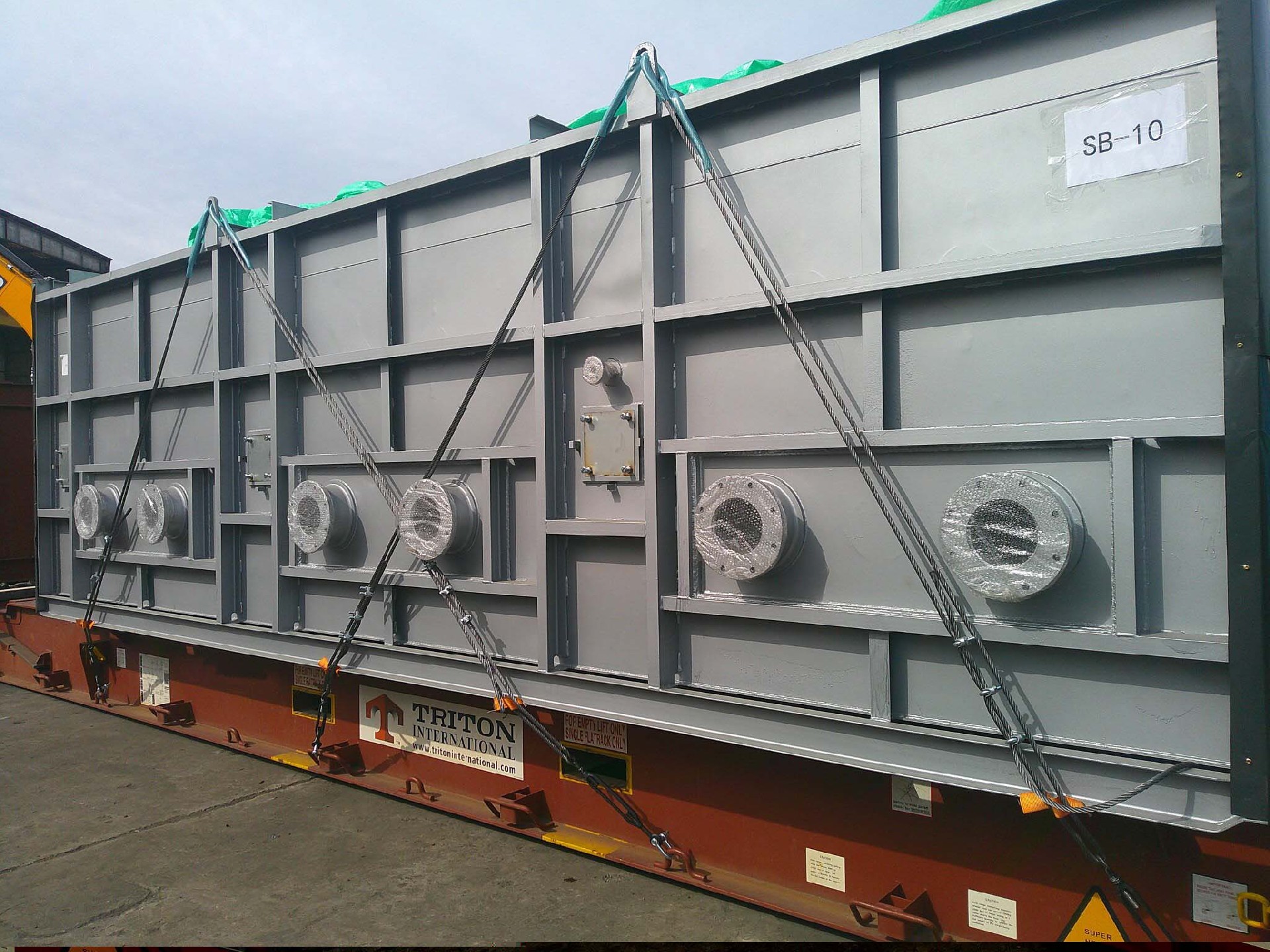
After acquiring accurate data, customized transport plans are developed. No two heavy lift shipments share identical solutions: overwidth and overheight cargoes fit flat rack containers; overheight cargoes with moderate width use open-top containers; single units weighing over 100 tons or exceeding standard container dimensions require breakbulk carriers or heavy-lift vessels. Route planning also demands granular breakdown for each segment: overland transit requires calculation of bridge weight limits, tunnel height restrictions and road turning radii, while ocean segments are evaluated based on route sea conditions, port handling capacity and berth conditions. Reliable logistics providers always deliver complete technical plans before quoting prices, instead of accepting orders with vague verbal promises like "it will probably fit".
Booking approval allows no ambiguity either. Shipping lines enforce strict engineering technical review procedures for heavy lift cargo; cargo parameters, reinforcement schemes and lifting methods must be submitted for verification before space can be secured. Inaccurate data reporting or rough plans may lead to cargo rejection by carriers, resulting in costly demurrage charges. Worse still, forced loading with flawed plans creates hidden navigation safety hazards. Submitting complete documents 7 to 15 days in advance and cooperating with terminals and maritime authorities to complete over-limit cargo reporting are prerequisites for smooth cargo delivery to port storage yards.
If plan design is the blueprint, port loading and lashing reinforcement are core procedures to turn blueprints into reality. Over 90% of heavy lift marine shipping accidents occur during loading and securing, mostly stemming from the careless attitude of "it looks tight enough".
Lifting operations form the first critical checkpoint. Heavy cargo units ranging from dozens to over a hundred tons require matching heavy-duty cranes. The specifications, quantity and hook angles of slings are calculated strictly. Vessels must maintain an even floating state before lifting; the vessel’s list angle is controlled within a safe range throughout lifting, with licensed signalmen coordinating all operations to ensure smooth cargo positioning. Professional teams routinely deploy laser positioning equipment to align cargo with designated stowage positions with millimeter-level accuracy.
Stowage location directly impacts navigation safety. In compliance with the Cargo Securing Manual and deck load distribution diagrams, cargo is placed directly above reinforced hull structures to evenly disperse weight and avoid local deck overload. The core principle of "lower placement for heavy cargo, upper placement for light cargo with centered gravity" is followed to align the cargo gravity center with the vessel’s central line, minimizing lateral torque during vessel rolling. Matching wooden dunnage or steel beams are laid underneath cargo to boost friction against sliding and distribute pressure to protect both decks and cargo bases.
Lashing reinforcement acts as the lifeline of heavy lift marine shipping, and it is where the spirit of absolute precision is best reflected. The widely adopted industry standard of six-direction restraint mandates effective fixation for cargo in forward, backward, left, right, upward and downward directions to eliminate any possible shifting space. The specifications and quantity of steel wires, chains and lashing belts are precisely calculated based on cargo weight, predicted acceleration and a safety factor of 2 to 3, rather than random fastening based on experience.
Clear execution standards govern the spacing of each fixing point, tension of every lashing belt and buffer protection at all sharp edges. Long strip cargo is secured with one fixing point every 1.5 to 2 meters; heavy equipment adopts multi-layer protection including bottom chain locks, side steel wire tensioning and cross top lashing. After reinforcement, all fasteners are inspected one by one, with photos and video records archived. Vessel officers must sign off after verification before the vessel departs. These seemingly tedious procedures drastically reduce the risk of cargo shifting in rough seas.
Heavy lift marine shipping is not a one-off service that ends once cargo is loaded. Precise coordination of every link is required from factory gates to destination discharge yards; disconnection at any node can render all prior precise preparations futile.
For overland delivery to ports, specialized vehicles such as low-bed trailers and hydraulic modular trailers are deployed. Optimal routes are mapped in advance, oversize transport permits processed, and road escort coordinated when necessary. Strict standards govern driving speed, turning radii and overnight cargo protection to guarantee intact cargo arrival at ports. For complex road conditions, pre-routing surveys are conducted to eliminate hidden risks including insufficient height clearance, width limits and road bearing capacity.
During ocean transit, vessel crews dynamically adjust sailing speed and course based on real-time meteorological data to avoid severe sea conditions. Crews conduct regular inspections of lashing conditions and retighten loose fasteners after heavy swells. Professional heavy-lift vessels equipped with anti-heel systems and dynamic ballast devices limit vessel tilt angles to a minimum, cutting dynamic impact force exerted on cargo. Routes with direct port calls and dedicated heavy lift berths are prioritized to eliminate secondary loading/unloading risks brought by transshipment, boosting transport safety and timeliness.
Strict protocols remain in place at destination ports. Terminals are notified in advance to reserve berths and heavy lifting equipment, enabling seamless discharge upon vessel arrival. Customs documents are pre-reviewed to ensure consistent information between documents and physical cargo, avoiding customs detention and inspection caused by declaration discrepancies. After discharge, seamless overland transit links complete door-to-door delivery. For high-value precision equipment, full cargo insurance and third-party loading/discharging supervision can be arranged as dual safety guarantees for the entire transport cycle.
Heavy lift marine shipping transports core industrial equipment and bears the timeline and corporate trust of overseas engineering projects. Delays for a single piece of equipment can stall an entire overseas project; a cargo damage accident may trigger economic losses worth millions. Within this industry, vague phrases such as "it will probably work", "it should be fine" and "close enough" signal dangerous hidden risks. Only embedding absolute precision into every operational detail can ensure stable and secure transit across thousands of nautical miles.
As China’s high-end manufacturing industry continues expanding globally, demand for heavy lift marine shipping will keep rising. The market abounds with logistics providers willing to accept orders, yet professional partners with solid technical capabilities, rich on-site operational experience and full-cycle control systems that deliver absolute precision for every shipment remain scarce. Selecting such a qualified logistics partner stands as the optimal solution for safe overseas shipment of heavy lift cargo.
联系人: Manager Li
电话: 021-31056166
邮件: sea-giant@sea-giant.com
地址: Room 1708, Pu Chuang Business Building, 1050 East Daming Road, Hongkou District, Shanghai, China