
As the Belt and Road Initiative continues to deepen and the global manufacturing landscape undergoes accelerated restructuring, heavy-lift international logistics is rapidly evolving from a "niche track" within the international freight forwarding industry into a highly valued, high-value market segment. The cross-border transportation of over-dimensional cargo—such as large-scale industrial equipment, complete plant units, and construction machinery—demands technical expertise, complex operations, and high risk profiles that far exceed the requirements of standard container shipping. This article provides a comprehensive analysis of the heavy-lift international logistics sector from multiple dimensions, including industry definition, market size, key challenges, operational processes, and future trends.
I. What Is Heavy-Lift Transport? Industry Boundaries and Market Potential
In the international logistics context, "heavy-lift cargo" generally refers to goods whose individual piece weight, length, width, or height exceeds the limits of standard containers or highway load regulations. Specifically, in maritime shipping, heavy-lift cargo typically refers to items weighing over 30 tons, exceeding 12 meters in length, 3 meters in width, or 3 meters in height. For road transport, standards are based on provincial traffic and road administration regulations; generally, cargo exceeding 40 tons in weight or dimensional limits requiring special permits is classified as heavy-lift transport.
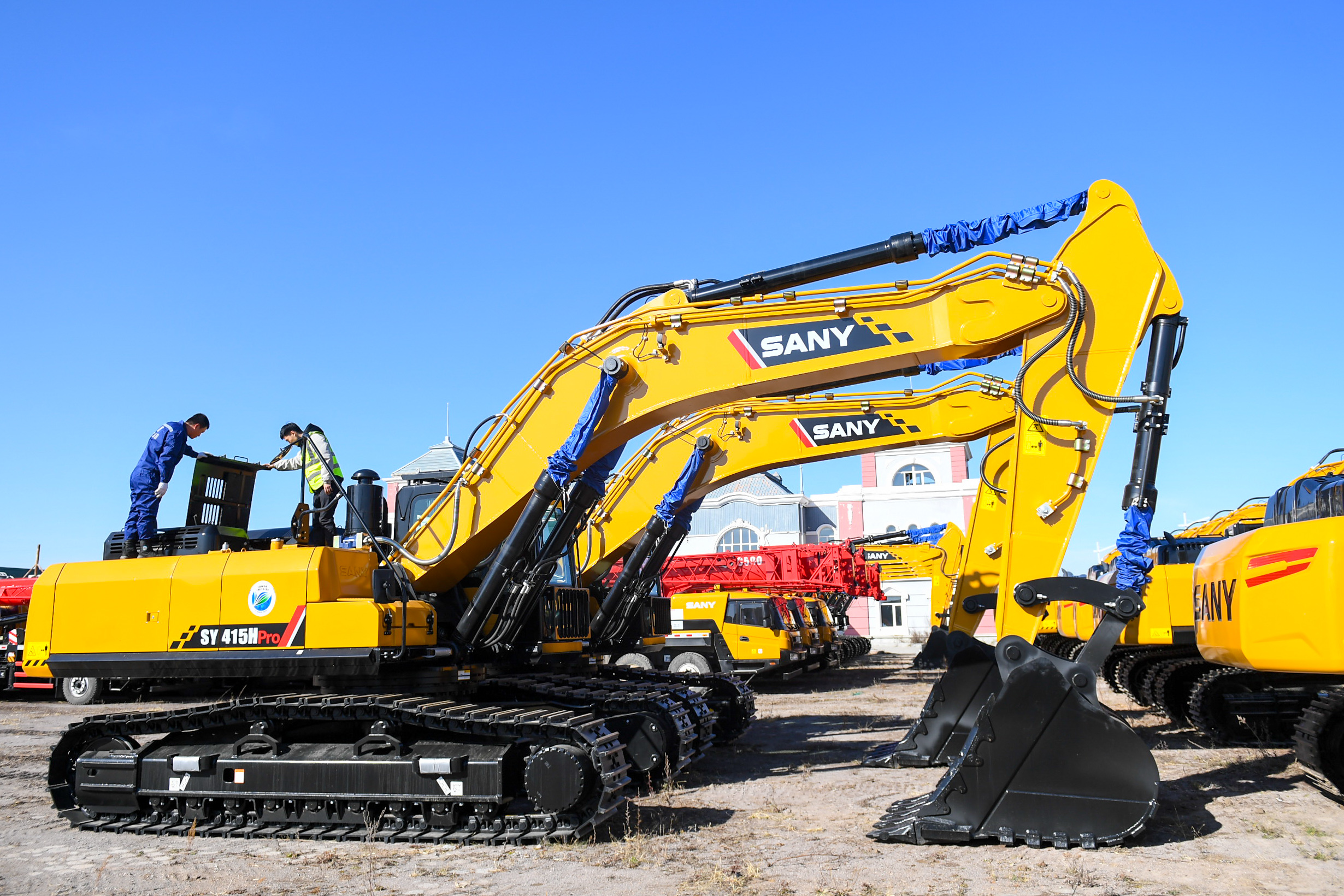
In terms of cargo categories, heavy-lift shipments primarily include: large construction machinery (excavators, bulldozers, complete cranes), energy equipment (wind turbine blades and towers, gas turbines, transformers), petrochemical equipment (reactors, columns, storage tanks), ship sections and port machinery (ship-to-shore cranes, gantry cranes, ship loaders), tunnel boring machines and excavation equipment, and large steel structural components. These goods typically exhibit at least one of the "three excesses" (excess length, excess width, excess height, or excess weight), and many high-end equipment types also possess the dual characteristics of "high value" and "high precision," imposing extremely stringent safety requirements on transport operations.
From a market demand perspective, the underlying drivers fueling growth in the heavy-lift international logistics market include: the global energy transition driving exports of wind power, photovoltaic, and energy storage equipment; infrastructure development demand in Belt and Road Initiative partner countries; logistics requirements for production line relocation and capacity transfer by multinational manufacturers; and the cross-border transport of ship sections and accessories driven by the deepening division of labor in the global shipbuilding industry. The convergence of demand across multiple segments makes heavy-lift international logistics a blue-ocean market with considerable growth potential and high entry barriers.
II. Five Core Challenges of Heavy-Lift Transport
Unlike the "standardized, assembly-line" operating model of container shipping, heavy-lift transport is a highly customized, non-standardized systems engineering project. Its core challenges are concentrated in the following five dimensions.
First, route constraints imposed by physical dimensions. Excessively long, wide, or tall cargo faces numerous physical obstacles during transit, including road width restrictions, turning radius limitations, bridge clearance heights, overhead cables, and tunnel cross-sections. During road transport, this often necessitates traffic control, temporary removal of roadside facilities, and even temporary reinforcement of certain road sections. Route selection largely determines project feasibility and transport costs.
Second, the technical difficulty of lifting and loading/unloading. Moving multi-hundred-ton equipment from the factory floor to transport vehicles, lifting it from vehicles onto vessels, and then discharging and positioning it at destination—each lifting node constitutes a high-risk engineering operation. Lifting point selection, rigging configuration, center-of-gravity calculations, and wind speed limitations all require precise solution design and on-site control by professional engineering teams.
Third, coordination challenges in multimodal transport. A complete heavy-lift international shipment typically involves multiple stages: factory pickup → road transport → port storage → ocean shipping → destination port discharge → road/rail/barge transport → final delivery. This encompasses various transport modes including road, sea, inland barge, and rail. Any oversight in coordination and scheduling between stages can result in project delays, cargo damage, or safety incidents.
Fourth, lashing, securing, and maritime safety. During ocean transit, heavy-lift cargo is subjected to wind and wave turbulence, vessel rolling, and heaving forces far greater than those encountered in land transport. The reliability of lashing and securing solutions directly determines the safety margin during the sea voyage. Professional heavy-lift securing plans must comprehensively consider route sea conditions, vessel motion characteristics, cargo windage area, and center-of-gravity position, followed by force calculations to determine lashing points, materials, and pre-tension forces.
Fifth, international compliance and documentation complexity. Heavy-lift exports involve various compliance requirements, including customs classification, export licensing (for sensitive equipment), and import certification in destination countries. The accuracy and completeness of documentation directly impact customs clearance efficiency. Moreover, permitting processes for road heavy-lift transport vary significantly across countries and regions, and obtaining transit permits for overseas road sections is often one of the most unpredictable aspects of the entire operation.
III. Complete Operational Workflow of Heavy-Lift Transport
A mature heavy-lift international logistics project typically follows this standardized operational process:
Phase 1 – Project Assessment and Technical Solution Design. Upon receiving a customer inquiry, the technical team conducts a comprehensive analysis of cargo parameters (dimensions, weight, center of gravity, lifting point distribution). Combined with the geographic locations of origin and destination, they carry out preliminary route surveys and assess the technical conditions of roads, bridges, and port facilities. This results in a comprehensive technical proposal covering transport routes, multimodal transport plans, key node operational protocols, risk assessments, and cost estimates.
Phase 2 – Permit Application and Resource Lock-in. After plan approval, simultaneous efforts are made to apply for road heavy-lift transport permits and over-dimensional vehicle通行 permits, secure suitable heavy-lift vessel space (heavy-lift ships, semi-submersible vessels, or multipurpose vessels), and schedule specialized transport vehicles (self-propelled modular transporters, low-bed trailers) and lifting equipment (floating cranes, truck cranes, crawler cranes).
Phase 3 – Packaging, Securing, and Factory Loading. Based on cargo characteristics and route conditions, a customized packaging plan is developed and securing is executed. For precision equipment, additional vibration-damping, moisture-proofing, and dust-proofing protective measures are added. After loading and preliminary securing at the factory, vehicle stability tests are conducted.
Phase 4 – Road Transport and Port Operations. Road transport is executed according to the pre-planned route and time windows, with escort vehicles and engineering technicians accompanying the entire journey. Upon arrival at the port, storage space at the quayside is coordinated, customs declarations, inspection and quarantine procedures, and port safety reviews are completed, and lifting onto the vessel or ro-ro operations are arranged.
Phase 5 – Maritime Monitoring and Destination Port Operations. Throughout the sea voyage, cargo status is tracked in real-time via GPS positioning and onboard monitoring systems. Prior to vessel arrival, destination port customs clearance preparations and discharge plan confirmation are completed in advance, ensuring rapid discharge, customs clearance, loading onto vehicles, and final delivery upon cargo arrival.
IV. Outlook on Industry Development Trends
Looking ahead, the heavy-lift international logistics industry will exhibit several notable trends.
Deepening professional specialization. As cargo types and equipment parameters become increasingly complex, the industry will further segment into more specialized vertical tracks, including wind power equipment logistics, petrochemical equipment logistics, ship parts logistics, and construction machinery logistics. Service providers with deep experience in specific segments will gain stronger bargaining power.
Digital empowerment of end-to-end management. Digital technologies will accelerate penetration across route simulation and modeling, real-time cargo status monitoring, intelligent multimodal scheduling, and electronic document flows, driving the industry's transition from "experience-driven" to "data-driven" operations.
Enhanced end-to-end visibility and risk management. Customer demand for full-transparency logistics continues to grow, making the deployment of IoT devices (temperature/humidity sensors, shock recorders, GPS trackers) increasingly common. AI-powered and big-data-based risk early-warning systems will become standard capabilities for heavy-lift logistics service providers.
Green logistics as a new benchmark. Driven by global carbon neutrality targets, the heavy-lift logistics sector will also incorporate carbon emission accounting, low-carbon transport mode optimization, and new-energy transport equipment applications as part of green logistics practices. ESG performance will become an important consideration for cargo owners when selecting logistics partners.
Heavy-lift international logistics is a "slow business"—building experience takes time, building trust takes time, and building networks takes even more time. Yet it is precisely this time-built barrier that enables truly established heavy-lift logistics specialists to secure long-term, stable value returns amidst the grand narrative of global supply chain system upgrading.
Contact: Manager Li
Phone: 021-31056166
Email: sea-giant@sea-giant.com
Add: Room 1708, Pu Chuang Business Building, 1050 East Daming Road, Hongkou District, Shanghai, China
We chat