
Nearly three years into the Red Sea crisis, the global container shipping market is seeing a significant shift. On July 6 local time, Maersk announced that it would, together with its partner Hapag-Lloyd, resume routing certain services under their Gemini Cooperation network through the Red Sea and the Suez Canal. This marks the formal launch of the two companies' plan to return to the Red Sea, and is seen by industry observers as an important signal that global container shipping is gradually returning to normal operations. However, a number of industry analysts believe that as the diversions gradually come to an end, the global container shipping market may face new challenges ahead, including a rapid release of capacity and downward pressure on freight rates.
On July 6, Maersk issued a statement saying that after a comprehensive assessment of the current regional security situation, it had decided together with Hapag-Lloyd to adjust the AE15 service under the Gemini Cooperation network and resume transits via the Red Sea and the Suez Canal. Under the new arrangement, the AE15 service will adopt the following port rotation: Qingdao – Kwangyang – Ningbo – Tanjung Pelepas – Port Said – Damietta – Colombo – Singapore, reconnecting Asia, the Mediterranean and European markets through the Suez Canal, instead of routing via the Cape of Good Hope. Maersk stated that this adjustment is only the first step in a phased return to Red Sea operations. The company will continue to closely monitor the security situation in the Middle East, and any further resumption of Red Sea transits within the Gemini Cooperation network will depend on whether local conditions remain stable and whether there is any new escalation of regional conflict. This is the second time since the outbreak of the Red Sea crisis that Maersk and Hapag-Lloyd have attempted to resume Red Sea services. Since 2023, due to regional security concerns, most container shipping lines have long avoided the Red Sea and the Suez Canal, instead diverting via the Cape of Good Hope, which has tied up a significant amount of global shipping capacity and significantly increased transit times and costs. Industry consensus holds that as some routes resume transits through the Red Sea, the global container shipping market will enter a new phase of adjustment.
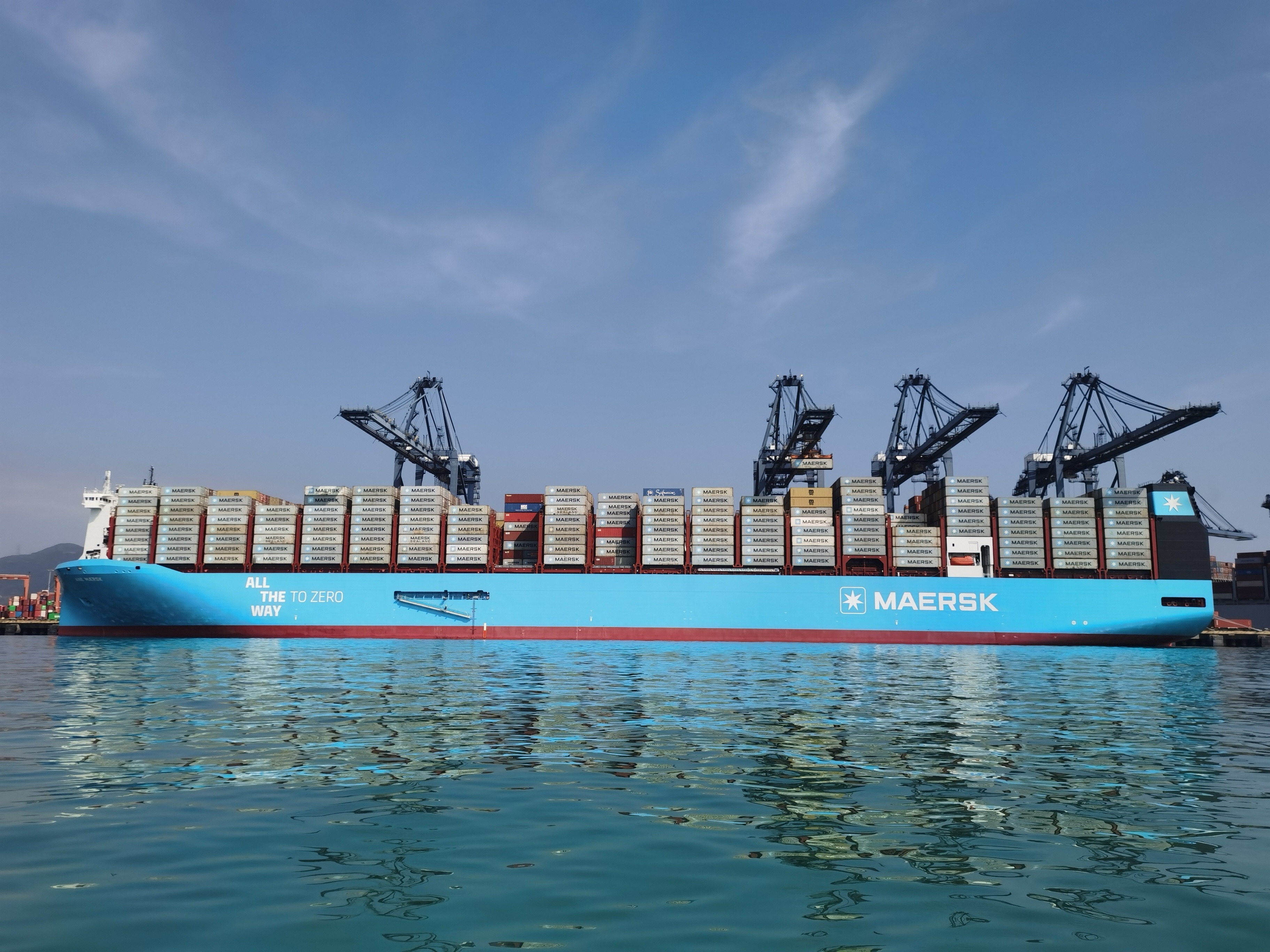
Haider Anjum, a senior analyst at Jyske Bank, said that according to Maersk's internal estimates, if Red Sea shipping were to fully return to normal, the effective capacity of the global container fleet would increase by about 7% to 9%. However, since this resumption is being carried out gradually, the additional capacity will also be released in stages, which helps avoid a concentrated return of capacity in a short period and reduces the risk of a sharp decline in freight rates. He also noted that the timing of this resumption is relatively favourable. In line with market patterns, after the summer peak shipping season ends, global freight demand typically enters a seasonal downturn, and gradually restoring Suez routes at that point could also help ease congestion pressures that may arise at European ports. However, the capital markets reacted cautiously to the news.
Following the announcement, Maersk's B-shares closed down 5.4% on the day at DKK 15,800 per share. Analysts believe that investor concerns centre on the prospect that as more vessels return to Suez Canal transits, the effective capacity of the global fleet will increase, putting downward pressure on future container freight rates and the profitability of shipping companies. At the same time, industry attention is turning to the longer‑term market impact. Mikkel Emil Jensen, a senior analyst at Sydbank, believes that if major liner companies were to fully resume Red Sea transits in the future, the global container shipping market could face a severe test in 2027. He noted that the global container market already has a large number of newbuild orders on hand. Once all major carriers completely abandon the Cape of Good Hope diversion, an estimated additional effective capacity of about 2.5 million TEU would be released, equivalent to a substantial number of vessels re‑entering operational service. This would further exacerbate the supply‑demand imbalance in the market and place considerable pressure on freight rates and shipping company earnings. He also expressed caution about the timing of the resumption. In his view, until the United States and Iran reach a more stable regional security arrangement, the risks in the Middle East remain uncertain. Therefore, he had originally expected that shipping companies would resume Red Sea transits later in the year.
However, Lars Jensen, chief analyst at Vespucci Maritime, a shipping consultancy, took a different view. He believes that since the two companies have decided to restore certain routes, they must have concluded on the basis of their own risk assessments that current security conditions are acceptable. He expects the resumption of Red Sea services to occur mainly in late summer to early autumn, after the global peak shipping season has ended, so as to minimise disruption to existing shipping networks. Nevertheless, he also cautioned that if major global liner companies concentrate their return to Suez routes within a short period, port operations could be affected and new port congestion might emerge. Lars Jensen further pointed out that even if Red Sea services return to normal in the future, not all voyages will necessarily go through the Suez Canal. Some shipping lines may still choose to route their Europe‑to‑Asia return legs via the Cape of Good Hope, because return legs typically have lower load factors; diverting that way can help absorb some of the additional capacity while also avoiding Suez Canal transit fees. In some cases, compared with paying higher transit tolls, the additional fuel cost of routing via Africa may not be greater, so it still retains a certain economic rationale.
Contact: Manager Li
Phone: 021-31056166
Email: sea-giant@sea-giant.com
Add: Room 1708, Pu Chuang Business Building, 1050 East Daming Road, Hongkou District, Shanghai, China
We chat