
On July 13, Maersk announced that the WAF6 route, exclusively operated by the company, has officially resumed transits via the Suez Canal and the Red Sea. This marks the third Maersk service to restore Suez passage within the past week, following the AE15 and MECL routes, signaling a further acceleration in the company's Red Sea network restoration. After nearly two years of routing via the Cape of Good Hope, global liner operators are now showing a new shift in their strategies regarding Red Sea navigation. As some major trunk routes progressively resume Suez transits, the global shipping network, transit times, and competitive dynamics are entering a new phase of adjustment.
According to an announcement on Maersk's official website (July 13, 2026), the WAF6 route—operated exclusively by Maersk—connects the Middle East, the Mediterranean, and West Africa. Following the adjustment, the route will resume passage via the Red Sea and the Suez Canal between Salalah and the Western Mediterranean. Maersk stated that this adjustment is another step in the company's gradual strategy to restore the Trans-Suez Corridor, while emphasizing that it will continue to monitor security conditions in the Middle East and retain contingency plans to reroute via the Cape of Good Hope should risk levels change. The safety of crew, vessels, and customer cargo remains the highest priority. Previously: on July 6, the AE15 route under the Gemini cooperation framework resumed Suez Canal operations; on July 9, Maersk announced the restoration of Suez passage for the MECL (Middle East–U.S. East Coast) route; and on July 13, WAF6 officially joined the restoration list. With three route restorations in just one week, this represents Maersk's densest round of network adjustments since the Red Sea crisis began.
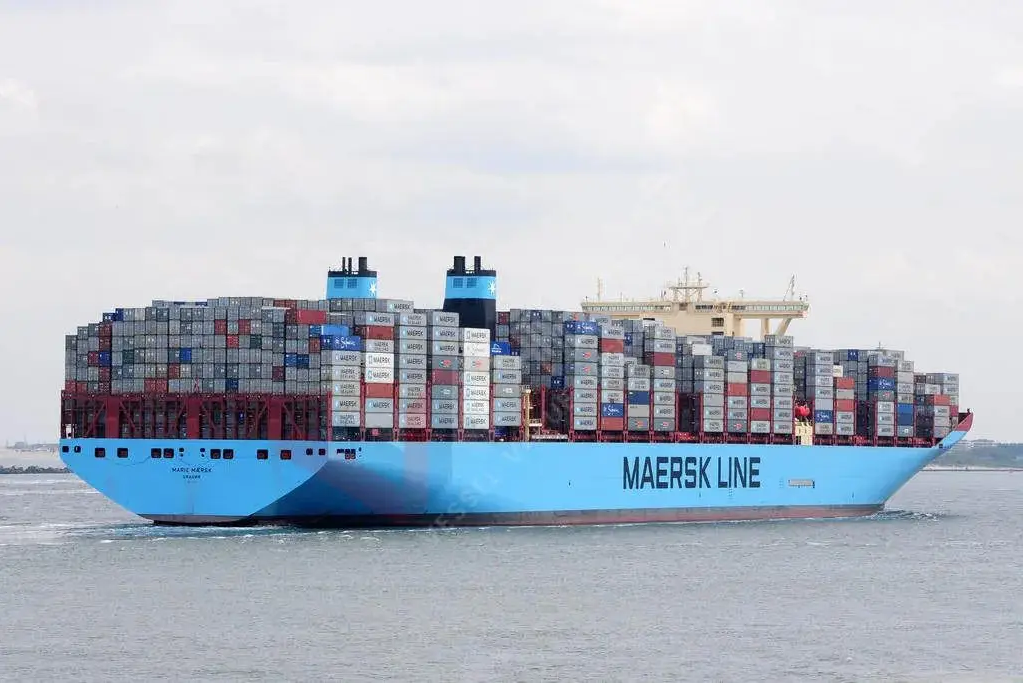
Although Maersk did not separately disclose voyage time reduction data for the WAF6 route after restoration, its previously released data for the MECL route showed: westbound voyages shortened by an average of approximately 7 days; eastbound voyages shortened by an average of approximately 14 days. As the WAF6 route likewise resumes passage via the Suez Canal and the Red Sea, industry expectations broadly anticipate significant improvements in transit efficiency. Maersk noted that the Suez Canal remains the fastest, most efficient, and more sustainable maritime route connecting Asia–Europe, the Middle East, and the U.S. East Coast, and that restoring this route will further enhance customer transport efficiency. Regarding Maersk's recent consecutive Suez route restorations, market analysts believe that beyond changes in security assessments, market competition is also a significant factor. According to a Reuters report on July 13, Haider Anjum, Senior Analyst at Jyske Bank, stated that Maersk's pace of restoring Red Sea operations has been "faster than market expectations." He believes that liner companies are reassessing Red Sea risks and consider that the current Red Sea situation is not entirely synchronized with risks in the Strait of Hormuz, prompting companies to restart certain routes. On the other hand, industry observers widely acknowledge that CMA CGM, which resumed certain Red Sea routes relatively early, has already gained a competitive advantage in terms of transit times. As customer focus on shipment lead times continues to intensify, Maersk also needs to progressively restore Suez passage to maintain service competitiveness and market share.
It is worth noting that despite the noticeably faster pace of restoration, Maersk has not announced a full return of all routes. The company has repeatedly emphasized that it is adopting a gradual return strategy, restoring Suez passage only for routes that have completed risk assessments, while continuing to evaluate other routes based on regional security conditions. At the same time, the company has made it clear that should the security environment in the Red Sea change again, it can immediately revert to Cape of Good Hope routing. This stance also indicates that the current recovery strategy among global liner operators remains centered on dynamic risk management, rather than a full-scale return to pre-pandemic or pre-crisis operational models.
From AE15 to MECL and then to WAF6, Maersk's consecutive restoration of three routes suggests that the Red Sea operational strategy of leading global liner companies is gradually shifting from "full diversion" to "selective restoration." However, this does not mean that Red Sea shipping risks have been eliminated. In the period ahead, the security situation in the Red Sea, insurance costs, war risk surcharges, and each shipping line's risk assessment mechanisms will continue to collectively influence the pace of Suez Canal restoration. For freight forwarders, the future competitive focus may gradually shift from "whether there is space available" to "who can provide more stable, faster, and more predictable transport services." As route restorations continue to progress, staying abreast of the latest network adjustments and market changes among shipping lines will become a key factor in enhancing customer service capabilities.
Contact: Manager Li
Phone: 021-31056166
Email: sea-giant@sea-giant.com
Add: Room 1708, Pu Chuang Business Building, 1050 East Daming Road, Hongkou District, Shanghai, China
We chat