
The global container shipping market's "capacity race" has entered the second half of 2026, and the landscape is quietly shifting.
According to the latest data released by shipping analytics firm Alphaliner on 9 July 2026, the global fleet of operational container vessels has reached 7,592 ships, with a total capacity of 34.428 million TEU. The top ten liner companies account for a combined capacity of 29.124 million TEU, representing 84.6% of the world's total — market concentration at the top remains high, but internal rankings and growth engines are undergoing new changes.
This Top 10 roundup gives you a one-stop overview of the 2026 global container shipping capacity map.
1. 2026 Global Top 10 Container Lines by Capacity at a Glance
1 | MSC | 734.3 | Independent | Geneva, Switzerland |
2 | Maersk | 472.8 | Gemini Cooperation | Copenhagen, Denmark |
3 | CMA CGM | 437.7 | Ocean Alliance | Marseille, France |
4 | COSCO Shipping | 364.4 | Ocean Alliance | Shanghai, China |
5 | Hapag-Lloyd | 238.7 | Gemini Cooperation | Hamburg, Germany |
6 | ONE (Ocean Network Express) | 216.8 | Premier Alliance | Singapore |
7 | Evergreen | 200.6 | Ocean Alliance | Taiwan, China |
8 | HMM | 103.4 | Premier Alliance | Seoul, South Korea |
9 | Yang Ming | 75.7 | Premier Alliance | Taiwan, China |
10 | ZIM | 69.4 | Independent | Haifa, Israel |
Source: Alphaliner, as of 9 July 2026. Alliance structures reflect the new landscape following the February 2025 reshuffle.
2. Spotlight on the Leaders: A Three-Way Divergence, MSC in a League of Its Own
MSC: A Commanding Lead, the First "Thousand-Ship" Fleet
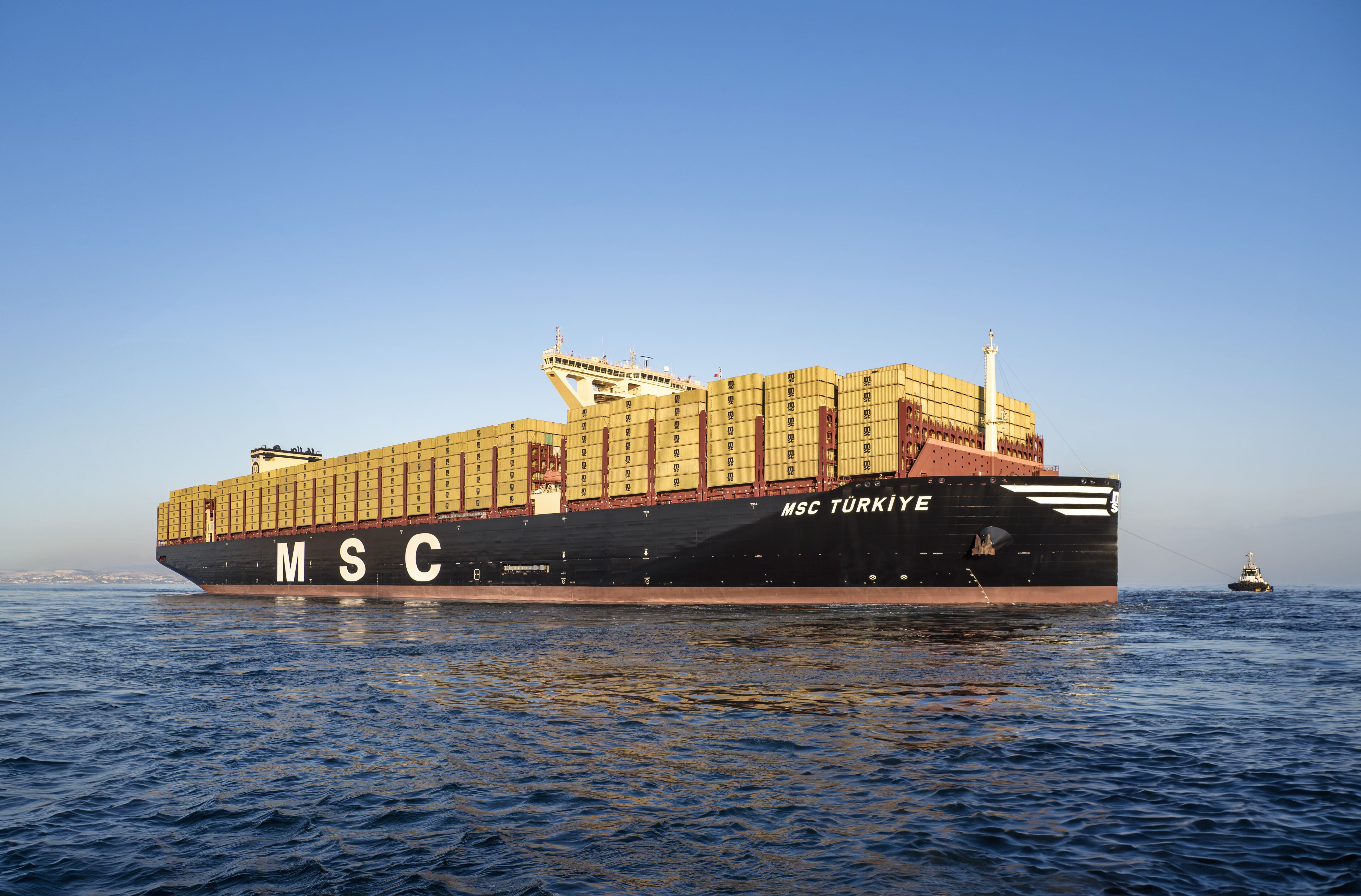
Mediterranean Shipping Company firmly holds the global No. 1 spot with 7.343 million TEU. Its capacity gap over second-placed Maersk has widened to 2.615 million TEU — a difference almost equivalent to the entire fleet of COSCO Shipping. As early as May 2026, MSC's operated vessel count surpassed 1,000, making it the first liner company in global container shipping history to reach "thousand-ship" status, with an owned-fleet proportion approaching 75%. After its 2M alliance with Maersk expired in January 2025, MSC chose to go independent, yet its expansion shows no sign of slowing down.
Maersk: Steady but Feeling the Heat from Behind
Maersk ranks second with 4.728 million TEU, but its hold on the runner-up spot is becoming less secure. The company's long-term strategy aims to keep capacity within the 4.1–4.3 million TEU range, pursuing a "logistics integrator" path rather than simply competing on fleet size. This restraint has allowed trailing rival CMA CGM to close the gap.
CMA CGM: The Fastest-Growing "New Engine"
This year's biggest story is that the title of "fastest-growing" has changed hands for the first time. According to Alphaliner, in the first half of 2026, CMA CGM added 237,000 TEU to its fleet, a growth rate of 5.7%, surpassing MSC's 207,000 TEU and Maersk's 115,000 TEU. CMA CGM CEO Rodolphe Saadé has publicly stated that the group's shipping division will overtake Maersk to become the world's second-largest liner company by the end of 2027 — the carrier already has over 200 newbuilds on order, with deliveries stretching into 2030.
3. Mid-Tier Landscape: Evergreen Breaks the 2-Million Mark, Expanding the "Two-Million TEU Club"
Competition is equally fierce among ranks four to seven.
COSCO Shipping holds on to fourth place globally with 3.644 million TEU, making it the highest-ranked Chinese carrier; its orderbook represents about 38% of its existing fleet, indicating strong momentum for future growth. Hapag-Lloyd stands firm in fifth place with 2.387 million TEU. Its Gemini Cooperation with Maersk emphasizes a hub-and-spoke network focused on schedule reliability. ONE (Ocean Network Express), born from the integration of Japan's three major shipping groups, ranks sixth with 2.168 million TEU and maintains a balanced presence on transpacific and Asia-Europe routes.
A notable milestone was achieved by Evergreen — with capacity increasing by 49,000 TEU in the first half, its total fleet surpassed 2 million TEU for the first time, making it the seventh liner to join the "Two-Million TEU Club." This means all of the top seven have now crossed the 2-million-TEU threshold, further raising the barriers to entry at the very top.
4. The Lower Tier Shuffle: HMM Holds Firm, ZIM Under Pressure
The race for the eighth to tenth spots is even more delicate. HMM holds eighth place with 1.034 million TEU, serving as the flagship of Korean shipping. Yang Ming ranks ninth with 757,000 TEU, with capacity largely unchanged. ZIM, in tenth place with 694,000 TEU, continues to see its capacity decline year-on-year due to geopolitical tensions and security concerns in the Middle East, its market share sliding from about 2.5% to around 2.1%. The battle between ZIM and Yang Ming for position is tightening.
It is also worth noting that Singapore's SeaLead, which briefly surged to 13th place globally in 2025, has since terminated 16 charters and withdrawn multiple services following sanctions. Its capacity has plummeted by 95.2% from its peak, and it has now fallen to 79th place — a stark counterexample that underscores the deep moats protecting the top-tier carriers.
5. The Future Embedded in Orderbooks: The Expansion Wave and Cyclical Concerns
The "second half" of the capacity rankings story lies in the orderbooks.
In 2025, global new container ship orders hit a record high of 645 vessels totaling over 5.1 million TEU. The global orderbook now stands at around 1,165 ships / 11.3 million TEU, equivalent to 33.5% of the existing fleet. Among the leaders, MSC's orderbook of about 2.05 million TEU continues to lead; CMA CGM's orders represent 45.5% of its current fleet, COSCO's 38.1%, and Evergreen's 43.8% — virtually all major players are "betting real money on the future."
But concerns are also mounting. Delivery slots at some yards are already pushed to 2030, compounded by full shipyard capacity, soaring construction costs, and fears of structural overcapacity. The pace of new orders is expected to slow in 2026. On one side, the push for decarbonization and post-alliance reshuffle fleet renewal; on the other, a cyclical downturn looming on the horizon — this may be the most central tension facing the container shipping industry over the next two to three years.
6. Final Thoughts
Looking at the 2026 capacity Top 10, three trends emerge:
First, MSC's lead has shifted from quantitative accumulation to a qualitative transformation, and operating independently has only made its expansion more agile. Second, CMA CGM is proving to be the most aggressive pursuer, and a change of the "second-place" title may only be a matter of time. Third, the alliance reshuffle has not weakened market concentration at the top; the new landscape — with Gemini, Ocean Alliance, and Premier Alliance forming a three-pillar structure alongside independent MSC and ZIM — has shifted competition from "battles between alliances" to "battles over network quality and contract performance."
For shippers and freight forwarders, choosing a carrier is no longer just about looking at capacity rankings. Route fit, schedule reliability, and the proportion of green vessels matter just as much. After all, bigger capacity doesn't necessarily mean a better fit for you — but without a clear picture of this landscape, nobody can truly claim to "understand shipping."
Contact: Manager Li
Phone: 021-31056166
Email: sea-giant@sea-giant.com
Add: Room 1708, Pu Chuang Business Building, 1050 East Daming Road, Hongkou District, Shanghai, China
We chat