
Lead: With feeder services to the port of Aden still suspended due to the ongoing regional situation, Hapag-Lloyd has officially announced a stop on new bookings for cargo destined for Aden. Behind the announcement lies a stark reality: security conditions in the Gulf of Aden have deteriorated sharply over the past month, as Somali piracy resurges — six vessels are now held by armed groups and more than 90 crew members are in captivity.
In late August, Hapag-Lloyd issued a service update confirming that, due to the continuing situation in and around Yemen, feeder services to Aden remain suspended. Unable to provide a reliable onward connection for cargo destined for Aden, the carrier has decided to stop accepting new bookings for the port until further notice.
One point deserves emphasis: this adjustment targets Hapag-Lloyd's booking and feeder-connection services, and does not mean the port of Aden is fully closed. The port itself remains operational, but as a carrier, Hapag-Lloyd cannot commit to delivering cargo to Aden safely and on time. Caught between risk and reliability, the shipping line has chosen to press pause.
Hapag-Lloyd said it will continue to assess the local situation and will issue further updates once feeder operations can resume. For shipments already booked or currently in transit, the company has offered three alternative routes.
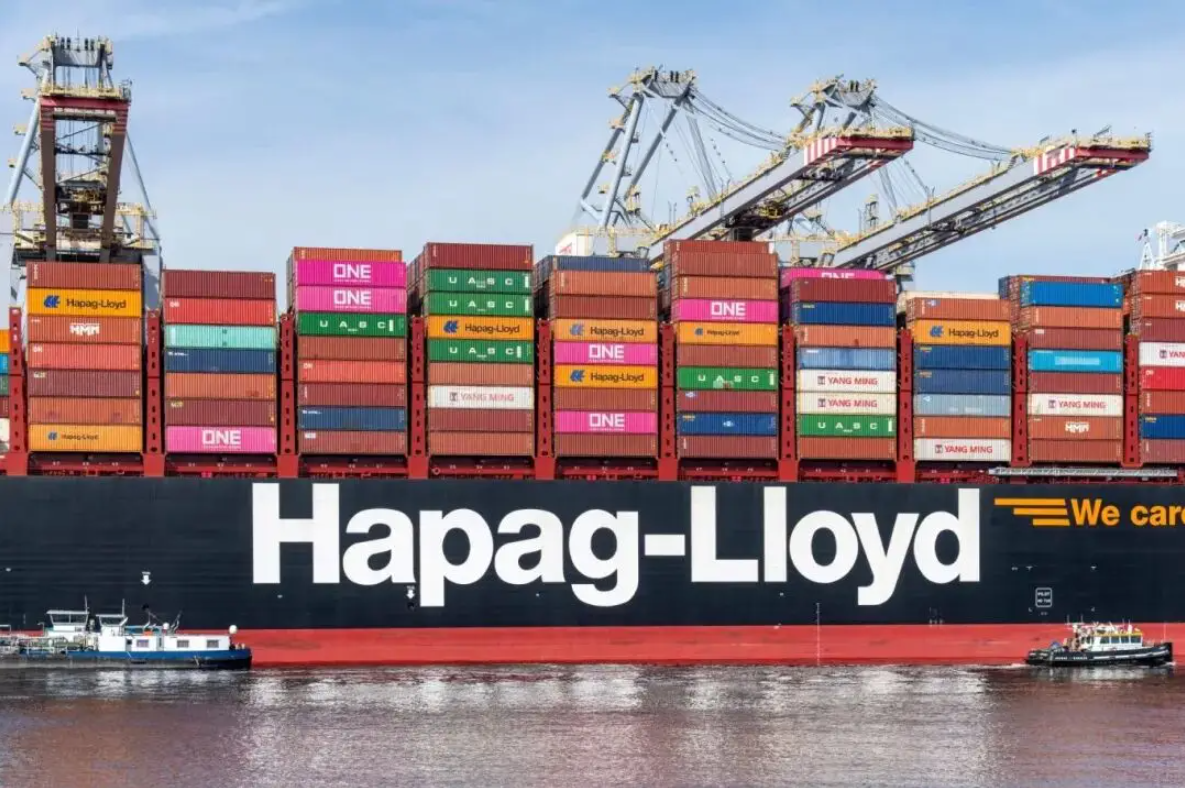
According to the Hapag-Lloyd notice, cargo involving Aden can be handled as follows, subject to operational feasibility and applicable charges:
Option 1: Change of Destination (COD) to the Upper Gulf. Shippers may request a change of destination to other ports or locations in the Upper Gulf region. However, any change must be confirmed on a case-by-case basis depending on routing, space availability and local operational conditions, and may incur change-of-destination fees, additional freight and other charges. Not all cargo can be adjusted directly.
Option 2: Terminate shipment at Jeddah. For cargo already discharged at Jeddah, Saudi Arabia, customers may apply to terminate the shipment and clear the cargo locally. This option must comply with Saudi customs and regulatory requirements; shippers should also confirm import qualifications, documentation, duties and any onward transshipment arrangements before deciding.
Option 3: Return to origin. Customers may also apply to have cargo returned to its original port of loading, subject to schedule, space availability and operational conditions. Return freight and other additional costs need to be confirmed separately.
Hapag-Lloyd advises customers with cargo involving Aden to contact their local customer service team as soon as possible to coordinate solutions based on the current location of each shipment.
Hapag-Lloyd did not specify the security incidents behind the feeder suspension in its notice, but shipping risks in and around the Gulf of Aden have been rising at an alarming pace.
The International Maritime Organization (IMO) said on August 24 that, following recent ship-hijacking incidents, six vessels in the waters around the Gulf of Aden are now under the control of pirates or armed groups, with more than 90 crew members held captive. Somali piracy, dormant for more than a decade, has made a comeback in 2026 — maritime intelligence firm Windward has counted at least five commercial hijackings since April.
Two hijackings in August stand out. On August 17, the cargo vessel Lutuf was boarded and seized by eight armed men approximately four nautical miles off the Somali coast. On August 20, the Eritrea-flagged tanker SIBU 1 was taken over by six armed persons in the Gulf of Aden and forced to redirect toward Somalia. Earlier, in July, a Tanzanian-flagged tanker was hijacked in the Gulf of Aden and taken toward Somalia's Puntland region.
Analysts largely attribute the pirate resurgence to the U.S.-Israel-Iran conflict, which has drawn naval resources away from the Middle East and left a security vacuum in the Gulf of Aden and off Somalia. At the same time, ties between the Houthis and Somali armed groups are deepening. Maritime security firm Dryad Global has even warned that if the Houthis and Somalia's Al-Shabaab were to formally ally and bring Somali pirates into the equation, maritime risk in the Red Sea, the Bab el-Mandeb Strait and the Gulf of Aden would climb to unprecedented levels.
The direct consequence of elevated risk in the Gulf of Aden is that more vessels are shunning Red Sea routes. Data shows that virtually all major carriers continue large-scale diversions around the Cape of Good Hope — adding roughly 6,000 nautical miles per voyage and extending transit times by 7 to 15 days, while passively cutting effective global capacity by 15% to 20%. War-risk premiums have climbed accordingly: Reuters reports that war-risk insurance costs in the Red Sea region have jumped from about 0.3% of a vessel's value to roughly 0.75%.
These risk premiums eventually flow into freight rates. The Shanghai Containerized Freight Index (SCFI), after bottoming out in late July, rose for three consecutive weeks, reaching 3,355.24 points on August 14. Maersk also sharply raised its Peak Season Surcharge (PSS) for shipments from Asia to Saudi Arabia effective August 10, with 40-foot containers jumping from USD 1,100 to USD 2,000 — nearly doubling. Drewry's World Container Index stood at USD 4,255/FEU, keeping overall rates at historically elevated levels.
For forwarders and shippers planning to ship to Aden, the most practical approach right now is: for cargo already en route, confirm the current location, demurrage and detention costs, and the cost of diversion or return as soon as possible; for cargo not yet shipped, reassess the destination port and routing plan early — whether to switch cargo to nearby hubs such as Jeddah or choose an alternative destination — to avoid cascading charges while cargo sits at sea.
Hapag-Lloyd has not announced when new bookings or feeder services to Aden will resume. Until security conditions in the Gulf of Aden stabilize, that door will likely remain closed.
Disclaimer: Data in this article is from public sources and is for industry analysis only. It does not constitute any decision-making advice; actual freight rates are subject to carriers' official quotations.
联系人: Manager Li
电话: 021-31056166
邮件: sea-giant@sea-giant.com
地址: Room 1708, Pu Chuang Business Building, 1050 East Daming Road, Hongkou District, Shanghai, China