
With more than a month to go before China's National Day Golden Week, the top carriers have moved in force. Maersk cut three voyages on its Asia-Europe trunk routes on August 20; Hapag-Lloyd followed the same day with three blanked sailings on the Europe trades and adjusted another three on the North America trades on August 28; MSC issued two customer advisories on August 24 and 26, cancelling six voyages in one stroke. Add the 90 blank sailings that Drewry counts for weeks 40-44, and a Golden Week capacity realignment spanning the two main arterial trades - Asia-Europe and trans-Pacific - is now fully underway. What makes this year different: with the Mid-Autumn Festival (September 25-27) and National Day Golden Week (October 1-7) separated by only three working days, the pre-holiday shipping window is tighter than ever, and the impact of any cancelled sailing is magnified several times over.
In a customer advisory issued on August 20, Maersk said it would make structural adjustments to its Far East-Europe network, citing expected demand softness and reduced port manpower during the holiday. Three voyages were cancelled: the AE15 sailing from Qingdao (scheduled September 28), the AE12 sailing from Ningbo (scheduled October 8), and the AE1 sailing from Shanghai (scheduled October 10).
Maersk said the overall objective of the adjustment is to minimise the impact on customers around Golden Week and to improve supply-chain predictability through structural changes and alternative routes. Customers can continue to book through regular channels, and the company will arrange alternative coverage. Looked at chronologically, the adjustments hit precisely the last week before the holiday and the first week after it - with the late-September Qingdao departure gone and Shanghai and Ningbo going dark in early October, shippers on the Europe trades face a hard 10-to-15-day gap between their final pre-holiday cargo and the first post-holiday sailings.
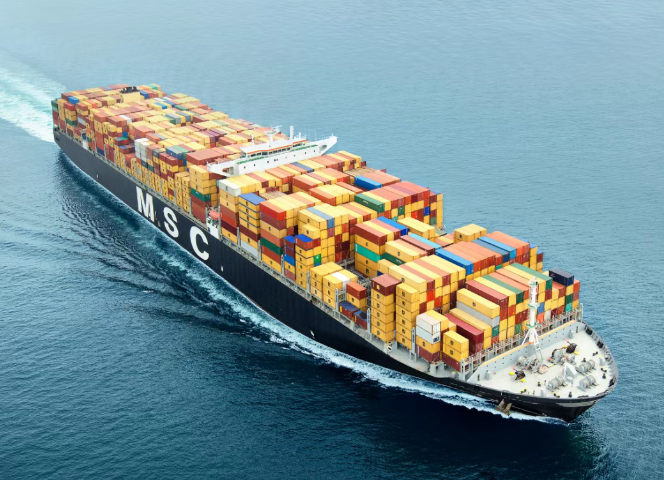
MSC's adjustment is the most sweeping among the top carriers. On August 24, MSC published its Golden Week sailing programme covering the Asia-Europe network; on August 26, it issued a second advisory, "2026 Golden Week Sailing Programme - Trade Asia to USA," covering Asia-US West Coast services. Together, the two advisories cancel six voyages:
Four on Asia-Europe: JADE voyage GJ639W in week 39, SWAN voyage FW640W in week 40, BRITANNIA voyage QB640W in week 40, and LION voyage GL641W in week 41, spanning both the North Europe and Mediterranean markets;
Two on Asia-US West Coast: ORIENT voyage GO640N in week 40 (rotation Qingdao-Ningbo-Shanghai-Busan to Long Beach) and PEARL voyage GO641N in week 41 (rotation Yantian-Xiamen to Long Beach).
All of the affected loops are core freight corridors serving China-Europe and the US West Coast. MSC's rationale echoes Maersk's: demand is expected to soften during and around Golden Week, customers can still book normally, and cargo will be carried by alternative services. But Freightos analyst Judah Levine cautions that tariff-window front-loading has already pushed some importers to build inventory ahead of schedule, flattening the traditional pre-holiday rush. Carriers are matching capacity to actual volumes rather than running half-empty vessels - which means the expected "last big wave" of pre-holiday bookings may not materialise, and tightness will be driven more by capacity withdrawal than by demand.
Hapag-Lloyd issued two advisories, on August 20 and August 28, following Maersk on the Europe trades the same day and separately adjusting its North America network.
On Europe, three voyages were cancelled: the Asia-North Europe NE2 sailing from Shanghai (October 10), the Asia-Mediterranean SE3 sailing from Qingdao (September 28), and the Asia-Mediterranean SE1 sailing from Ningbo (October 8). The advisory lists four alternative departures: NE3's Maersk Cambridge from Shanghai on October 6, NE1's Al Nefud from Shanghai on October 10, SE4's Berlin Maersk from Qingdao on October 1, and SE3's Mayview Maersk from Ningbo on October 12. It is worth reading carefully: the alternatives are not paired one-to-one with the withdrawn voyages, no space is confirmed for affected cargo, and the time gaps are typically three to four days - Qingdao cargo slips from September 28 to October 1 (the first day of the holiday), while Ningbo cargo moves from week 41 into week 42.
On North America, three sailings were cancelled: WC2's Guthorm Maersk voyage 640E from Shanghai (October 10, with the Xingang-Qingdao-Busan rotation retained), US2's Navios Unison voyage 641E from Ningbo (October 7), and AA7's Wan Hai A13 from Ningbo (October 1). To fill the US2 gap, Hapag-Lloyd will run the US1 service with Maersk Shams departing Haiphong on October 2 and making an additional call at Norfolk.
Placed in the industry context, the scale of this adjustment becomes clearer. Drewry data shows carriers sharply stepped up blank sailings for October, driven by capacity oversupply, weak demand and worsening port congestion: 90 sailings have been cancelled across weeks 40-44, equal to 13% of the 716 originally scheduled, with half concentrated on the eastbound trans-Pacific. Within a single week, the number of blanked sailings for weeks 40-41 jumped from 55 to 67, an increase of 22%.
The economic logic of blanking is straightforward: carriers cut effective supply to offset post-holiday demand softness and support rates. But the futures market tells a different story - October European contracts are trading at a steep discount to spot, showing the market has already priced in post-holiday weakness. The real price pressure will most likely arrive in early October, not September.
Equally important, this Golden Week blanking programme is unfolding against multiple headwinds: global port congestion still stands at 4.3 million TEU of capacity waiting, above the pandemic-era peak; Typhoon Shadel just swept through East China in late August, with Shanghai port only resuming gate-in/gate-out operations in phases on August 28; and Panama Canal transit restrictions continue to squeeze US East Coast capacity. Peak-season congestion plus blanked sailings could push total delays past 20 days.
Four things need to be done immediately. First, check whether booked voyages are on the cancellation list and confirm the actual schedules and connections of any alternative sailings - never assume "alternative booking available" means the same vessel on the same day. Second, recalculate cut-off and departure dates: alternatives are typically three to four days later, so delivery commitments, inland haulage and downstream windows must be replanned, with at least a week of buffer built into transit-time promises. Third, treat September 28-30 - the only three working days between the two holidays - as the critical window: space, trucking and customs resources will be extremely tight, so deliver cargo to the terminal three to four days early rather than gambling on the final cut-off. Fourth, prepare fallback plans for time-sensitive orders: if sea freight cannot be secured in time, move early to air freight, express services or overseas-warehouse replenishment.
Equally important is booking strategy: do not rely on a single carrier. Spread bookings across multiple carriers and ports so that one cancelled sailing does not leave cargo stranded, and proactively inform overseas customers of the dual impact of Golden Week blanking and port congestion to set expectations and avoid disputes. The sooner cargo ships, the better; the sooner space is locked, the more cost-effective. With capacity withdrawal now a done deal, securing space before the holiday beats paying premium rates after it.
Disclaimer: Data in this article is from public sources and is for industry analysis only. It does not constitute any decision-making advice. Actual freight rates are subject to carriers' official quotations.
Contact: Manager Li
Phone: 021-31056166
Email: sea-giant@sea-giant.com
Add: Room 1708, Pu Chuang Business Building, 1050 East Daming Road, Hongkou District, Shanghai, China
We chat