
The moment a piece of equipment cannot fit into a standard container, ocean freight becomes an entirely different game. By the industry's common yardstick, cargo exceeding 12.2 metres in length, 2.44 metres in width, or 24 tonnes per unit falls outside the limits of standard containers and is classified as out-of-gauge (OOG) cargo - booking methods, packing requirements, cost structures and risk profiles all follow a separate logic from ordinary freight. This guide breaks down the six most common pitfalls in equipment exports, for factories and trading companies to check before signing contracts and finalising plans.
Not all heavy cargo moves the same way. For mildly out-of-gauge cargo, flat racks and open-top containers are the first options: flat racks have no side walls or roof, making them suitable for over-wide and over-high cargo requiring lifting; open-top containers suit over-high cargo and offer relatively stable schedules and mature handling. If the cargo is extremely heavy or large - a whole construction machine or a complete production line beyond the capacity of special containers - it needs a breakbulk vessel or a Ro-Ro ship (suitable for self-propelled equipment). Breakbulk vessels can carry pieces weighing tens or even hundreds of tonnes, but schedules are not fixed, typically requiring an extra 7 to 15 days of buffer.
The basis for the decision is one thing only: precise cargo parameters. Before booking, measure the actual length, width, height and net weight, and check them against container limits - a standard 20GP is rated for roughly 28 tonnes and a 40GP/40HQ for about 26 tonnes; anything beyond that is over-weight. Inaccurate parameters can mean a rejected booking at best, or cargo arriving at the port only to find it cannot be loaded, at worst. Make confirmed measurement the first step of the enquiry, not an afterthought.
Heavy cargo cannot be booked on short notice like ordinary freight. Carriers need to review cargo dimensions, weight, centre of gravity, lifting points and handling requirements in advance, and verify the vessel structure and terminal lifting capacity before confirming acceptance; many trade lanes have explicit limits on OOG length, width and weight. The industry norm is to plan bookings at least 15 to 30 days ahead. For Europe-bound OOG cargo, a transport safety assessment report must be submitted 7 days before loading; for the United States, a centre-of-gravity diagram is required.
The real cost can be seen in one documented case: a company chose a cheaper forwarder to save 10% on quotation, only to be told shortly before loading that the space had been taken - the project was delayed 20 days, and the loss far exceeded the savings. Heavy-lift space is inherently scarce, especially out-of-gauge Ro-Ro slots, which usually need to be locked in a month ahead. When comparing prices, what you are ultimately comparing is the ability to deliver the space, not the number on paper.
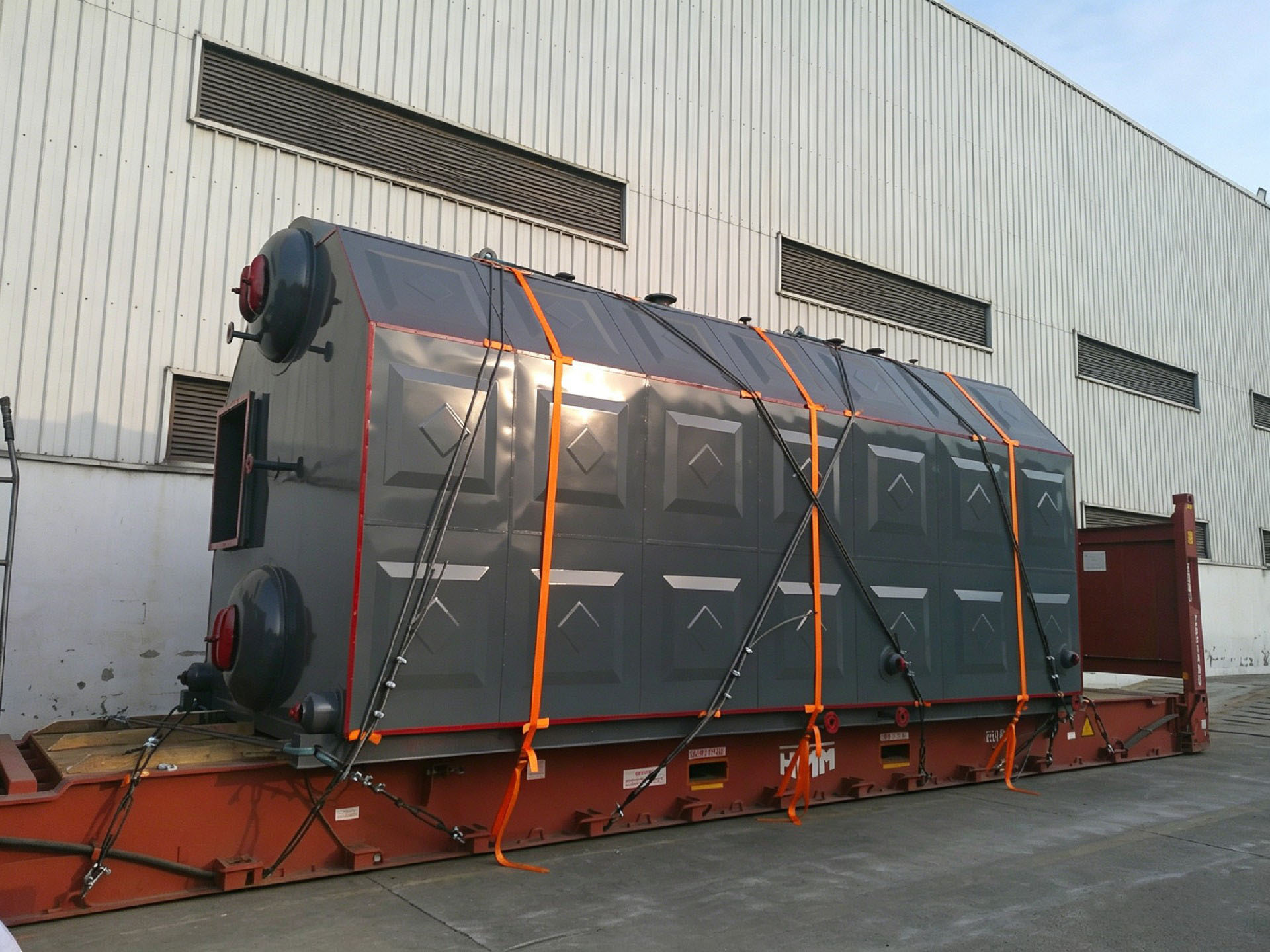
Ocean waves and lifting shocks are far harsher than domestic transport, and heavy cargo fears displacement and impact above all. Ordinary carton packing is entirely unsuitable; standard practice is a load-bearing base of fumigated timber or steel, with the cargo bolted or welded to the base, anti-rust treatment for metal equipment, and moisture-proof vacuum film plus cushioning for precision machinery. Wooden packaging must undergo IPPC fumigation or heat treatment, or it will not clear customs at destination.
One typical case: a customer-packed injection moulding machine shifted in transit to the United States because the securing straps lacked sufficient tension, and the resulting damage claim cost USD 50,000. It should be noted that securing calculations (lashing tension, securing points) are highly technical - it is advisable to engage a qualified institution to design and certify the plan. What a forwarder can contribute at the operational level is on-site loading supervision: verifying packing condition, lifting operations and securing implementation at the terminal, and photographing cargo condition, securing details and seals before loading as evidence for potential claims.
Unlike ordinary customs clearance, out-of-gauge cargo requires an additional set of documents: an OOG dimensions-and-weight declaration, the carrier's special-container acceptance approval, the port's heavy-lift handling record, a packing and securing verification report, and the equipment's factory certification. Machinery with hydraulic oil or fuel also needs a non-hazardous declaration; solid-wood packing requires a fumigation certificate; exports to the EU may involve CE certification and to the US FCC/DOT certification, while tariff-relevant shipments require certificates of origin arranged in advance.
Any single missing or incorrect document can trigger detention or re-export at destination, and the resulting storage and demurrage costs often far exceed the cost of preparing the documents. It is advisable to draw up a document checklist immediately after the booking is confirmed and work through it item by item, allowing time for remediation - rather than scrambling after the vessel has sailed.
What exporters most easily overlook is the second half of the journey. Arriving at the destination port is only half the trip: for inland transport after clearance, many countries require separate over-dimensional transport permits - in the United States, each state issues its own permit, and some states additionally require road load-bearing test reports; some Southeast Asian countries require a full route plan 15 days in advance, and mountain routes need prior survey of height and width limits, bridge load ratings and turning radii. Transhipment ports must also be verified for heavy-lift and berthing qualifications - if any single node fails, the entire route has to be rearranged.
Final-mile delivery has its own requirements: heavy cargo cannot go through ordinary warehousing networks and generally requires flatbeds, low-loaders or crane trucks. Some receiving warehouses (such as overseas FBA facilities) restrict oversized items - always confirm in advance whether the warehouse has forklifts, lifting equipment, and dimensional or weight limits, to avoid cargo arriving at port but being unable to enter the warehouse.
Ordinary cargo insurance typically does not cover the lifting and inland-transport risks of heavy cargo. Given the high value involved, it is advisable to take out all-risks cover with heavy-cargo riders that explicitly cover lifting impact, road vibration and extreme weather, with insured value planned at 110% to 120% of cargo value. Industry surveys indicate that most heavy-cargo damage disputes trace back to incomplete insurance terms - only at claim time does the shipper discover that the lifting phase was never covered, and the loss is borne alone.
Finally, choosing the forwarder. Heavy cargo falls under project cargo, which ordinary forwarders struggle to handle. Judge on three points. First, heavy-lift experience and special resources: familiarity with open-top and flat-rack stowage rules, partnerships with low-loaders and multi-axle hydraulic trailers, and the ability to survey factory-to-port routes in advance. Second, process completeness: the ability to coordinate the whole chain from factory to port to destination, with clear responsibility allocation and timeline commitments for permits, documentation and on-site supervision. Third, terms on paper: space-locking timelines, permit processing deadlines and damage compensation standards should all be written into the contract - verbal promises are worthless in a dispute.
One sentence to sum up: verified parameters, early booking, professional securing, complete documentation, destination planning, and adequate insurance. Do these six things well, and the vast majority of heavy-cargo risks will have been blocked before loading.
Disclaimer: Data in this article is from public sources and is for industry analysis only. It does not constitute any decision-making advice. Actual operations are subject to carriers' and destination countries' official requirements.
Contact: Manager Li
Phone: 021-31056166
Email: sea-giant@sea-giant.com
Add: Room 1708, Pu Chuang Business Building, 1050 East Daming Road, Hongkou District, Shanghai, China
We chat