
Nearly three years after diverting around the Cape of Good Hope, the shipping giants' return to the Red Sea is moving from "testing the waters" to "institutional change." On August 10, Maersk and Hapag-Lloyd jointly announced that the AE19 service under their Gemini Cooperation network would officially switch from routing around the Cape of Good Hope back to the Red Sea and Suez Canal, effective immediately. This marks the second east-west service in the Gemini network to be structurally restored to the Suez route after AE15 in July, taking the global liner industry's return to the Red Sea a major step forward.
The essence of this adjustment lies in the word "structural." Unlike occasional single-vessel trial transits, AE19's entire route is being permanently rewritten: effective from the "Berlin Maersk" (17,480 TEU, built 2025) on westbound voyage 628W and eastbound voyage 637E. The revised AE19 connects China, South Korea, Southeast Asia, Saudi Arabia and the Mediterranean market, with a new rotation of: Xingang–Qingdao–Busan–Ningbo–Shanghai–Tanjung Pelepas–Jeddah–Suez Canal–Port Said–Tangier–Port Said–Suez Canal–Jeddah–Singapore–Xingang.
In its announcement, Maersk said the joint decision was made after a thorough assessment of the security situation in the Red Sea area, marking "a step towards a gradual return to a trans-Suez network," while emphasizing that routes through the Suez Canal and Red Sea are the "fastest, most sustainable and most efficient" way to serve customers across Asia, the Middle East, Europe and the U.S. East Coast. The message is clear: the extra voyage distance and fuel costs of the Cape routing have always been a burden liner companies want to shed as soon as possible.
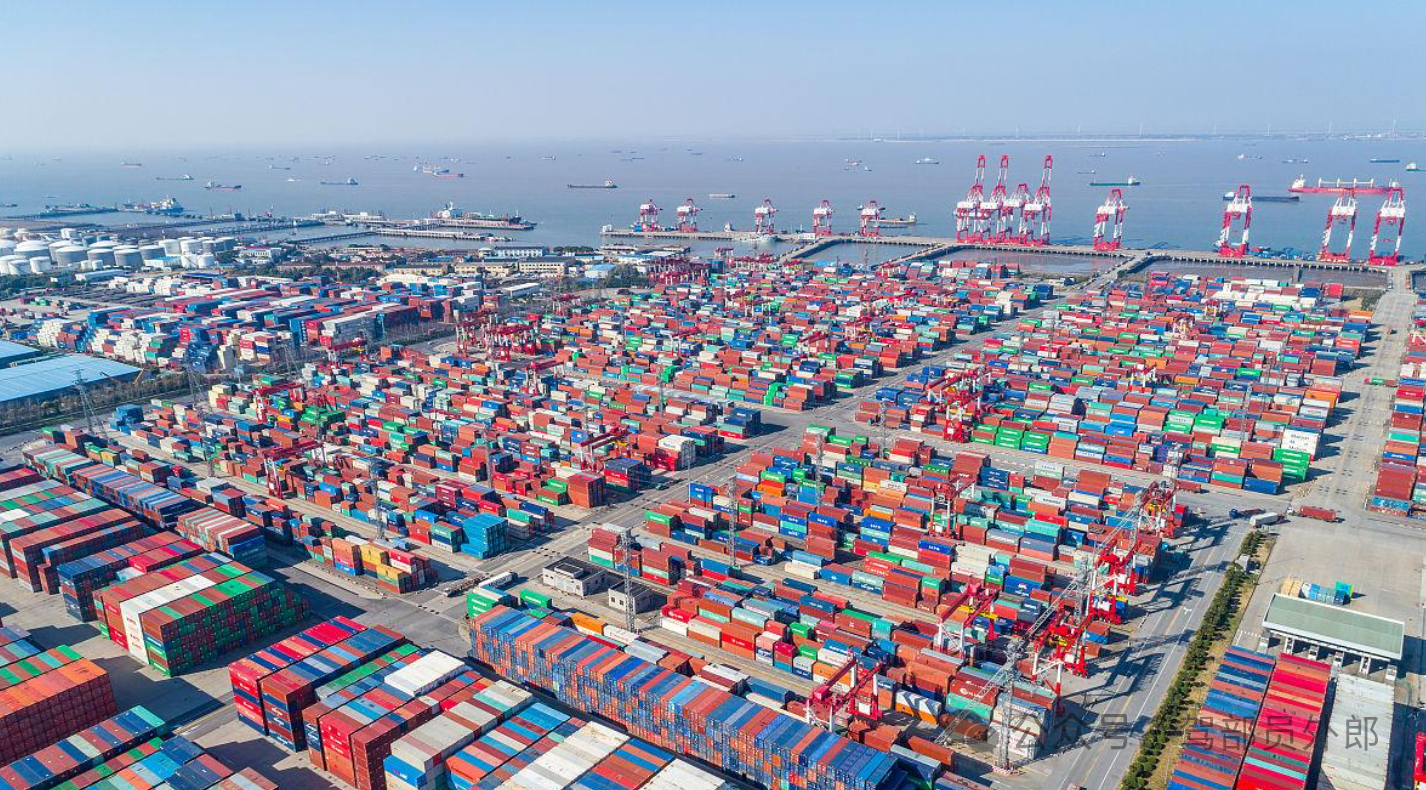
AE19 is not an isolated case — the scope of the return is expanding rapidly. On July 6, Gemini had already announced that its AE15 Asia–Mediterranean service would resume transits via Suez, with the "Majestic Maersk" among the first ships on the new routing; from August, AE15 further added Jeddah, Saudi Arabia to its rotation, effective from the "Madison Maersk" (19,076 TEU) on voyage 632W, strengthening direct connectivity between Asia, Saudi Arabia and the Mediterranean.
Meanwhile, Maersk's independently operated Middle East–U.S. East Coast MECL service and the WAF6 service have also gradually returned to the Suez corridor. Even more noteworthy, schedule information shows that the "Manchester Maersk," an ultra-large container vessel with a capacity of 20,568 TEU, is currently executing a Gemini AE2/NE1 Asia–North Europe mainline voyage and is scheduled to transit the Suez Canal westbound on August 15–16. If more AE2/NE1 vessels follow suit, the resumption would extend from Asia–Mediterranean services to the world's most critical Asia–North Europe trunk route — the first North Europe service to actually return to Suez since the Red Sea crisis. However, as of now, the two companies have not formally announced a structural switch of the entire AE2/NE1 service to Suez, and this change still needs to be observed over subsequent voyages.
The results of the resumption are showing up in the Suez Canal's ledger. Egyptian Canal Authority Chairman Osama Rabie disclosed that Suez Canal revenue rose 23% year on year to 4.67 billion in fiscal 2025/26, with vessel transits up 10% and cargo tonnage up 22%; Q2 2026 canal revenue reached 1.26 billion, up from roughly $1.1 billion in Q1. Although these figures have not fully recovered to pre-crisis levels, the rebound trend is established.
The latest weekly report from shipping consultancy Linerlytica confirms this: as of early August, container capacity diverting around the Cape of Good Hope had fallen to 5.2% of the global fleet — the lowest since January 2024; the number of diversion vessels is below 300, totaling about 4.1 million TEU, down sharply from the peak of 5.3 million TEU earlier this year. CMA CGM and Maersk are leading the charge in increasing Suez-bound frequencies, with CMA CGM's EPIC westbound service and Maersk's AE11 westbound service both having scheduled vessels to sail via the Bab el-Mandeb Strait directly to Suez.
However, the resumption does not mean the Red Sea risk has disappeared. The latest maritime security assessments still list the southern Red Sea and the Bab el-Mandeb Strait as areas requiring heightened attention; the Houthis have recently issued new threats against certain vessels linked to Saudi Arabia. War-risk surcharges currently still average 1.2% of base freight, and armed escort protocols remain mandatory for transiting vessels. At the same time, U.S.–Iran negotiations have stalled, and traffic through the Strait of Hormuz remains constrained — just 84 transits were recorded for the full week of August 3–9, falling to only six on Sunday.
It is precisely on the basis of these uncertainties that Maersk and Hapag-Lloyd have stated clearly: there is currently no specific timeline for a full return to Suez, nor any consideration of switching the broader east-west network back to the trans-Suez corridor. The two companies are pursuing a gradual "service-by-service" strategy: verifying navigational safety, schedule stability, insurance costs and contingency capabilities one route at a time before deciding the next step. This approach both captures the cost advantages of the Suez corridor and preserves room to retreat should geopolitical conditions reverse.
For the market, the most sensitive nerve is capacity. Routing around the Cape of Good Hope adds roughly 10–14 days to each Asia–Europe voyage, equivalent to a passive contraction of 8%–10% in effective capacity on the Europe route — precisely the core support that has kept Europe freight rates elevated since the Red Sea crisis. Now that the pace of resumption is clearly accelerating, expectations of supply repair are rising: on August 11, the main EC2610 containerized Europe freight futures contract fell 4.12% to 1,569 points, with the market beginning to price in the capacity release logic in advance.
For shippers and freight forwarders, this means two things. First, the medium-term downward channel for Europe freight rates is being further consolidated, and the mix of long-term contracts versus spot bookings should be adjusted dynamically. Second, the Red Sea resumption is still in its "small-scale trial" phase and could reverse at any time due to geopolitical swings — any strategy betting on "rates will inevitably collapse" is inadvisable. A gradual return calls for a gradual response: keeping a close eye on the carriers' service-by-service announcements is the most prudent approach for now.
Disclaimer: The data in this article comes from public sources and is for industry analysis reference only. It does not constitute any decision-making advice; actual freight rates are subject to the carriers' official quotations.
Contact: Manager Li
Phone: 021-31056166
Email: sea-giant@sea-giant.com
Add: Room 1708, Pu Chuang Business Building, 1050 East Daming Road, Hongkou District, Shanghai, China
We chat