
In mid-August 2026, the global container shipping market has entered the most intense phase of its annual peak-season game. While Europe and Mediterranean routes drift lower on softening demand, two corridors are surging against the trend: the US East Coast, propped up by Panama Canal draft restrictions and record-breaking "jump-the-queue" auction fees, and Latin America, where booming Chinese auto exports have triggered a structural capacity mismatch. For exporters preparing Black Friday and Christmas stock, the signal behind these price moves matters more than the numbers themselves: space has replaced rates as the biggest variable of the season.
The strength of the US East Coast trade starts with a Panama Canal caught by the throat. Hit by El Nino-driven drought, the canal authority has phased down draft limits for the Neopanamax locks: 49.5 feet on July 3, 49.0 feet on July 24, and a further cut to 48.5 feet (14.78 meters) on August 15. Every 0.5 feet of draft reduction forces a large containership to offload hundreds of TEUs — with cargo value losses estimated at up to USD 400,000 per voyage.
Draft limits are only the first layer of pressure; the auction "jump fees" are the real headline. According to a Cailianshe report on August 12, squeezed by both the Middle East conflict and El Nino, the average daily auction price for the canal's regular lock slots has hit around USD 1.1 million in August — more than 16 times the level a year earlier. On August 3, 113 vessels were waiting to transit, versus just 40 on January 2. This Monday (August 10), one containership paid USD 4 million to jump the queue, an all-time record. Neopanamax vessels carrying LPG, crude oil and other cargoes are now waiting up to 10 days to transit, the longest since May.
These layered costs are ultimately passed straight into freight rates. The latest SCFI put the US East Coast rate at USD 9,290/FEU, up 2.6% week-on-week; Xeneta data shows US East Coast spot rates at USD 9,988/FEU, closing in on the USD 10,000 mark, with some direct-contract quotes exceeding USD 10,500. CMA CGM, Hapag-Lloyd and MSC have imposed canal surcharges ranging from USD 100 to USD 320 per TEU. The East Coast-West Coast spread has widened past USD 2,800 — far above the normal level of around USD 1,000. The US East Coast, which cannot bypass the canal, is absorbing the hardest supply constraint in the entire market.
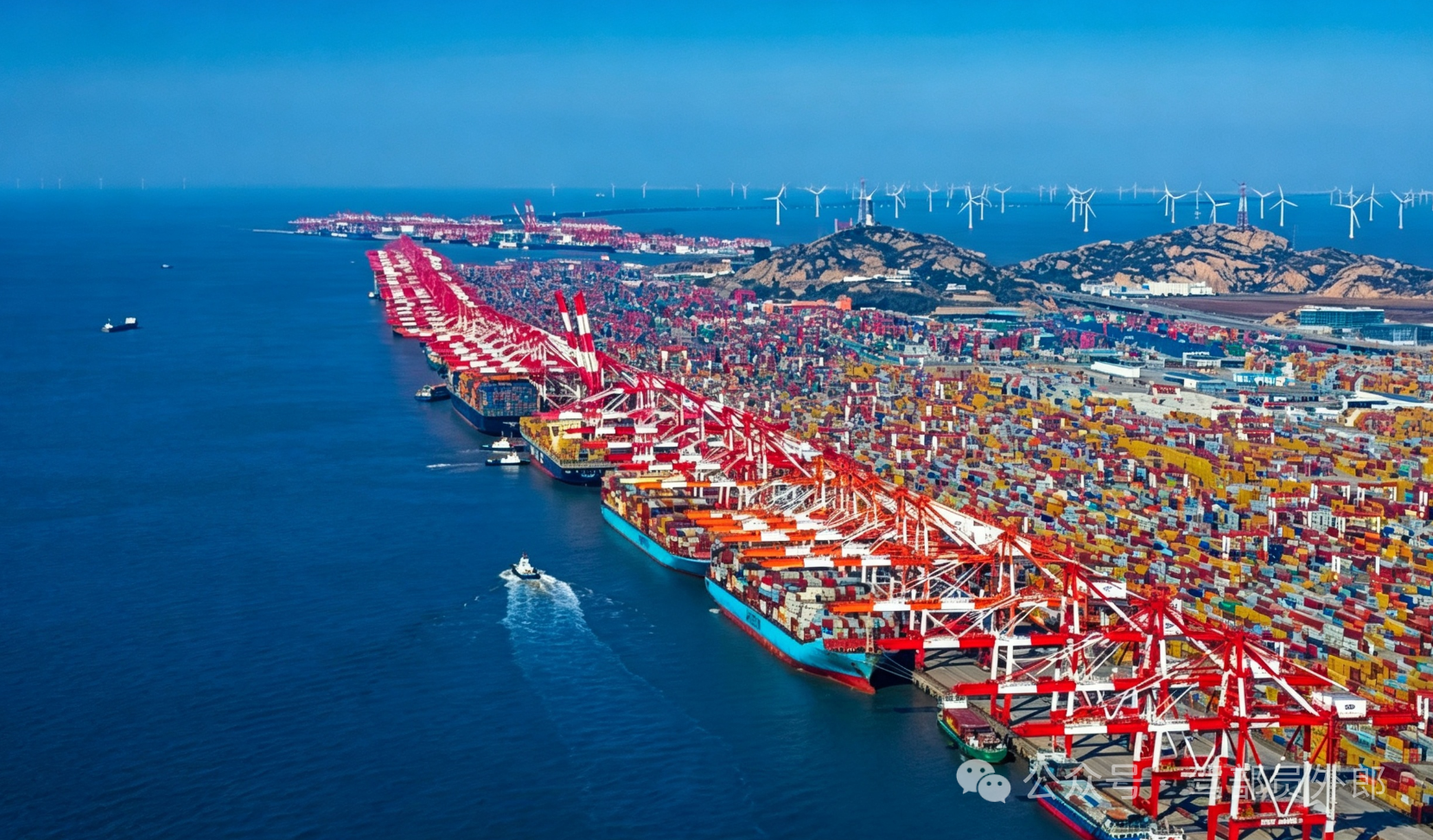
If the US East Coast is "passively" rising, Latin America is taking off on its own momentum. Ningbo Shipping Exchange data for the week of August 7 shows the West Coast South America rate index surging 16.3% week-on-week, far outperforming most deep-sea trunk routes. An S&P Global report on August 11 puts North Asia–West Coast South America rates at USD 5,600–6,000/FEU in the second week of August, with the Platts assessment (PCR 29) at USD 6,200/FEU. With carriers implementing a new round of GRIs in the third week of August, the market expects rates to climb further to USD 6,500–7,000/FEU.
The core driver of this surge is not conventional demand growth but a structural capacity mismatch: booming Chinese auto exports are filling containers and squeezing out general cargo space. Reports indicate that around 28,000 containerized vehicle units have flooded onto the West Coast South America trade alone, and carriers such as MSC have launched containerized finished-vehicle solutions, with multiple shipping lines taking tens of thousands of vehicle export bookings. General consumer-goods shippers are now competing with finished cars for the same slots — an almost "counter-seasonal" frenzy in what is normally a slow period.
Capacity is shrinking in tandem on the supply side. According to RSLog's observations, carriers have executed large-scale capacity withdrawals in August: COSCO's WSA8 and OOCL's TLP8 Mexico-only services, totaling roughly 3,000 TEU, are suspended for the month; PIL's WSA6, Yang Ming's SA8 and Wan Hai's AS2 are blanking sailings in the second week; HMM's NW4 and ONE's ALX4, together around 8,600 TEU, are blanking in the first half of the month; and Maersk's AC2 (about 13,000 TEU) no longer calls Shanghai from August, replaced by AC1 at just 4,500 TEU — a net reduction of approximately 8,500 TEU on that single loop. Maersk has also imposed peak season surcharges of USD 750 per 20GP and USD 1,500 per 40GP on Mexico, West Coast South America, Central America and Caribbean routes since August 3.
Behind both corridors' strength lies the same fact: space has become a scarce resource. Industry feedback indicates that most carriers' slots through end-August are essentially fully booked, booking lead times have lengthened noticeably, and rollover risk is rising. Carrier bookings in August are broadly full, with some US-bound services seeing "no space available."
The underlying logic of this standoff is a tightening on both sides of supply and demand. On the demand side, US inventory-to-sales ratios have posted their steepest seven-month decline in over three decades (excluding 2009 and 2020), as strong end-market sales drive import restocking and retailers ship ahead of tariff windows; the Black Friday and Christmas stocking wave starting in mid-to-late August lifts volume expectations further. On the supply side, carriers keep managing capacity through blank sailings, port omissions and service withdrawals — the scale of August capacity removal on Latin America routes looks almost like precision "peak-shaving." Carriers are tightening supply on one hand and landing GRIs on the other, converting every ounce of seasonal demand into pricing leverage.
Rate strength is only the surface; the ripple effects across the supply chain are what shippers really need to watch. First, longer booking lead times: with space tight, forwarders must confirm sailings weeks in advance; last-minute bookings are largely impossible, and late-season cargo risks "having goods but no ship." Second, tightening equipment and containers: Ningbo Port Authority policy prioritizes rail-sea intermodal and feeder transshipment containers, visibly squeezing space and equipment allocation for regular export bookings, with equipment shortages intensifying at some origin ports. Third, deteriorating schedule reliability: average delays at Shanghai's Yangshan terminal have stretched from the previous 4–5 days to about 10 days, Ningbo around 5 days, compounded by severe weather disrupting berthing operations at destination ports such as Chile's San Antonio and Valparaiso — end-to-end transit-time uncertainty has risen sharply.
For smaller shippers, these changes mean peak-season shipping is no longer a simple matter of "getting a quote and booking a slot." Space confirmation, equipment availability and schedule reliability can each become a bottleneck.
Facing firmer rates on the US East Coast and Latin America, shippers need to shift from "waiting for rates to fall" to "securing delivery." Three actions are worth taking immediately. First, lock space early: for tight corridors like the US East Coast and Latin America, book two to three weeks ahead and negotiate price only after confirming usable space — never judge by the lowest quote alone. Second, prepare alternatives: US East Coast cargo can evaluate routing via the US West Coast plus rail distribution, while Latin America cargo should have at least two sailing options lined up, with transshipment ports and free-time terms confirmed in advance. Third, build surcharges into the cost model: compare canal and peak season surcharge effective dates carrier by carrier — cargo gated in before key dates such as August 15 and August 19 may qualify for older rates.
At its core, this peak-season standoff is a tug-of-war between carriers' capacity management and shippers' delivery needs. The canal constraint on the US East Coast and the auto export boom in Latin America point to one common conclusion: rates will stay elevated in the near term, and space tightness will run through August into September. For shippers, betting on a rate correction is a worse bet than holding confirmed space in hand — in an uncertain market, a certain sailing date is itself a competitive advantage.
Disclaimer: Data in this article is from public sources and is provided for industry analysis only. It does not constitute any decision-making advice; actual freight rates are subject to carriers' official quotations.
Contact: Manager Li
Phone: 021-31056166
Email: sea-giant@sea-giant.com
Add: Room 1708, Pu Chuang Business Building, 1050 East Daming Road, Hongkou District, Shanghai, China
We chat