
As tensions persist in the Middle East, the global shipping network is once again under pressure. Several container carriers have successively adjusted or suspended relevant routes, including two key Red Sea feeder services that have been urgently called off. Combined with disrupted shipping flows in the Persian Gulf region, supply chain uncertainty continues to escalate.
Against the backdrop of recurring volatility in the Red Sea and the broader Middle East, shipping companies are accelerating the contraction of their capacity networks. German carrier Hapag-Lloyd announced that it will suspend its JD2 and JD3 service routes effective May 10, with no resumption date announced yet. This adjustment is widely regarded in the industry as a significant signal of the Red Sea shipping network’s contraction.
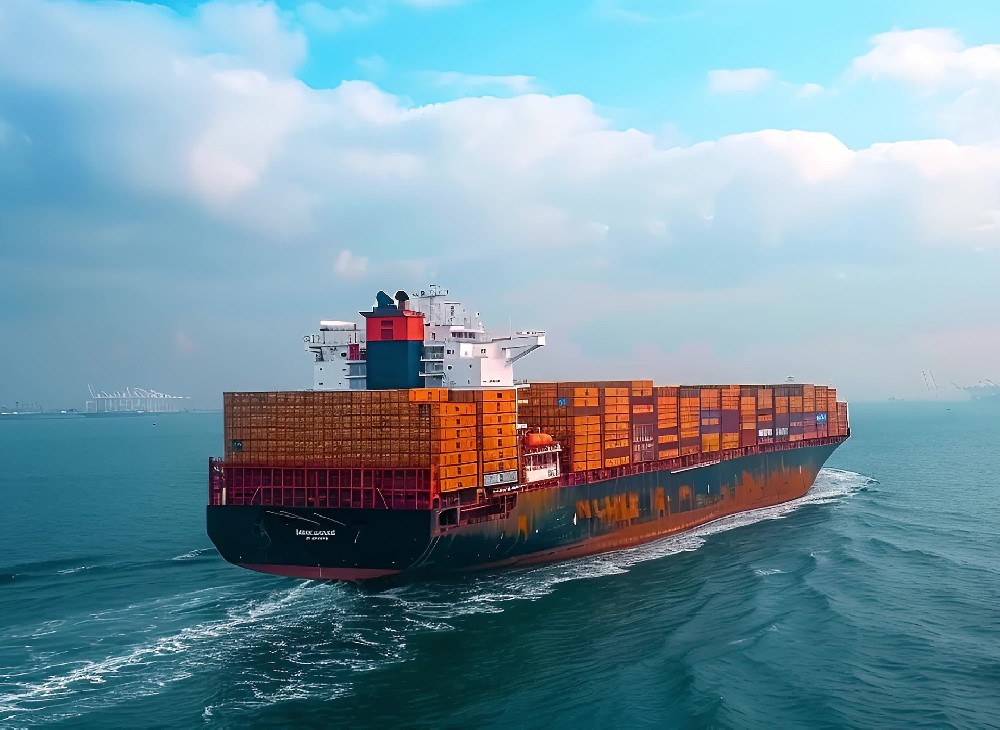
According to available information, the JD2 service previously connected key ports such as Tangier, East Port Said, and Jeddah, while the JD3 route covered East Port Said, Aqaba, and Jeddah. The suspension of these two routes means that feeder transport capacity in the Red Sea region has been significantly weakened. Although some capacity will be reallocated to alternative routes such as JD1 and SE4, industry consensus holds that replacement solutions will struggle to fully compensate for the loss of space and transit time on the original routes.
In markets that rely heavily on feeder connections, such as Jordan, the route suspensions will directly increase pressure on last-mile transport. Cargo that previously transited via Jeddah or Aqaba will now be forced into more congested transport corridors, raising the risk of further declines in regional logistics efficiency.
At the same time, another shipping giant, Ocean Network Express (ONE), has issued an urgent notice announcing the termination of the originally scheduled Middle East voyage for the "HMM MIR" (voyage 0019W/0020E) on its GS2 service. This vessel had originally planned to load cargo from multiple major Chinese ports—including Dalian, Tianjin, Qingdao, Shanghai, Ningbo, and Shekou—and proceed via Singapore to Middle Eastern destinations including Jebel Ali, Dammam, and Abu Dhabi.
According to the latest arrangements, the vessel will no longer continue its planned route. Cargo on board must be discharged at either Khor Fakkan (UAE) or Sohar (Oman) port. This means that a large volume of cargo originally destined for the Persian Gulf region will not be able to arrive at its intended ports on schedule. Subsequent transportation arrangements must be made by the cargo owners themselves, who will also bear all associated costs, including handling charges, storage fees, and detention/demurrage charges.
Behind these frequent route adjustments lies the overlapping risk exposure of two critical maritime chokepoints in the Middle East. The Strait of Hormuz, a vital artery for global energy and trade flows, has repeatedly experienced navigation restrictions in recent weeks. Although there were brief reports of intermittent openings, the situation has quickly reversed, and navigation remains under tight control. Some shipping companies have explicitly advised clients to avoid the route for the time being to reduce operational risks.
Meanwhile, the Bab el-Mandeb Strait, which connects the Red Sea to the Gulf of Aden, is also facing heightened uncertainty. Recent escalation of regional tensions has raised the potential risk of this key waterway being closed. Should the strait be blocked, Red Sea shipping would face an even greater shock, further compressing an already stretched transport network.
With both critical chokepoints under pressure simultaneously, the shipping network is being forced into a "contraction and restructuring" phase. Many routes that previously relied on transshipment through the Red Sea and the Middle East are being gradually cut, while remaining corridor capacities are approaching their limits. Supply chain resilience has notably deteriorated.
Industry insiders point out that, starting with the deterioration of the Red Sea situation, followed by repeated restrictions in the Strait of Hormuz, and now the rising potential risk in the Bab el-Mandeb Strait, the uncertainty in the current shipping market has shifted from episodic disruptions to structural risk. The adjustments being made by shipping companies—including suspensions and rerouting—are largely reactive measures to a complex and volatile environment.
Overall, the current route suspensions are not merely isolated adjustments. They reflect a systemic contraction of the global shipping network against a backdrop of geopolitical conflict. For freight forwarders and foreign trade enterprises, it is necessary to reassess transport routes and cost structures while building greater operational flexibility to cope with what may remain an extended period of uncertainty.
Contact: Manager Li
Phone: 021-31056166
Email: sea-giant@sea-giant.com
Add: Room 1708, Pu Chuang Business Building, 1050 East Daming Road, Hongkou District, Shanghai, China
We chat