
Under the dual pressure of persistent geopolitical tensions and high fuel costs, the global maritime market is once again experiencing a wave of rate hikes. Several major container carriers have issued a flurry of freight rate adjustment notices, with some route rates climbing as high as USD 7,200, bringing renewed cost and operational pressures to freight forwarders and foreign trade enterprises.
On the eve of May 2026, the international maritime market has seen a new round of concentrated rate adjustments. Major carriers including Maersk, CMA CGM, MSC, and Hapag-Lloyd have successively announced rate increases covering multiple core routes such as Asia-Europe, Trans-Pacific, and emerging markets, with broad scope and significant magnitude.
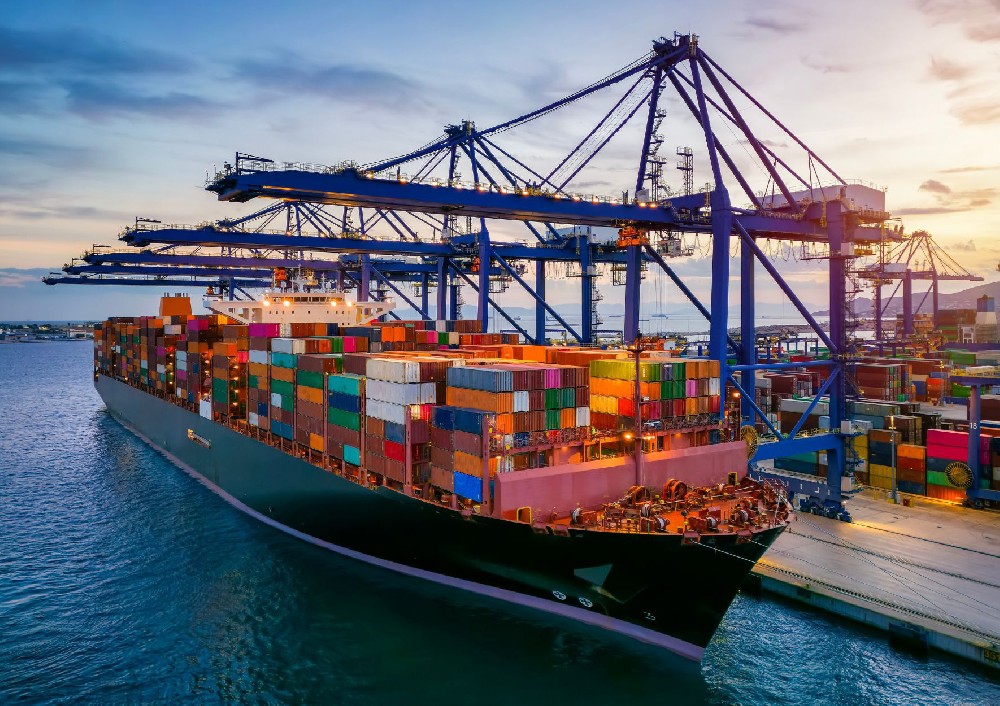
MSC has announced an upward adjustment of its Emergency Bunker Surcharge for shipments from Asia to the United States and Canada. The new rates take effect from May 1, 2026 (based on gate-in time), covering major ports on the U.S. East Coast, U.S. West Coast, and Canada. The company noted that ongoing conflicts in the Middle East have impacted the global fuel supply chain, increasing the difficulty of fuel acquisition, which is a key factor driving this surcharge increase.
Meanwhile, Maersk has adjusted its surcharge standards for certain heavy cargo shipments. This adjustment applies primarily to cargo exported from the Far East to Mexico, the West Coast of South America, Central America, and the Caribbean. Specifically, 20-foot dry containers with a Verified Gross Mass (VGM) exceeding 20 tons, and 40-foot reefer containers exceeding 23 tons, will be subject to new rates. The relevant charges take effect from April 30, 2026, with a later implementation date of May 15 for certain countries such as Colombia.
On the Europe-Mediterranean trade lane, CMA CGM has announced a FAK (Freight All Kinds) rate increase from Asia to the Mediterranean and North Africa regions, effective from May 15 to May 31, 2026. The adjustment covers multiple destinations including the West Mediterranean, East Mediterranean, Adriatic Sea, Black Sea, and Algeria. It applies to dry containers, reefers, and out-of-gauge (OOG) cargo. The new quotes already include basic ocean freight and various surcharges, though terminal handling charges and security-related surcharges must still be calculated separately.
In addition, Hapag-Lloyd has simultaneously raised its FAK rates from the Far East to Northern Europe and the Mediterranean. The new prices take effect from May 15, 2026, and apply to 20ft, 40ft, and high-cube container types, including both dry and reefer containers, signaling an overall strengthening trend in westbound Europe freight rates.
Overall, this round of rate increases is not driven by a single factor but rather results from the accumulation of multiple pressures. On one hand, continued tensions in the Middle East have exacerbated volatility in global energy markets, significantly raising carriers' fuel costs. On the other hand, issues such as route diversions, port congestion, and unstable supply provisions have further increased operational complexity and cost levels.
Industry analysts point out that current shipping companies are passing some costs on to the market through surcharge adjustments and FAK rate hikes — a typical cyclical operation. However, it is worth noting that against a backdrop of ongoing uncertainty in global trade demand, whether these rate increases can be fully implemented and how long they will last remain subject to market validation.
Contact: Manager Li
Phone: 021-31056166
Email: sea-giant@sea-giant.com
Add: Room 1708, Pu Chuang Business Building, 1050 East Daming Road, Hongkou District, Shanghai, China
We chat