
The China‑Kazakhstan border transport corridor is once again sounding the alarm. Since the end of May, a growing backlog of vehicles has appeared at multiple border crossings between China and Kazakhstan, with long lines of trucks waiting for customs clearance and queues stretching for kilometres along some sections. Industry sources indicate that the Kazakh authorities have recently stepped up the intensity of their supervision and inspection of transit cargo, leading to a marked decline in border crossing efficiency. For some shipments, the clearance and appraisal process may now be extended by one to three months, posing a fresh challenge to cross‑border logistics companies.
Kazakhstan escalates inspection efforts
It is understood that Kazakhstan’s customs service is now applying stricter regulatory measures to goods moving through the China–Kazakhstan–Eurasia transit corridor, focusing on combating illegal imports, undervaluation of goods, incorrect commodity classification, and the illegal circulation of restricted products. The current round of intensive inspections covers a wide range of products, including industrial and technology‑oriented goods such as electronic products, chips, servers, communications equipment, machine tools, auto parts, drones, batteries, electric bicycles and electric scooters. At the same time, consumer goods such as branded apparel, footwear, cosmetics, alcohol, cigarettes and e‑cigarettes have also been placed under heightened scrutiny. In addition, stricter checks are being applied to dual‑use items, goods suspected of infringement or counterfeiting, LCL (less than container load) cargo with unclear descriptions, and shipments whose declared value appears abnormally low. According to industry insiders, customs will compare the declared value with market prices; once an under‑declaration is suspected, the goods may be sent to a professional appraisal agency for valuation. This appraisal process alone can take several weeks, greatly extending the overall clearance time.
Costs for businesses continue to rise
As inspection intensity increases, both logistics transit times and transport costs are coming under pressure. Industry estimates suggest that if a vehicle is detained for inspection, the resulting parking and waiting charges alone could amount to several thousand euros, and most of these costs must be borne by the cargo owner or the logistics provider. For companies that rely on the China–Kazakhstan land corridor for China‑Europe transport, the delays not only affect delivery schedules but can also increase the risk of customer default claims, further raising overall supply chain costs. One logistics practitioner commented that the biggest concern today is not rising freight rates but the growing uncertainty – companies often have no way of knowing in advance which shipments will be selected for inspection, nor can they accurately predict when a particular consignment will finally be cleared.
Stability of the China‑Kazakhstan corridor under renewed pressure
In recent years, the China‑Kazakhstan corridor has become an important land‑based logistics artery linking China with Central Asia, Russia and the European market, thanks to its relatively short transit times and moderate costs. However, repeated inspection escalations and resulting congestion are eroding those advantages. Industry insiders note that this is not the first time such a situation has occurred – last autumn, the China‑Kazakhstan border also experienced large‑scale congestion, with huge numbers of vehicles stranded for lengthy periods and some deliveries delayed by weeks or even months. For certain types of goods, companies are now placing greater emphasis on transport certainty rather than simply pursuing the lowest cost.
Firms begin to look for alternative routes
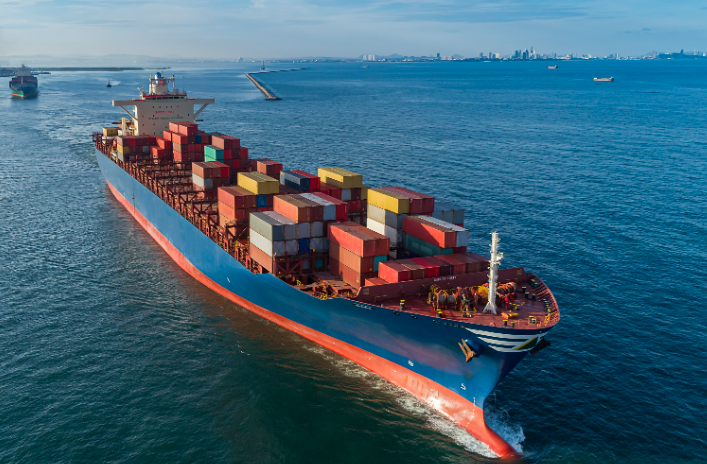
Faced with rising clearance risks, a growing number of companies are evaluating alternative transport options. At present, corridors passing through Russia and Mongolia are receiving more attention. For time‑sensitive cargo, routing via Russia’s Zabaikalsk crossing or through Mongolia has become a popular fallback. Meanwhile, for large volumes of goods with relatively low time sensitivity, more shippers are turning to sea freight: cargo is moved by ship from Chinese ports to Vladivostok, Vostochny (Oriental Port), Novorossiysk and St Petersburg, and then onward to its final destination. Industry insiders comment that in today’s international logistics environment, “the most reliable route” is gradually replacing “the cheapest route” as the primary consideration when companies choose their transport solution. As cross‑border demand between Central Asia and Eurasia continues to grow, the future efficiency of customs clearance at the China‑Kazakhstan border and any further changes in regulatory policy will remain key factors influencing the stable operation of regional supply chains.
Contact: Manager Li
Phone: 021-31056166
Email: sea-giant@sea-giant.com
Add: Room 1708, Pu Chuang Business Building, 1050 East Daming Road, Hongkou District, Shanghai, China
We chat