
As the traditional peak season starts early, the US tariff policy window approaches, and global supply chains remain under strain, the international container shipping market has entered a new round of rate increases. The latest Shanghai Containerized Freight Index (SCFI) recorded its sixth consecutive weekly gain, with rates rising across all four major routes. The US West Coast route posted one of the strongest increases, up nearly 10%. Industry insiders generally believe that with cargo volumes being released intensively, carriers continuing to manage capacity, port congestion worsening, and geopolitical risks persisting, the upward trend in freight rates is likely to continue in the short term, and the market is expected to see a cyclical peak in July.
According to data released by the Shanghai Shipping Exchange on 5 June, the SCFI stood at 2726.48 points, up 154.75 points from the previous week, a weekly increase of 6.02%, marking the sixth consecutive week of gains. All four major routes rose:
Far East to US West Coast: +US$403 to US$4,552 per FEU, +9.71%
Far East to US East Coast: +US$408 to US$5,741 per FEU, +7.65%
Far East to Europe: +US$130 to US$2,605 per TEU, +5.3%
Far East to Mediterranean: +US$82 to US$3,832 per TEU, +2.2%
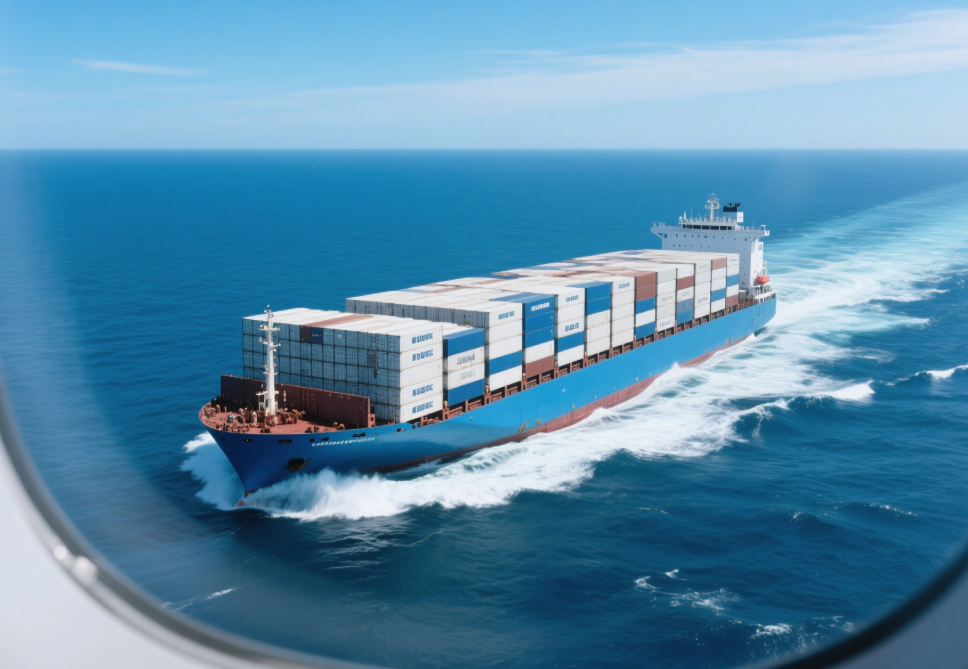
In fact, since tensions in the Middle East escalated, the SCFI has nearly doubled, reflecting sustained market heat. The main driver of this round of rate increases is concentrated demand from North America. The 10% interim import tariff policy previously implemented by the United States is set to expire on 24 July. Many Asian exporters have accelerated shipments to avoid potential trade cost risks, driving rapid growth in trans‑Pacific cargo volumes. At the same time, adjustments in trade policies have also spurred a recovery in US import demand, further boosting shipping demand.
Alongside strong demand, carriers continue to implement capacity management strategies – blank sailings, space control, and restrictions on low‑rate bookings have kept the market tight, especially on the US East Coast. Many major port routes are already seeing “space impossible to secure,” with rollovers and cargo push‑outs occurring frequently. Major freight forwarders report that most vessels on US routes are now operating near full capacity, and carriers are pushing up market rates through Peak Season Surcharges (PSS) and General Rate Increases (GRI).
It is understood that several carriers have notified customers of further rate increases effective 15 June:
US West Coast: approx. US$1,500 PSS, pushing actual rates to about US$6,350 per 40ft container
US East Coast: approx. US$1,300 PSS, pushing actual rates to about US$7,600 per 40ft container
US Gulf: approx. US$1,250 PSS, pushing rates to about US$7,700 per 40ft container
Meanwhile, MSC had already raised its US West Coast offer to US$4,700 and plans a further increase to US$6,000 in mid‑June.
Outlook
Industry insiders generally believe the current upward momentum will persist in the near term. Kuehne+Nagel noted in its global sea freight market update that the combination of peak season and supportive policy factors is expected to keep rate momentum going through the end of July. HSBC Global Research also stated that with early shipping, port congestion, and carriers’ capacity management tightening available capacity, the container market has entered an early peak season, and this momentum will continue. Wan Hai Lines’ general manager Hsieh Fu‑lung commented that the intensity of this rate increase “will be very strong”, with further room for gains. However, some analysts caution that a demand slowdown after the July tariff policy becomes clearer is a risk, and significant uncertainty remains for the market thereafter.
Contact: Manager Li
Phone: 021-31056166
Email: sea-giant@sea-giant.com
Add: Room 1708, Pu Chuang Business Building, 1050 East Daming Road, Hongkou District, Shanghai, China
We chat