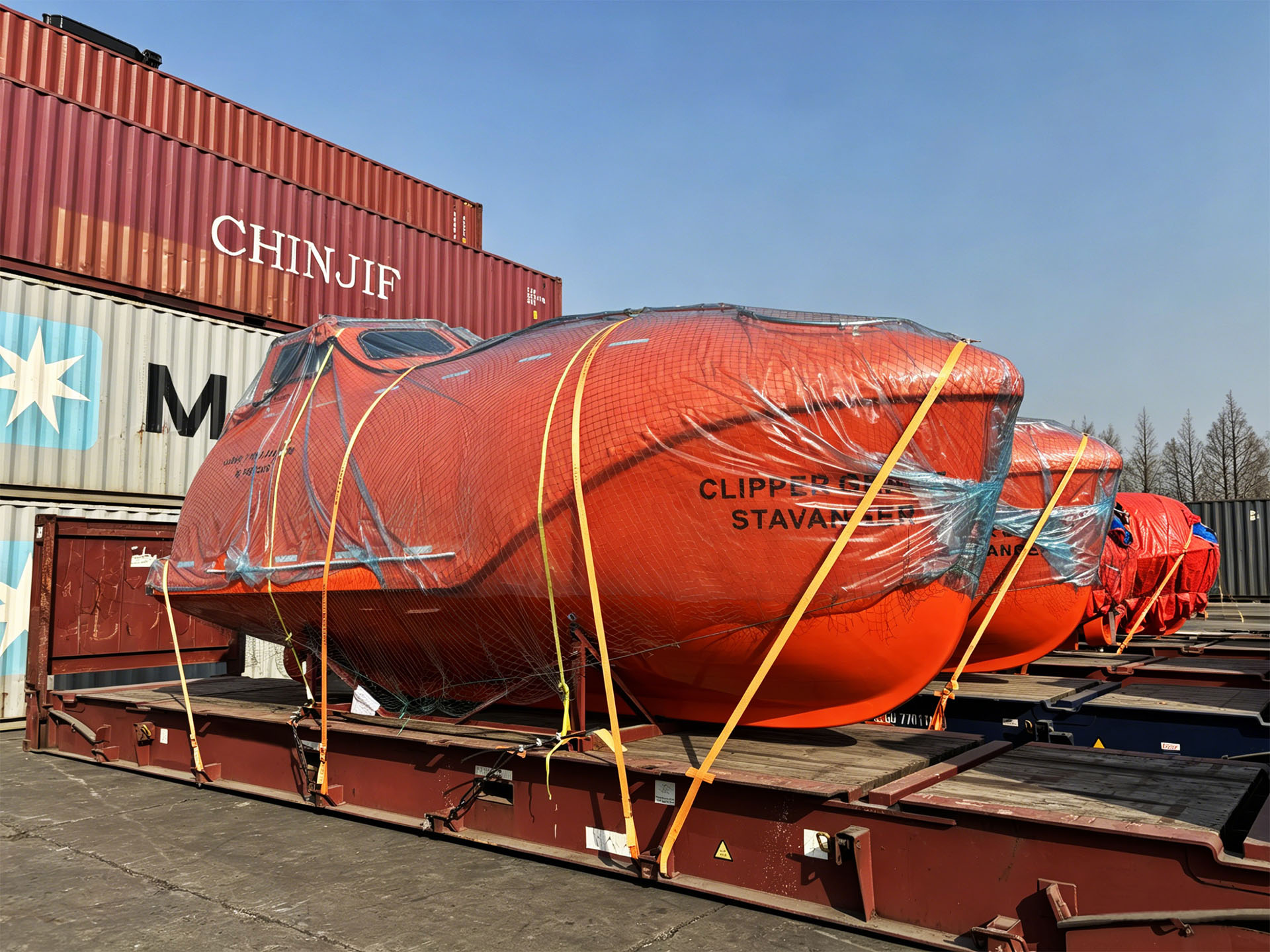
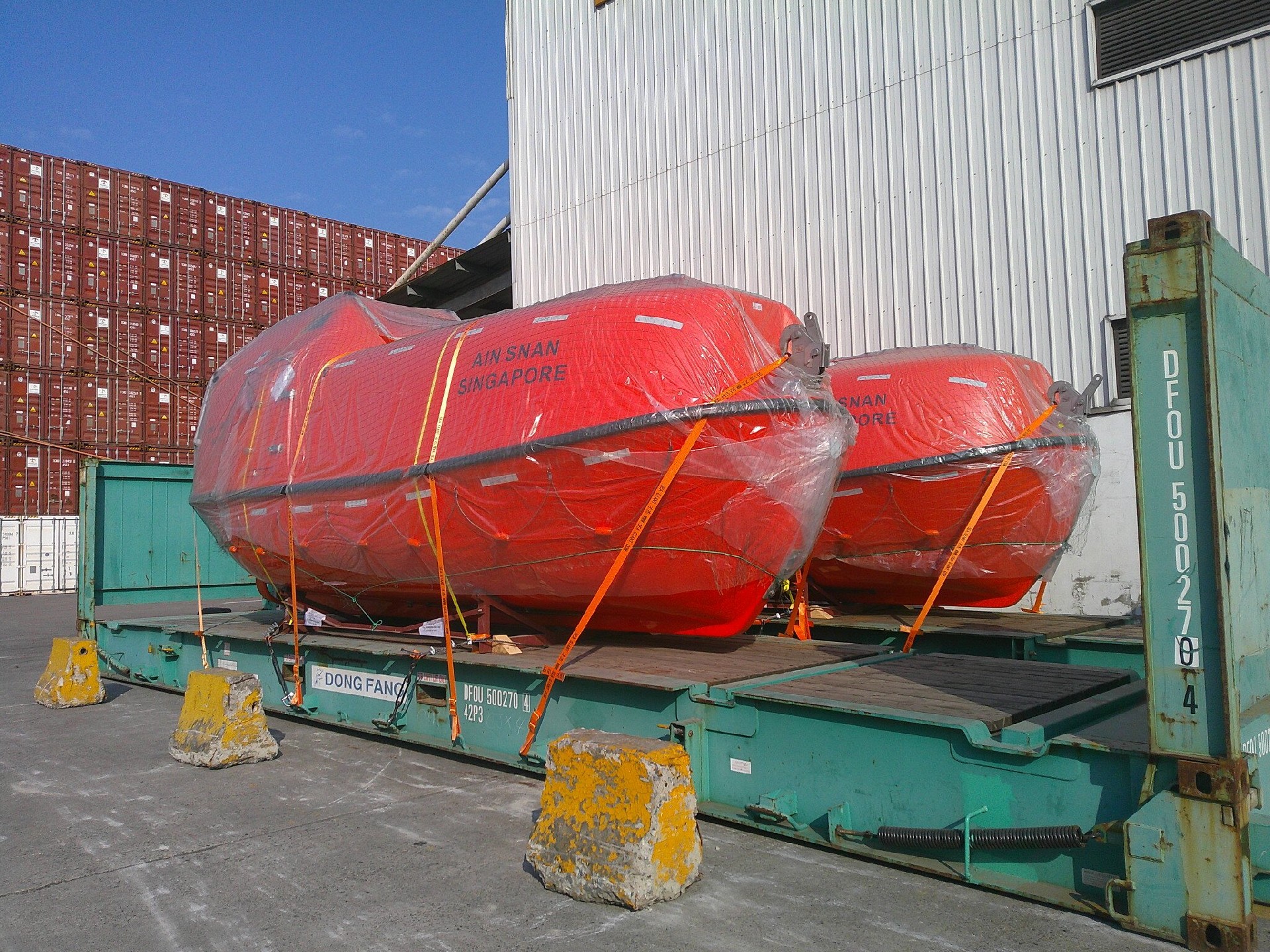
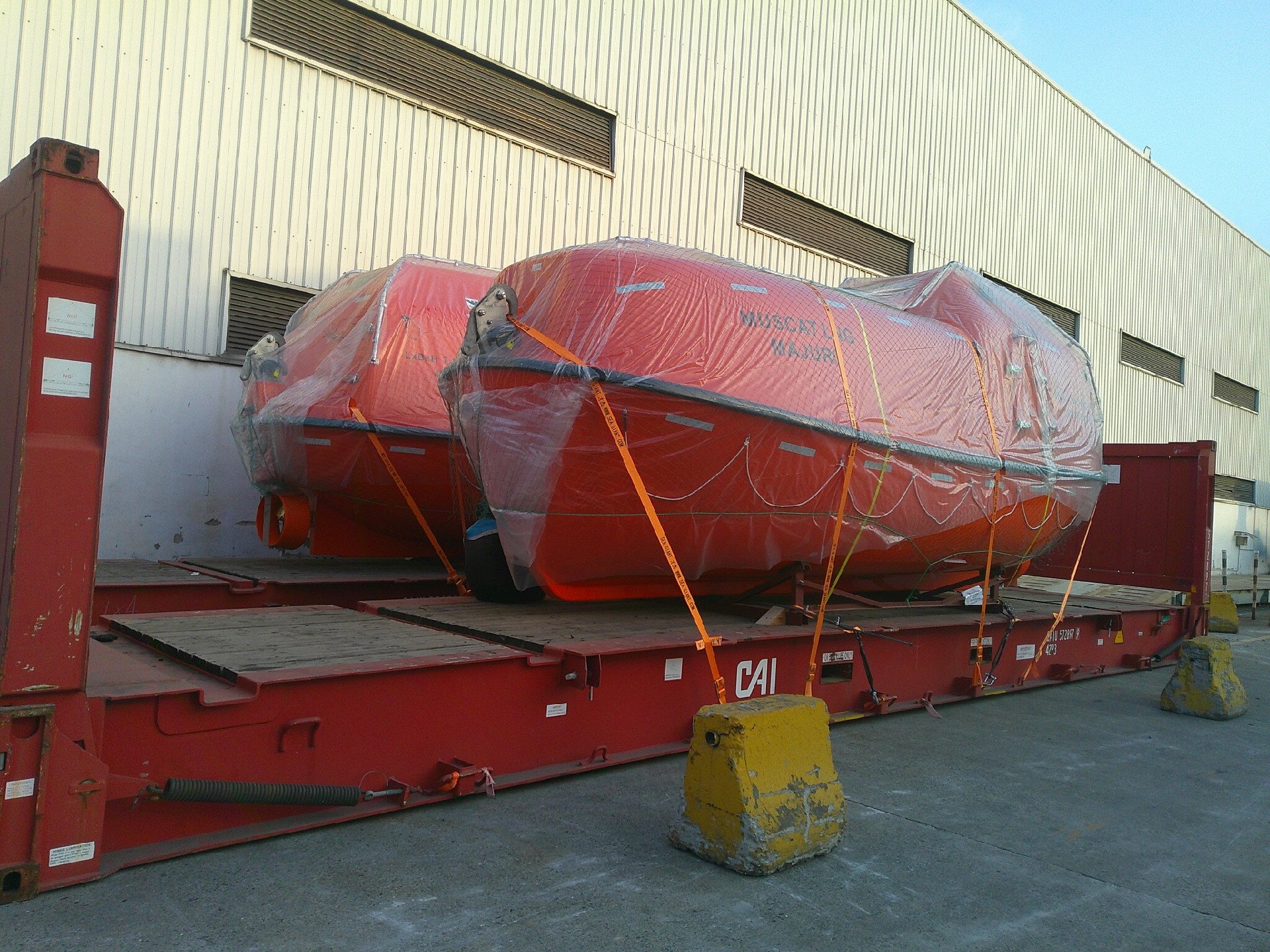
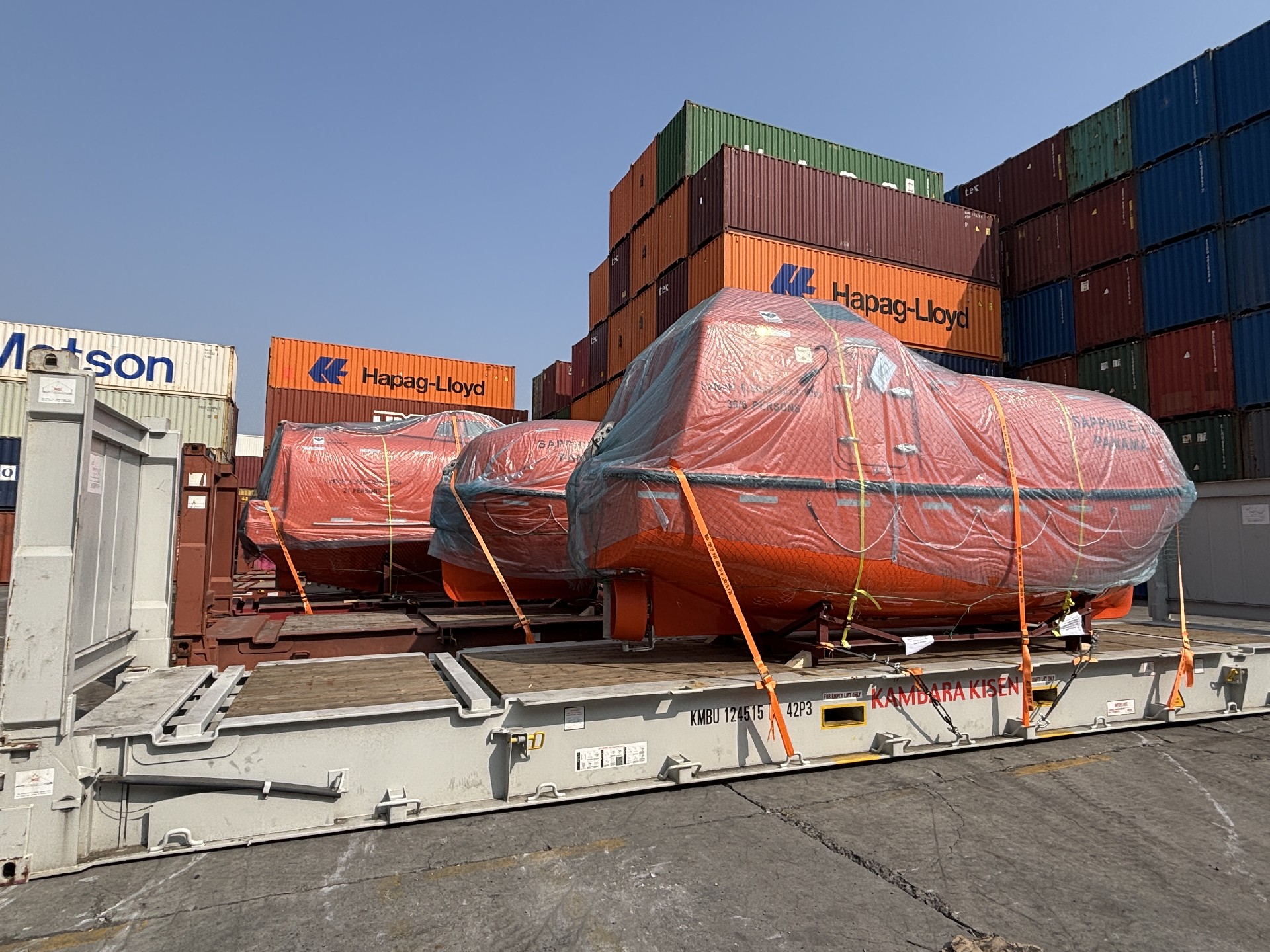
Lifeboats are high‑value, damage‑prone heavy‑lift cargoes. The hulls are mostly made of fibreglass‑reinforced plastic (FRP) or aluminium alloy, with a high‑finish surface. They integrate specialised fittings and precision release mechanisms internally, demanding high protection standards and complex handling, making them a high‑risk and sensitive cargo category in ocean shipping.
The hull has a ship‑shaped curved surface with a non‑flat bottom, making it impossible to place directly and stably. Customised cradles or saddles must be used for support during transport.
FRP/aluminium alloy construction: the paint layer and hull structure are vulnerable to impact, and improper stress can cause cracks or delamination, requiring extremely high protection standards.
Complex onboard fittings: oars, lifejackets, signalling equipment, engines, and release mechanisms are shipped together with the lifeboat. These must be inventoried and secured to prevent them from scattering or colliding during transit.
The davit and release mechanism are precision‑engineered: they can deform or fail if subjected to stress or impact, so they must be individually secured or packed.
Multiple units are usually shipped in a single batch, requiring careful stowage to ensure that lifeboats do not touch or press against each other.
JYC Supply Chain: Providing a Comprehensive Integrated Logistics Service System
JYC handles a full range of equipment types, including enclosed lifeboats, free‑fall lifeboats, rescue boats, fast rescue boats, and other marine and offshore life‑saving appliances. Based on hull dimensions and weight, we customise the transport solution and manage the entire process from port consolidation to shipment.
Domestic pick‑up → customised cradle design + vessel type matching → lashing and securing → port delivery → ocean freight booking → destination delivery
Step 1: Domestic Inland Transport
Clients may either arrange delivery to our designated port consolidation yard themselves or authorise us to provide door‑to‑door pick‑up. We operate a fleet of low‑bed trailers covering major lifeboat manufacturing bases nationwide. Based on hull dimensions, we deploy the appropriate vehicle and customised cradle to ensure safe delivery to the consolidation yard.
Step 2: Customised Cradle Design + Vessel Type Matching
We design customised transport cradles or saddles according to hull dimensions and weight, ensuring that the hull is stably supported with the bottom clear of any stress. Based on the batch quantity, we select the appropriate vessel type and develop a stowage plan to avoid squeezing between hulls.
Step 3: Lashing and Securing
All operations comply with shipping line requirements and industry standards.
Our lashing solution:
The hull is lifted and placed onto the customised cradle. Rubber mats or felt are laid between the hull bottom and the cradle to protect the hull coating.
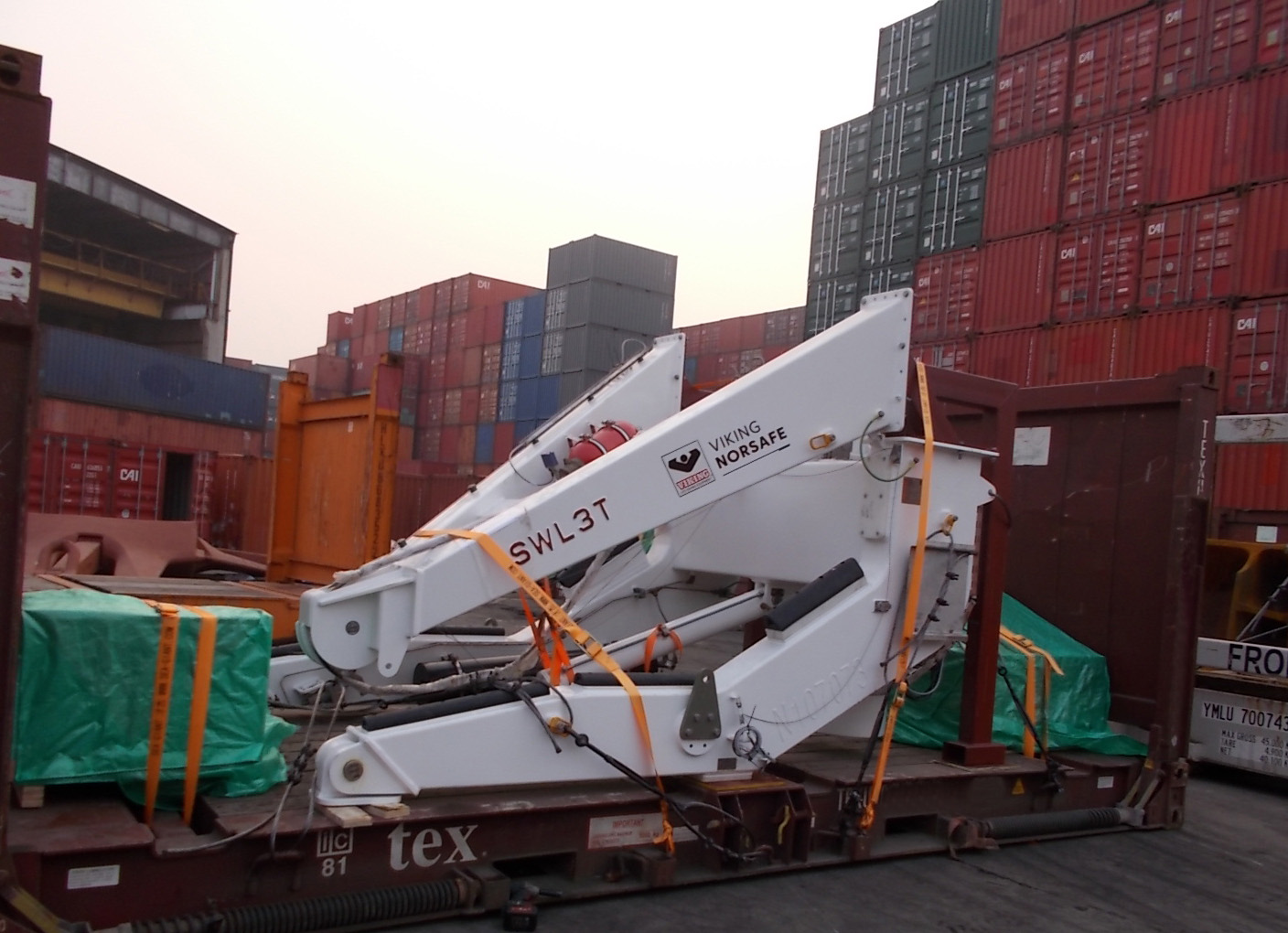
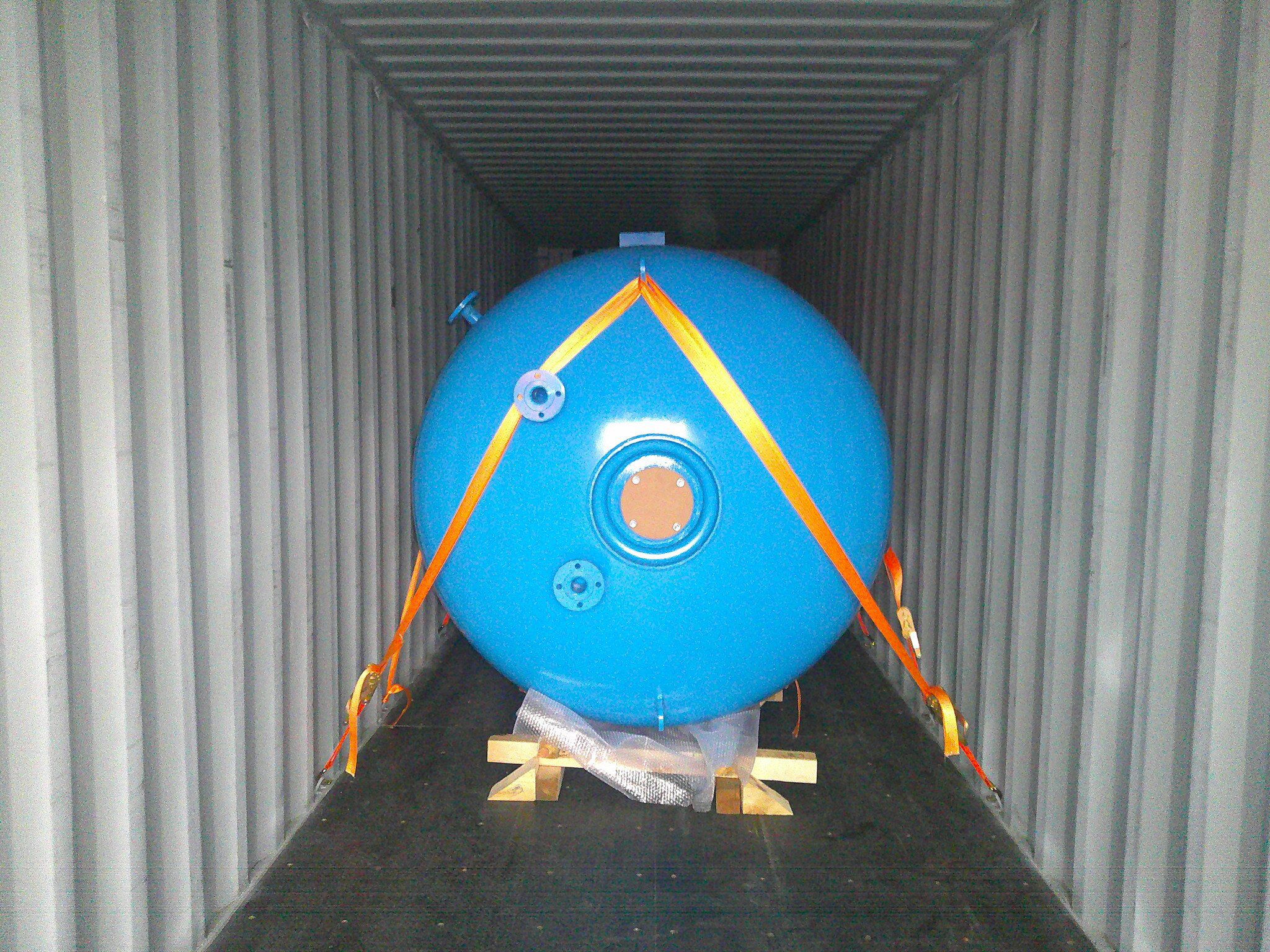
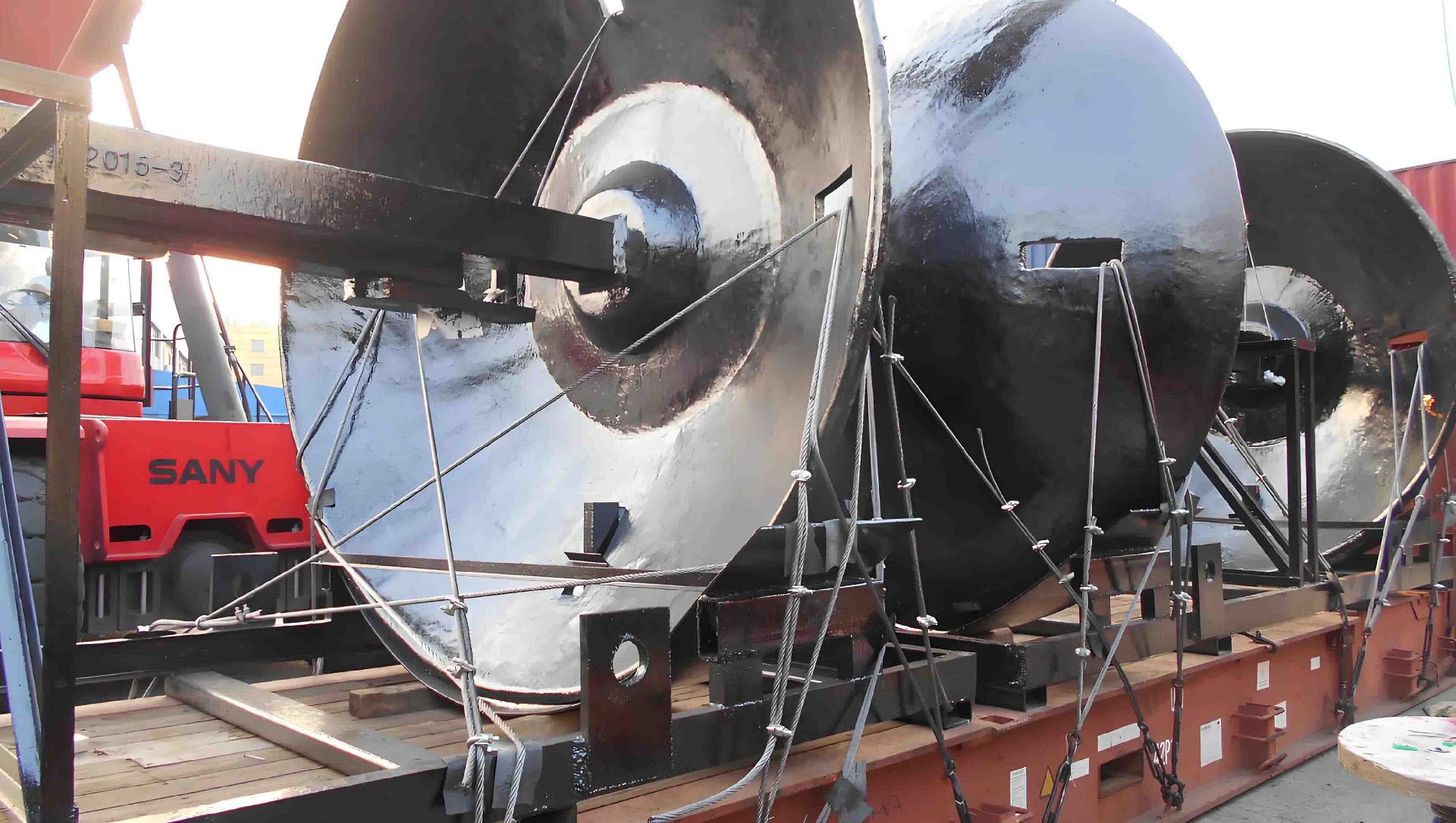
Lashing straps with tensioners are symmetrically secured from the front, rear, left, and right of the hull, with tension adjusted to meet the requirements of the intended voyage area to prevent horizontal displacement.
Lateral supports are installed on both sides of the hull to prevent overturning during vessel rolling.
All onboard fittings are inventoried and then centrally secured with lashing straps to prevent them from scattering and impacting the inner hull during the voyage.
The davit, release mechanism, and other accessories are individually packed in wooden crates or steel frames, marked with "This Side Up" and "Do Not Crush" labels.
When multiple lifeboats are shipped together, a safe clearance is maintained between hulls, with isolation pads added to prevent contact and abrasion between adjacent units.
After the entire vessel is lashed, photographs are taken for documentation, and a lashing inspection certificate is issued.
Step 4: Port Operations
We submit the heavy‑lift operation plan to the terminal in advance, coordinate lifting and handling equipment (cranes, etc.) to ensure smooth delivery of the cargo to the port. Dedicated supervisors oversee the loading, re‑inspect the lashing condition, and only after confirmation arrange for vessel loading. We also cooperate with customs inspections and assist with clearance procedures.
Step 5: Ocean Freight Booking
Based on hull dimensions, weight, and destination port, we select the most suitable vessel type and route, prioritising shipping lines with proven experience in heavy‑lift transport. Our main cooperating vessel types include: breakbulk / general cargo vessels, multi‑purpose vessels, and heavy‑lift vessels. We cover major ports from China to Southeast Asia, the Middle East, Africa, South America, and Europe. We also provide recommendations for marine insurance solutions.
Step 6: Destination Delivery
We notify the consignee in advance of the voyage schedule and estimated time of arrival, assist with discharging and customs clearance at the destination port, and coordinate local transport resources for last‑mile delivery. Throughout the process, we provide full tracking of all logistics milestones and keep you updated with real‑time transport status.
Contact: Manager Li
Phone: 021-31056166
Email: sea-giant@sea-giant.com
Add: Room 1708, Pu Chuang Business Building, 1050 East Daming Road, Hongkou District, Shanghai, China
We chat