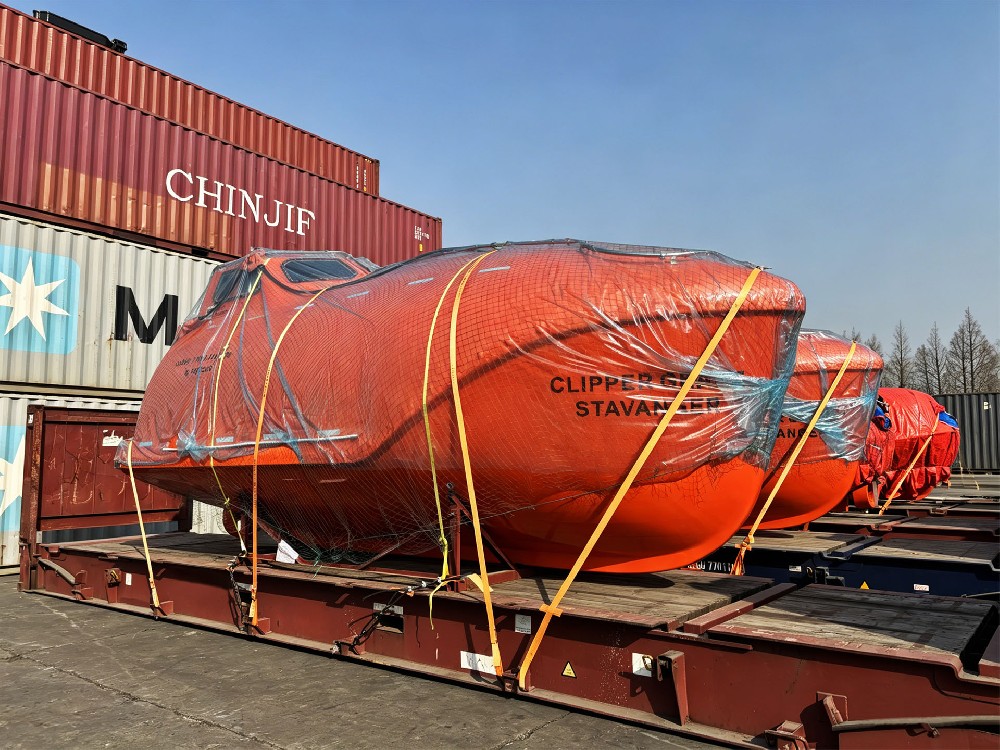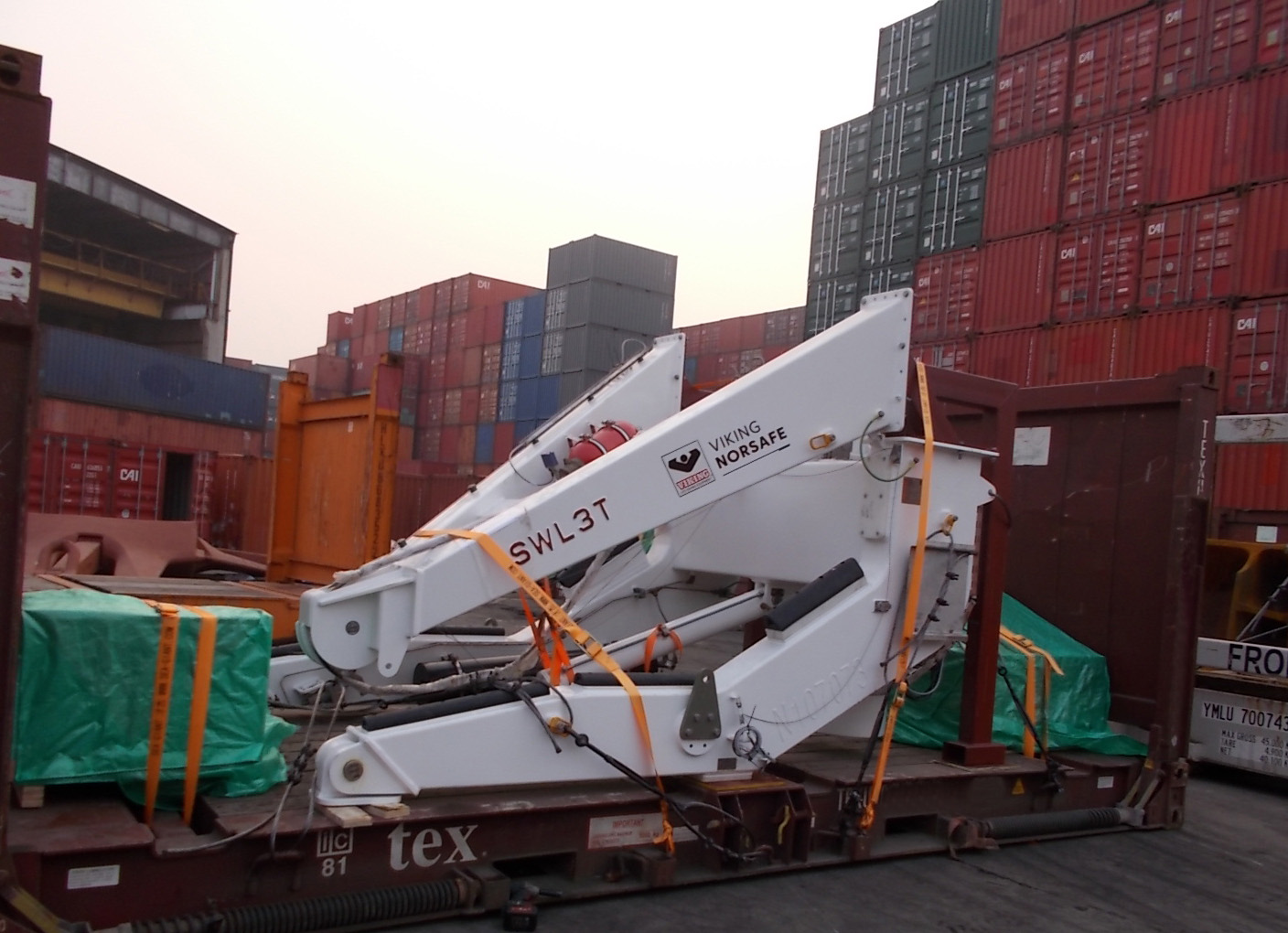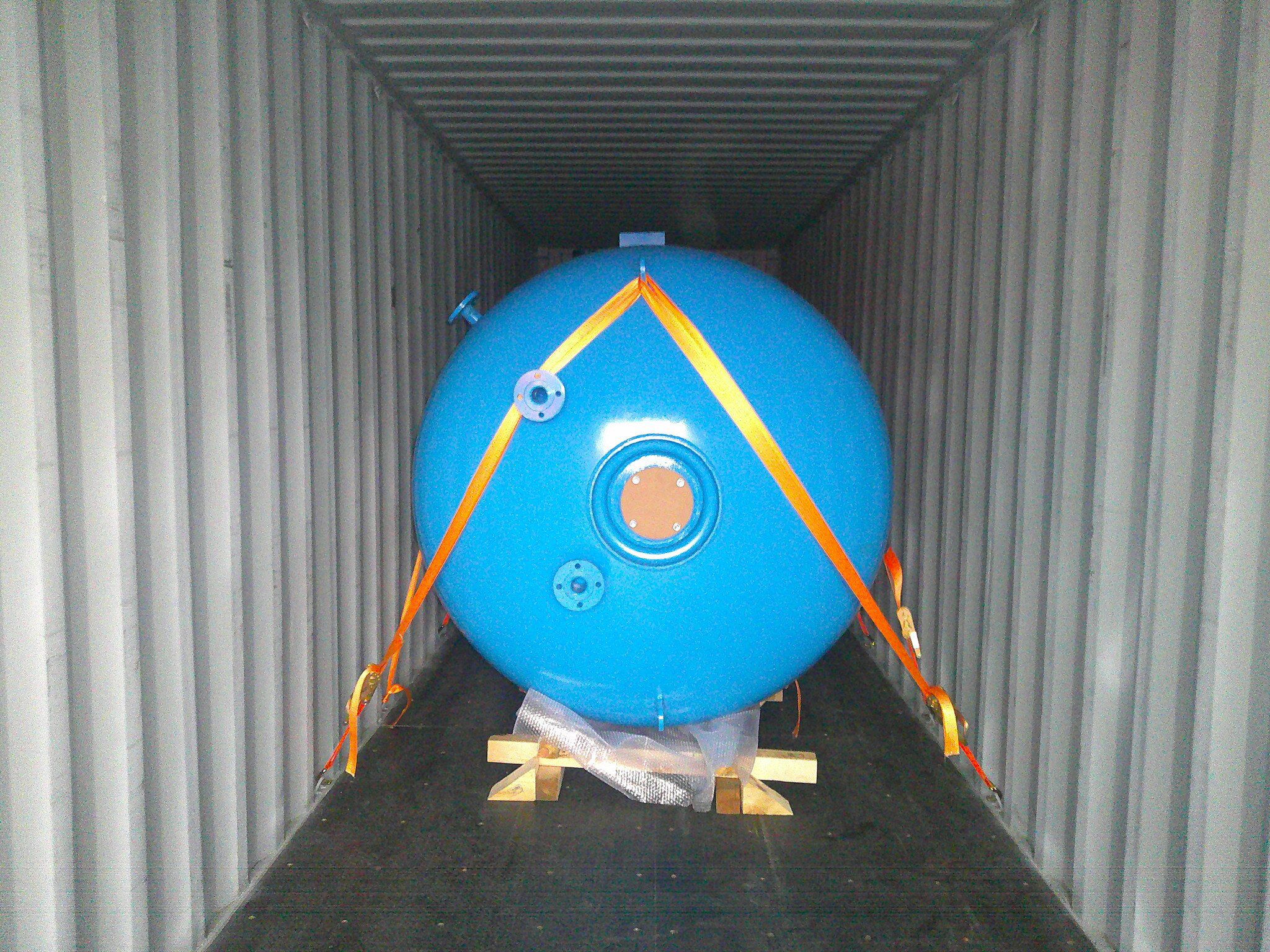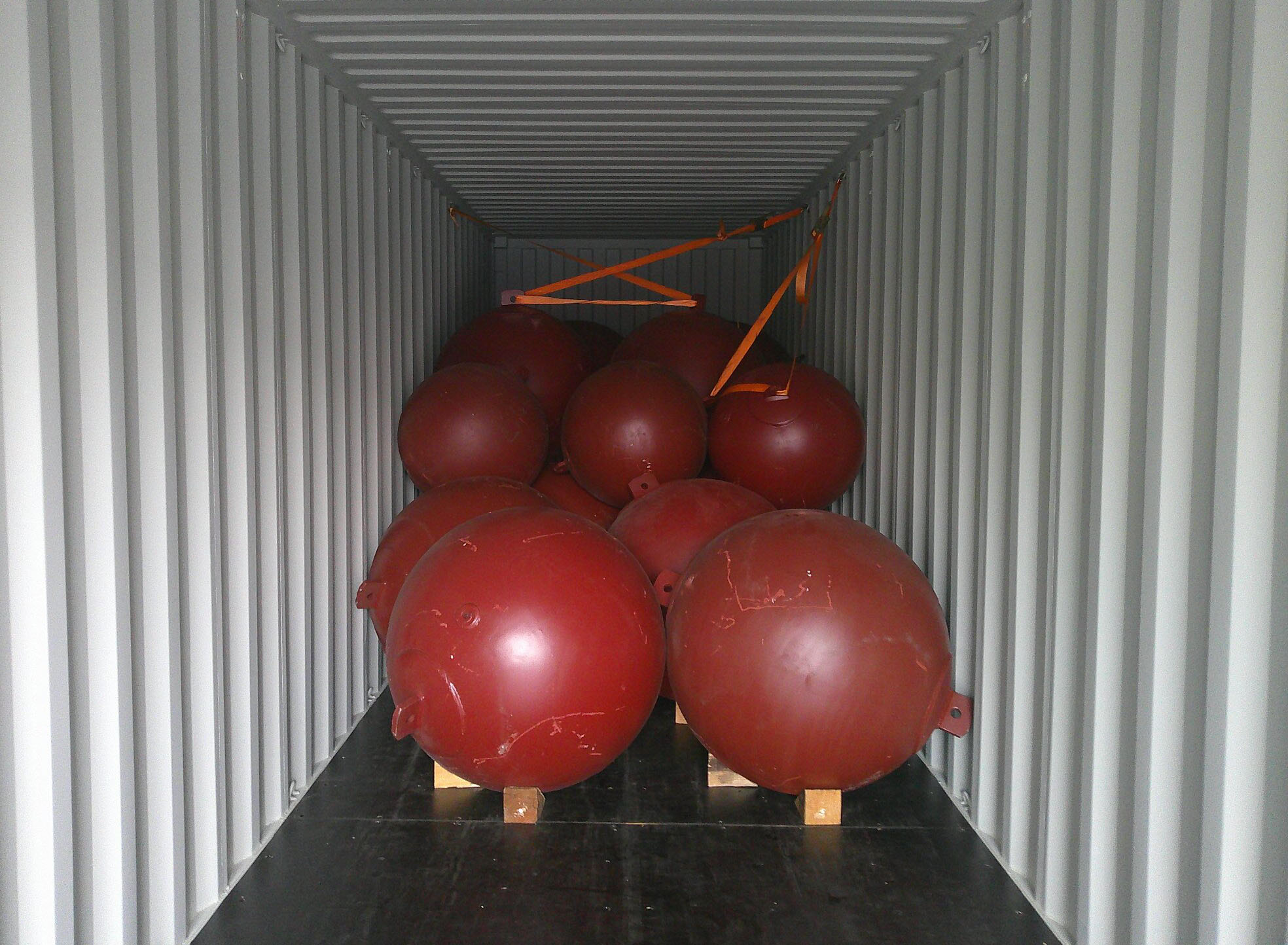
Pressure vessel heads fall into the category of large curved irregular‑shaped components. They are mostly hot‑press formed from steel plates, with large diameters, thick walls, and spherical‑crown or conical‑shell shapes. During transport, they are extremely prone to rolling, placing very high demands on anti‑skid and securing measures.
Diameter exceeding limits: large heads can have a diameter of over 4 metres. Dimensional drawings must be submitted in advance for booking to confirm deck stowage positions.
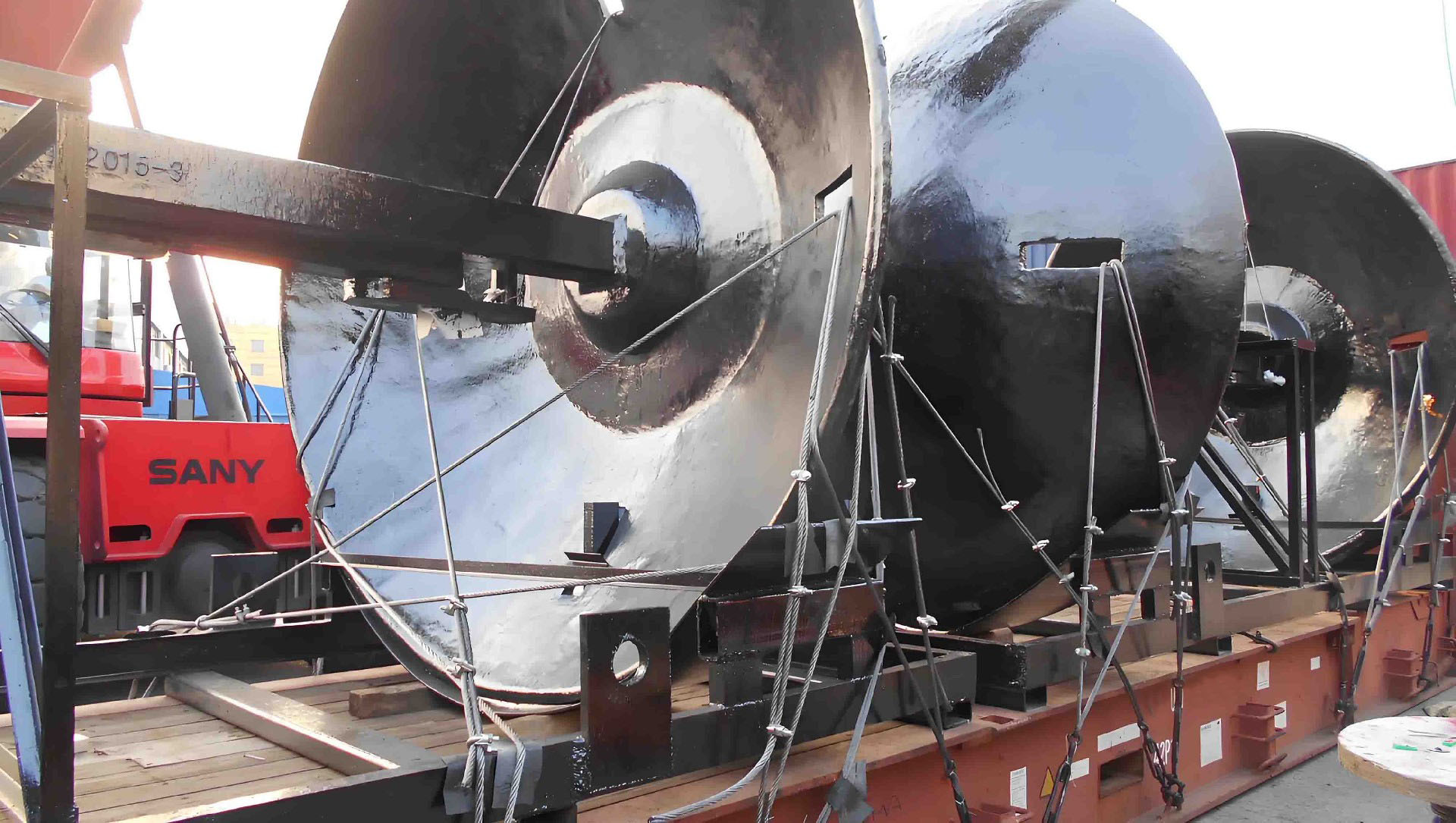
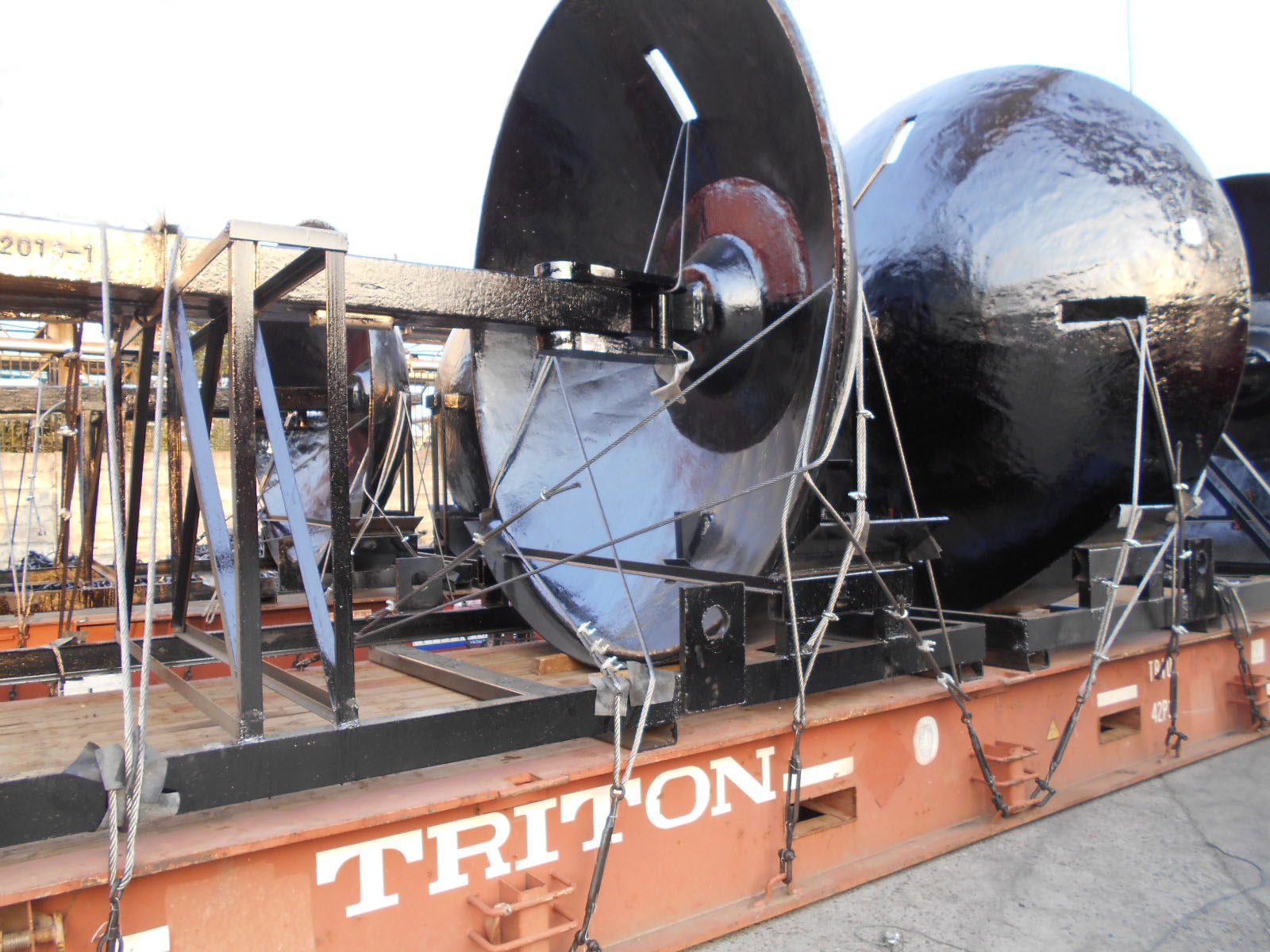
Unstable curved shape: whether placed with the convex side up or down, the head cannot rest stably on its own. Special cradles or saddles must be used for support.
Precision bevels: the welding bevels of the heads are precision‑machined. Any impact during transport will directly affect subsequent fit‑up and welding, so bevel protection is essential.
Thin‑walled large‑diameter components: some heads have relatively thin walls. Improper selection of lifting and securing points can cause local deformation.
High surface treatment requirements: stainless steel heads have an acid‑pickled passivation layer that is vulnerable to scratching, while carbon steel heads have anti‑corrosion coatings that are susceptible to impact damage.
JYC Supply Chain: Providing a Comprehensive Integrated Logistics Service System
JYC handles a full range of head types, including hemispherical heads, elliptical heads, dished heads, conical heads, flat heads, and other pressure vessel heads. Based on diameter and wall thickness, we customise the transport solution and manage the entire process from port consolidation to shipment.
Domestic pick‑up → customised cradle + vessel type matching → lashing and securing → port delivery → ocean freight booking → destination delivery
Step 1: Domestic Inland Transport
Clients may either arrange delivery to our designated port consolidation yard themselves or authorise us to provide door‑to‑door pick‑up. We operate a fleet of low‑bed trailers covering major head manufacturing bases nationwide. Based on head diameter, we deploy the appropriate vehicle to ensure safe delivery to the consolidation yard.
Step 2: Customised Cradle + Vessel Type Matching
We customise curved saddles or steel cradles according to the head diameter and curvature, ensuring stable support and uniform stress distribution on the curved surface. Based on batch quantity, we select the appropriate vessel type and develop a stowage plan.
Step 3: Lashing and Securing
All operations comply with shipping line requirements and industry standards.
Our lashing solution:
The head is placed with its convex side facing up onto the customised curved cradle, with rubber mats or timber sleepers laid at the contact points to protect the surface coating.
Multiple points around the head edge are secured to the cradle with steel wire ropes or lashing straps to prevent horizontal displacement.
The four corners of the cradle are secured to deck lashing rings with steel wire ropes and tensioners, with tension adjusted to meet the requirements of the intended voyage area.
When multiple heads are shipped together, isolating pads are placed between them to prevent edge‑to‑edge contact.
The bevels are protected with edge protectors or rubber sleeves to prevent impact damage.
Stainless steel heads are wrapped with stretch film to protect against marine salt spray and scratching.
After the entire vessel is lashed, photographs are taken for documentation, and a lashing inspection certificate is issued.
Step 4: Port Operations
We submit the heavy‑lift operation plan to the terminal in advance, coordinate lifting and handling equipment (cranes, etc.) to ensure smooth delivery of the cargo to the port. Dedicated supervisors oversee the loading, re‑inspect the lashing condition, and only after confirmation arrange for vessel loading. We also cooperate with customs inspections and assist with clearance procedures.
Step 5: Ocean Freight Booking
Based on head diameter, weight, and destination port, we select the most suitable vessel type and route, prioritising shipping lines with proven experience in heavy‑lift transport. Our main cooperating vessel types include: breakbulk / general cargo vessels, multi‑purpose vessels, and heavy‑lift vessels. We cover major ports from China to Southeast Asia, the Middle East, Africa, South America, and Europe. We also provide recommendations for marine insurance solutions.
Step 6: Destination Delivery
We notify the consignee in advance of the voyage schedule and estimated time of arrival, assist with discharging and customs clearance at the destination port, and coordinate local transport resources for last‑mile delivery. Throughout the process, we provide full tracking of all logistics milestones and keep you updated with real‑time transport status.
联系人: Manager Li
电话: 021-31056166
邮件: sea-giant@sea-giant.com
地址: Room 1708, Pu Chuang Business Building, 1050 East Daming Road, Hongkou District, Shanghai, China